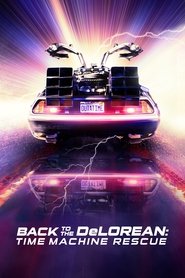
OUTATIME... tells the incredible comeback story of the world's most famous movie car - the DeLorean Time Machine from Back to the Future. Plagued by souvenir hunters, rats, and the elements, this cinematic icon seemed destined for the junkyard. Out of Time... chronicles the efforts of Back to the Future Co-creator / Producer Bob Gale, Universal Studios, and the trilogy's dedicated fan community as they tirelessly work together to bring the Time Machine back to life. OUTATIME is, at its core, a wonderful love story depicting the devotion of our fans to our movie trilogy as represented by what is arguably the most famous movie car of all time.
In the final days of the American Civil War, an emigre Hungarian military officer attempts to map the situation of the enemy. Many veterans of the 1848 War of Independence in Hungary fought on the northern side. Experienced Fiala, Boldogh who struggles with homesickness and the reckless Vereczky all experience their enforced emigration in different ways and news of impending peace elicits different reactions from them all.
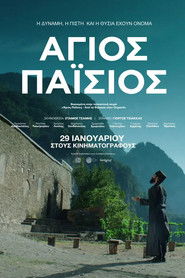
The story of Saint Paisios, or else known as Arsenios Eznepidis. After being uprooted from Farasa of Cappadocia as refugees, the family of young Arsenios settles in Konitsa, Epirus where he grows up with his mother and grandmother, who inherit to him their deep faith in Christ as well as their love for all people. Fast forward to many years later, his time in Mounth Athos and his move to Filotheos monastery play a catalytic role in his religious journey. Eventually, he sends a photograph of himself to his mother, bidding her farewell and telling her that from then on the Virgin Mary will be his mother. He no longer signs using the name Arsenios, but Paisios.
In the polarized and violent Medellín (Colombia's 'City of Eternal Spring') of the 1970s, doctor Héctor Abad Gómez is concerned about both his children and children from less favored classes. After a devastating loss in the family, Héctor gives himself to the greater cause of public health programs for the poor in Medellín to the consternation of the city's authorities.
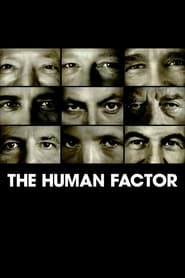
How US politicians and diplomats, over the past 25 years, have come close to achieving something almost impossible: securing peace between the State of Israel and its Arab and like-minded neighbors, mired in a struggle both dialectical and violent since the early 20th century, due to historical and religious reasons, entrenched offenses and prejudices, and the invisible and tyrannical hand of third countries' geopolitical interests in the area.
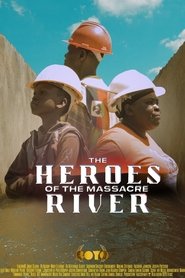
The Heroes of the Massacre River is a powerful documentary that chronicles the stories of the pioneers behind the construction of the historic Canal of Ouanaminthe, a project that united Haitians across the nation and the diaspora. This film celebrates the groundbreaking efforts of key figures, centering on Dr. Bertrhude Albert, Dr. Naismy-Mary Fleurant, architect Wideline Pierre, economist Etzer Emile as well as dedicated canal workers Milourie Sylfrard, Theodore Johnson and Joseph Pressoir — all guided by the investigative journey of Max Angie Clervil. It also serves as a commentary on the complexity of colonialism and borders, tracing the role that the Massacre River continues to play in the history of Ayiti.
From 1957 —the year in which the Soviets put the Sputnik 1 satellite into orbit— to 1969 —when American astronaut Neil Armstrong walked on the surface of the moon—, the beginnings of the space conquest were depicted in popular culture: cinema, television, comics and literature of the time contain numerous references to an imagined future.
The strange history of the now abandoned American 1993-bill, «Don't ask, don't tell» where sexual orientation was a "non-talk" policy in the American forces, leading to 13.368 getting kicked out before 2011.
Culled mostly from archival footage, this thought-provoking first volume of the Hidden Agenda series relays the little-known history of an elite group of power brokers who wield considerable influence over world affairs. Tracking the growth of the world's largest banking dynasties through the eyes of a conspiracy theorist, the program maintains that the true motivation behind their activities is to control the world itself.
1965 - The Rolling Stones is coming to Sweden - a little rougher and tougher than The Beatles who were here a few years earlier. And the fashion trend is spreading across Sweden - to the horror of many. The medium-strong beer will start to be sold in Sweden - in regular grocery stores. And at the end of the year Hasse och Tage's new feature film with Gösta Ekman in one of the main roles premieres. Tragedies strike: 10 Swedish youths die in an avalanche, a tunnel collapse in Stockholm causes suspense. American astronaut Ed White spacewalks after the Soviet Union's Aleksey Leonov. Hep Stars led by Svenne Hedlund dominate with three top-ten songs, including "Cadillac."
A filmed broadcast of the Command Performance radio programs in which various Hollywood stars appeared and performed in accordance with letter requests from American service men stationed around the world. This entry (Army-Navy Screen Magazine No. 20) was broadcast and filmed at a live performance at Camp Roberts, California. Lana Turner, Betty Hutton, Judy Garland and Bob Hope star.
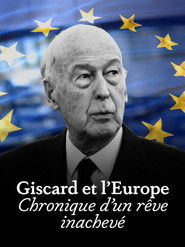
Over half a century of public service, Valéry Giscard d'Estaing embodied the dream of a united and strong Europe. From the youthful enthusiasm of the 1950s to the disillusionment of the 2005 referendum, his career chronicles an ideal confronted with the realities of power, national resistance, and populist winds. He tirelessly attempted to realize his youthful dream: a United States of Europe.
Moscow, January 1948. In the bitter cold, a large crowd attends the State Funeral of the Yiddish actor and director Solomon Mikhoels. An official proclamation mourns the death of "a great People's Artist of the Soviet Union." What people are really mourning is the death of the most popular Jewish theater in the Soviet Union, and the man who kept it alive against all odds for over 20 years. No doubt many suspected the truth: he had just been assassinated by Stalin's secret police.
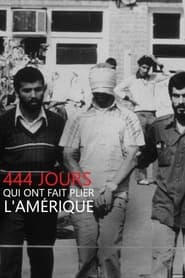
On January 20, 1981, 52 members of the U.S. Embassy in Tehran were released after 444 days of captivity. Told by those who lived through it, a crisis that traumatized America and upset the political balance in the Middle East.
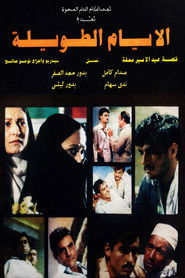
In 1959, underground revolutionaries try to assassinate Prime Minister Abd al-Karim Kassem in Baghdad. News reports claim they have failed, and at first the revolutionaries lay low, but as the secret police continue to comb the neighborhoods with house-to-house searches, they flee to the countryside. Among those fleeing is Saddam Hussein, the future president of the republic.
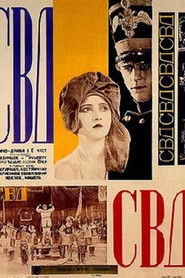
The film tells about the Decembrists’ revolt in the south of Russia. Right before the Decembrist Revolt 1825 a chevalier of fortune decides that it's time for a game. But on whom to make a bet? He asks the cards. But he's not the only one who makes the choice.
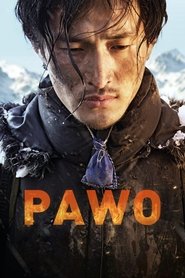
Since 1950, Tibet has been occupied by China. Dorjee, a young Tibetan, grew up in peace 40 years later. After the death of his father, it all comes to a point, where he realizes that his wings are already cut, what it means to be Tibetan in a country which is called "China". Inside Tibet and in exile, a last cry for freedom starts.
We have detected that you are using an ad blocker. In order to view this page please disable your ad blocker or whitelist this site from your ad blocker. Thanks!