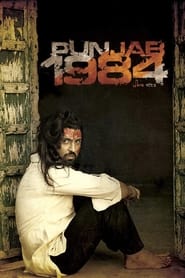
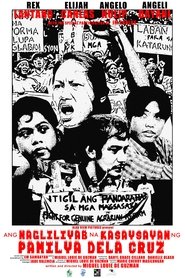
This is the story of a mother and her missing son set in the backdrop of 1984 Punjab, when the state was going through a terrible time of terrorism. The film depicts the longing of a mother for her son and her search for her son, who is labelled a terrorist because of the bad times in Punjab.
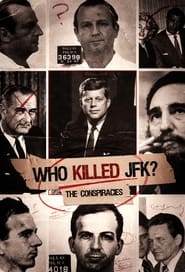
Over the decades, unanswered questions, tampered evidence, ulterior motives, and witness testimony surrounding the assassination has perpetuated conspiracy theories and alternative explanations that challenge the official narrative. Most of the figures involved--or knew who was involved--have mostly passed away, leaving avenues of investigation dead in their tracks. Over time, efforts to determine what happened have left more questions than answers. We take a look back on the moment that changed the course of world history, questioning the official record. Was the assassination a conspiracy?
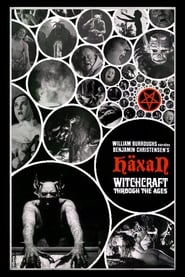
A seventy-six-minute version of Häxan, re-edited and re-released in the United States by Metro Pictures Corporation in 1968. It is narrated by author William S. Burroughs, with a jazz score and soundtrack featuring violinist Jean-Luc Ponty.
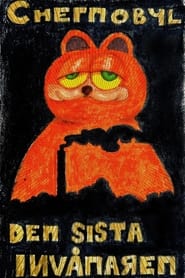
From 1945 to 1989, after the capitulation of Nazi Germany, two rival ideologies, communism and capitalism, faced each other in a merciless battle.
On one side of the Iron Curtain and on the other, throughout the Cold War, the USSR and the United States sought to shape children’s imaginations through their magazines and films. Never in the history of mankind have so many comic books been published and so many cartoons produced for young people.
In November 1989, communism collapsed with the Berlin Wall; capitalism was left to decide the future of the world. What if this victory had been prepared for a long time, and our thinking conditioned, from our early childhood, to ensure this absolute triumph?
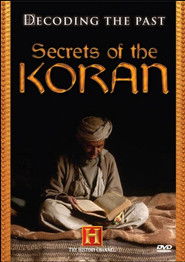
The Koran is one of the most important works ever written. For almost one billion people worldwide, it is the Holy Scripture, the word of God and his prophet. For others, it is a historical artifact that has left an indelible imprint on the world. DECODING THE PAST: SECRETS OF THE KORAN probes the heart of the work that many outside Islam find mysterious. This feature-length program examines the history of the verses and their implications for modern times, as well as the striking similarities and differences between the Koran and the Bible. Trace the influence of the Koran from the Golden Age of Islam to the modern rise of jihadism, and hear from top Islamic scholars and holy men as they share their insights into the work that lies at the foundation of one of the world's great religions. THE HISTORY CHANNEL provides the perfect guide to understanding the fundamental work that has shaped the Muslim faith for over 1,400 years, and will long continue to influence modern history.
As the BBC celebrates 90 years of covering Wimbledon, Sue Barker travels the globe to meet some of the legends who have graced the famous grass courts. Tennis royalty including Andy Murray, Roger Federer, Rod Laver, Chris Evert, Billie Jean King, Pete Sampras, Bjorn Borg, Virginia Wade, Martina Navratilova, Boris Becker and John McEnroe share memories and reflect on their own experiences at the iconic tennis tournament. These are their stories as never told before, emotional and self-deprecating, revealing how their lives and careers were changed by the Championships. For Sue herself, Wimbledon has been a big part of her life for nearly 50 years as a fan, player and broadcaster. She also meets the Duke of Kent, who is president of the All England Lawn Tennis Club, and the Duchess of Cambridge, who this year takes on a new role as patron.
The Rosie Kay Dance Company present a piece about the strange history and pop-cultural aftermath of CIA mind control experiments during the Cold War, with documentary segments by Adam Curtis.
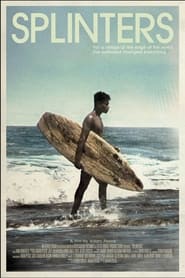
Splinters is the first feature-length documentary film about the evolution of indigenous surfing in the developing nation of Papua New Guinea. In the 1980s an intrepid Australian pilot left behind a surfboard in the seaside village of Vanimo. Twenty years on, surfing is not only a pillar of village life but also a means to prestige. With no access to economic or educational advancement, let alone running water and power, village life is hermetic. A spot on the Papua New Guinea national surfing team is the way to see the wider world; the only way.
The movie will chart Cole’s journey as musician and quiet revolutionary, navigating racial injustice, Hollywood sabotage and self doubt to ensure his legacy and help pave the way for future generations of artists and Black men and women.
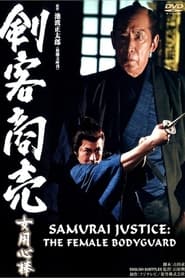
A chance encounter on the road leads to the unusual need for a female bodyguard to protect the granddaughter of an old friend of Akiyama Kohei, a wealthy merchant who plans to bypass his son-in-law as head of the company. When Daijiro’s wife Mifuyu takes on the job strange things start to happen, including the brutal slaughter of company employees. With the backing of Lord Tanuma, a chief elder on the ruling council, Kohei, Daijiro, and Mifuyu form a plan to foil the kidnappers plot and save the girl from certain death.
Palazzo Vecchio: a history of art and power. Directed by Piero Messina, through a clever movement of the narration between past and present, makes a real journey into the beauty of an ancient place that still retains its undisputed charm.
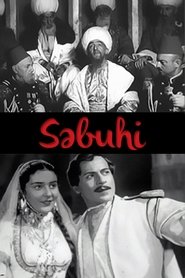
The film is dedicated to the life and creative work of the great Azerbaijani educator, playwright, and philosopher, Mirza Fatali Akhundov, affectionately known as Sabuhi, meaning “man of the morning.”
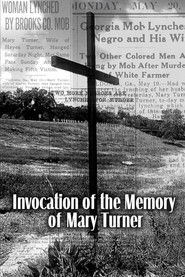
A stasis work invoking the memory of the lynching of Mary Turner, a young, pregnant African American woman in South Georgia. Publicly demanding justice after the murder of her husband, Turner was kidnapped by a mob, hung up in a tree, set on fire, her child cut out and killed, and shot hundreds of times before being buried on-site in 1918. Returning to the origins of cinema, filmed on the exact date and time of Turner’s lynching 105-years earlier, # 3 uses form, time, light, shadow, and landscape as metaphor to not only invoke the memory of Mary Turner, but to also ponder perspective relating to racial violence, violence against women, our failure to acknowledge our past, and the racial divide that continues to exist today in the schizophrenia of America life.
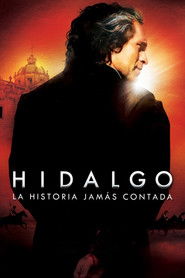
From his jail cell at Chihuahua's Military Hospital, Hidalgo begins to remember moments of his life, particularly his tenure as Parish Priest in the town of San Felipe Torres Mochas where he translated and produced the stage play "Tartuffe" by Moliere. During this time he fell in love with Josefa Quintana with whom he had three children and for whom he left the priesthood during a brief period in his life.
We have detected that you are using an ad blocker. In order to view this page please disable your ad blocker or whitelist this site from your ad blocker. Thanks!