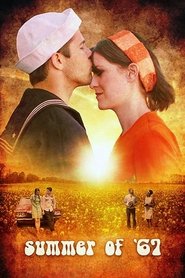
Based on real life events, Summer of '67 brings to life the turbulent times of the sixties and the struggles faced by the men and women impacted by the Vietnam War. Young wife and mother Milly (Rachel Schrey) is forced to live with her mother-in-law while her husband Gerald (Cameron Gilliam) is away on the USS Forrestal. Kate (Bethany Davenport) must choose between Peter (Christopher Dalton) her high school sweetheart and Van (Sam Brooks) her new hippie boyfriend. Ruby Mae (Sharonne Lanier) finally finds true love with Reggie (Jerrold Edwards) only to have him whisked away by the draft. Each woman faces the question of whether or not their man will return, and even if he does, will life as they know it ever be the same?
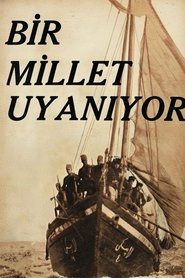
The events begin on March 15, 1920. The captain Davut, who belongs to the Kuvva-i Milliye in Anatolia, and the commander Tilki join the alliance that first presses the Akbas Ammunition and transfers the ammunition to the Kuvva-i Milliye on a received code.
Andrés Bonifacio is celebrated as the father of the Philippines Revolution against Spanish colonial rule. This eight-hour epic examines this myth, undertaking an expedition into history through various interwoven narrative threads, held together by an exploration of the individual’s role in history.
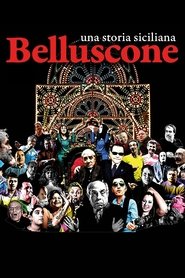
This film tells the story of three defeats: Berlusconi’s political and human defeat in his “twilight”, the one of Ciccio Mirra, Berlusconi’s unconditional supporter, deeply rooted in an ancient culture that dies hard, and the director’s artistic defeat in an Italy that recognised itself in this “Berlusconian culture” for a long time, and probably still does.
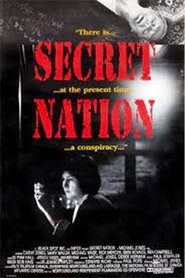
A graduate history student returns to her native Newfoundland, searching for proof of a conspiracy surrounding the referendum that saw Newfoundland join Canada.
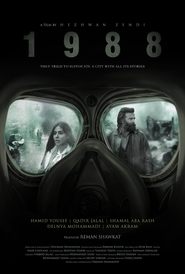
In the winter of 1988, in the depths of the Iraq/Iran war, the border town of Halabja was attacked by chemical weapons with all its people and their different stories.
For generations, an heirloom in the form of a ring has been passed down to the first daughter in the current ring holder's immediate bloodline to wed and bear another daughter. The next heir recounts the ring's history, what it means to her, and how it has affected her growth and familial relationships.
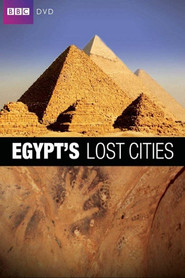
It is possible that only one per cent of the wonders of ancient Egypt have been discovered, but now, thanks to a pioneering approach to archaeology, that is about to change. Dr. Sarah Parcak uses satellites to probe beneath the sands, where she has found cities, temples and pyramids. Now, with Dallas Campbell and Liz Bonnin, she heads to Egypt to discover if these magnificent buildings are really there.
The "new roadways" of the title refer to various projects, carried out in the USA's research laboratories, that benefit mankind. These include solar energy projects, making glass that can be rolled up like a carpet, and diet experiments with mice that might lead to a cure for color blindness.
Based on testimony by Ethel’s brother, David Greenglass, the Rosenbergs are arrested by the FBI. The couple is accused of passing secret information about the atomic bomb to the USSR. Though the Rosenbergs maintain their innocence from the start, the media and public opinion seem to have condemned them from day one. The trial does nothing to change this and ends in a death sentence. On Friday June 19, 1953, Julius and Ethel Rosenberg are executed in the electric chair. Julius first, then Ethel. 30 years later, the truth finally comes out. Declassified FBI archives reveal that Ethel was not guilty of being a spy; she was merely married to one. Julius did indeed commit espionage for the Soviet Union, though primarily as a recruiter, nothing at all like the fictional James Bond. This documentary, made entirely of archival footage and animated illustrations, offers a tale of espionage as well as a complex family tragedy.
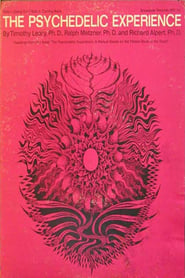
Experimental movie, where a man comes home and experiences LSD. His kaleidoscopic visions follow, with readings inspired by the Tibethan Book of the Dead.
In 1794, French revolutionary Maximilien Robespierre produced the world's first defense of "state terror" - claiming that the road to virtue lay through political violence. This film combines drama, archive and documentary interviews to examine Robespierre's year in charge of the Committee Of Public Safety - the powerful state machine at the heart of Revolutionary France. Contesting Robespierre's legacy is Slavoj Zizek, who argues that terror in the cause of virtue is justifiable, and Simon Schama, who believes the road from Robespierre ran straight to the gulag and the 20th-century concentration camp. The drama, based on original sources, follows the life-and-death politics of the Committee during "Year Two" of the new Republic.
We have detected that you are using an ad blocker. In order to view this page please disable your ad blocker or whitelist this site from your ad blocker. Thanks!