In the late 6th century, the leaders of the Yamato Dynasty had no clear plan for the creation of a unified state. Battles still raged among various warrior clans. Prince Shotoku, second son of Emperor Yomei, strived to create a new nation out of this chaos. NHK captures this great man from a time in history rarely depicted on screen, in a story of epic proportions.
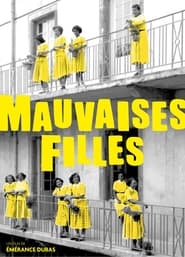
Disobedients, rebels, misunderstoods or simply unpopulars. As many other french women, Édith, Michèle, Éveline and Fabianne had been put in a juvenile detention center during their teenage years. Nowadays, with an incredible strength, each of them relate their story, and unveil the deeply moving fate lived by these « bad girls » until the late 70's.
Vienna glove-sales-lady Christel falls in love with Russian Czar Alexander. Austrian Prince Metternich tries to use this and other pleasant diversions to keep him out of the negotiation conferences of the 1815 Vienna Congress.
As his son is drafted into the army, a father volunteers months later to serve in the same regiment, determined to protect him from the horrors of war — even if it means never coming home again ...
Józef Gębski's film is a documentary reconstruction of the crime committed by NKVD officers against Polish officers imprisoned in Starobielsk and Kharkov in 1940. Accounts of historians and prosecutors are juxtaposed with the testimony of the then heads of the central and regional NKVD board.
Raja Ram Mohan Roy, a social reformer, stands against the evil customs of the society. Soon, he starts a battle to abolish 'Sati Pratha' in the Hindu communities.
Not quite a western, not quite a historical drama, Under Strange Flags is a little bit of both, and a lot of former RKO Radio cowboy hero Tom Keene. The star is cast as Tom Kenyon, a roving adventurer in Mexico during the Revolution. Hoping to protect the silver mine owned by heroine Dolores De Vargas (Luana Walters), Tom receives unexpected assistance from none other than rebel leader Pancho Villa (Maurice Black).
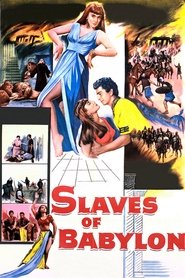
The Jews are taken from Jerusalem and made slaves by King Nebuchadnezzar. In the meantime Cyrus, king of the Persians, who has been living as a shepherd, is proclaimed king and defeats Nebuchadnezzar.
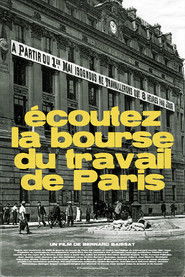
Since its opening in 1882, the Paris Bourse du Travail (Labor Exchange) has remained a nerve center of the labor movement. Once a hotbed of revolutionary syndicalism, and now a meeting place for the main labor federations, history is etched into the walls of the Bourse. It is from the rooms bearing the names of illustrious figures—Eugène Varlin, Fernand Pelloutier, Jean Jaurès, Léon Jouhaux—that historians (Jean Bruhat, Bernard Georges, Jacques Julliard, Jean Maitron, Madeleine Reberioux, Denise Trintant) and the Bourse's general secretary, Jean Braire, have sought to bring to life a century of social history. The general secretaries of the five major labor federations (André Bergeron, Jean Bornard, Edmond Maire, Jacques Pommateau, Georges Seguy) discuss the origins of the Bourses du Travail, but also address the present and the future.
At the outbreak of the Spanish Civil War, the nun Maria is forced to flee her convent. She takes refuge in a brothel, until it is liberated by a woman's anarchist group. Maria joins the group and eventually goes to the front. The women's group faces the problems of fighting not only the nationalists, but also factions on the left seeking to impose a more traditional military structure.
Actor Mark Bonnar is on a mission to understand more about the Scottish new towns in which he grew up, exploring the street sculpture made by artists such as his dad in the 60s, 70s and 80s. He discovers why the new towns are there and how they enticed people out of the bigger cities, and uncovers the surprising ways in which public art changed the new towns and the new towns changed public art. Mark's father, Stan, made sculptures that stand to this day on the streets of Glenrothes, East Kilbride and the Scottish new town that never was, Stonehouse. These new towns employed town artists to make artworks in the very housing precincts the new residents were moving into.
In 1519, Portuguese explorer Fernand de Magellan and his men embarked on an expedition that would forever change the way we see the world. Like Christopher Columbus before him, he set out in search of a western sea route to Asia's legendary Moluccan archipelago.
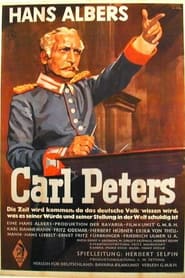
National-Socialist propaganda film that serves to memorialize one of the early representatives of colonialism: the German philologist Carl Peters. He is, at the end of the 1900′s, a noted advocate of the establishment of a German colony. Without support from Germany, he struggles on his own account against the English in East Africa. Later he is named Reichskommissar and promotes the expansion of a German colony. But Jewish and Social-Democrat opponents order him back to Germany and force him to resign.
We have detected that you are using an ad blocker. In order to view this page please disable your ad blocker or whitelist this site from your ad blocker. Thanks!