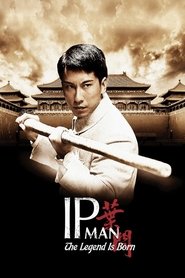
The remarkable true story of the early life of Ip Man, the formidable kung fu genius who would become Bruce Lee's mentor; beginning at the start of his journey from his initial training through to the ultimate battle to become supreme master of the art of Wing Chun.
"Algeria, The Two Soldiers" tells the true story of two young French soldiers during the Algerian War, who were driven in two completely opposite directions by the same keen sense of honor: Noël Favrelière deserted to free a young Algerian Muslim prisoner who was going to be executed, and René Técourt, to continue the fight for French Algeria alongside the OAS ultras. Two emblematic examples, which describe in a direct, carnal way, what happened there.
This film traces the history of major league baseball's one year team, the Seattle Pilots, who after their lone season of 1969 were moved to Milwaukee and became the Brewers.
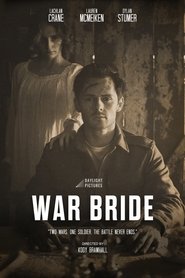
Joe, a closeted soldier struggling to embrace his true identity, is trapped in a world of expectation. Joe must confront not only the horrors of the battlefield, but the war raging within. When tragedy strikes Joe's wife, Bonnie, his descent into madness begins.
A biographical film about the life of the great Russian scientist, inventor of rocket technology and the founder of theoretical astronautics — Konstantin Tsiolkovsky, the hard spiritual work of the thinker, overcoming the stagnation of the surrounding and dramatic events of his family life.
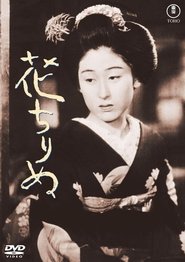
Set against the backdrop of an imperial victory in the civil war leading up to the Meiji Restoration, Fallen Blossoms tells the story of the sorrows of women in a geisha house in Kyoto by recounting the relationships of its inhabitants.
Set amidst the picturesque landscapes of 14th-century Gujarat's Shetrunjay Hills, against the backdrop of Allauddin Khilji's menacing intent to pillage the sacred temples and cultural heritage of Shetrunjay, Dadu Barot stands resolute, leading a meager band against overwhelming opposition.
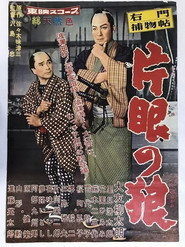
Five swordsmen are murdered and hung from a tree and the chase is on to find the killers. Two magistrates pursue the leads to solve the crime and it leads to a potential conspiracy to kill the Shogun.
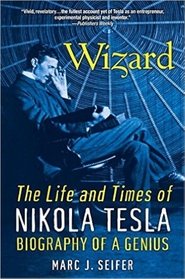
The first of a planned trilogy. Nikola Tesla's tales as told to a female cub reporter assigned to cover him, seeking to reveal the secrets of a man who had come to be labeled a "mad scientist".
Mesopotamia was the site of the Sumerian civilisation, which flourished at the confluence of the rivers Tigris and Euphrates. From 5000 to 2000 BC, the Sumerians flourished in a hostile environment by developing agriculture and irrigation and they opened up the trade routes of the ancient world. It was the Sumerians who invented writing and the wheel, and they first divided time into minutes and seconds. In the end however the Babylonian civilisation took the place of the Sumerians. However their heritage and myths live on in the Mediterranean and Western worlds to this day.
The war units of the Hun Emperor Mete Han and the Chinese Emperor Gao-Zu, the father of the turan tactic used by the Turks for centuries, come face to face in the Battle of Baideng. The war genius Mete Han was going to surround the Chinese with an unexpected war tactic and inflict a heavy defeat on them.
When Sharpe is ordered to whip the King of Spain's Irish Royal Brigade into shape, he faces dissent from the men who believe the British are slaughtering their relatives in Ireland and a spy from within.
Born Fernando de Bulhões, he was a precocious Portuguese youth, concerned with the suffering of the poor. Grown into a contemplative young man he renounces the world to join first the Augustinian Order and then the Franciscans order (where he takes the name Anthony) in his dedicated service to the faith.
We have detected that you are using an ad blocker. In order to view this page please disable your ad blocker or whitelist this site from your ad blocker. Thanks!