During the ultra-violent era of the downfall of the Tokugawa Shogunate one man rose above the rest with his ideas of how to overthrow the corrupt government and end the bloodshed between the Choshu and Satsuma clans which would ultimately lead to the alliance of these 2 clans and restoration of the emperor to full power. Based on the play that made Sawada Shojiro famous, this is the story of Tsukigata Hanpeita, a forward looking samurai from Choshu, who along with Katsura Kogoro and Sakamoto Ryoma of Tosa worked to bring their dream of a new era in Japan.
The legend of the "Five Poisons Trial" in the martial world is a life-and-death game where only one person can survive to claim a reward of a thousand taels of gold. The mysterious wanderer Lin Yun teams up with Qiao Yu, Feng Yiyang, and others to face various challenges and adversaries, engaging in fierce battles along the way. The trial reveals the dark sides of human nature—greed, anger, obsession, arrogance, and suspicion. Amidst the chaos, Lin Yun and Qiao Yu devise a clever plan to confront the true forces at play, seeking justice and resolution.
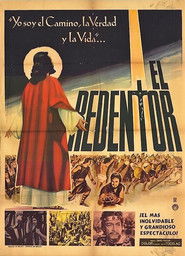
The Passion of Jesus, starting with His arrest and trial, was shot near Madrid and features narration by Sebastien Cabot. Jesus' face is never seen, but in the English version, He is voiced by veteran Hollywood actor Macdonald Carey.
This short traces the history of sound in the movies, beginning with French scientist Leon Scott's experiments in 1857. Featured are snippets from early sound pictures.
A succulent account of the life of French chef Auguste Escoffier (1846-1935) who made the simple act of cooking food a true art by creating the modern concept of haute cuisine, and who also became the main reference point for many generations of future chefs.
A story of destinies joined by Guatemala's past, and how a documentary film intertwined with a nation's turbulent history emerges as an active player in the present.
A plot to overthrow the United States government is uncovered in New York City in the summer of 1919 when William Flynn, a field agent for the Bureau of Investigation, is sent to investigate a bomb threat that has targeted some of America's most powerful politicians and leaders of commerce, New York millionaire John D. Rockefeller, Sr. among them. Flynn's investigation takes him on a journey into the underworld of homegrown terrorism and introduces him to a competitive culture of violence and murder. Greed, power, and politics are at the center of the story and Flynn must distinguish the villains from the merely discontented. Along the way, he discovers that terrorism has many faces and that a determination of guilt or innocence often lies in the psychology of fear that constricts individuals at every level of society. Sedona International Film Festival.
A prince attempts to rescue his sister from the gods, but incurs a divine curse that dooms his bloodline. With his wife at his side, he must find a way to break the cycle of suffering before the gods reduce his legacy to ruin.
His parents captured by the Baekje armies, prince Eo-jin infiltrates the enemy castle alone to seek revenge. His plot is ruined when he falls in love with a princess there and is forced to choose between betraying his parents and nation or the woman he loves.
A film about the historical uprising of the seamen in Kiel: During the Russian October Revolution of 1917, German and Russian soldiers start to solidarize with each other. By disarming the officers, machinist Henne Lonke and stoker Jens Kasten prevent the attack on a Russian freighter. When German admiralty gives out orders for operation "Nibelungen", which would lead the German fleet into a suicidal attack against England and quell the revolutionary spirit, seamen and soldiers from different political backgrounds unite in protest.
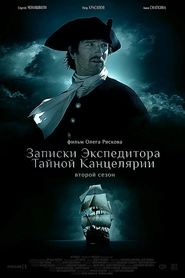
Russia in the early 18th century: Naval officer Plakhov has fallen in love with a young woman. When she is threatened by a stranger, he kills him and is thereby sentenced to death. However, the head of the secret service decides to send Plakhov on a mission instead.
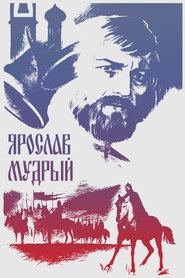
In the XIth century Kyivan Rus' (Ukraine-Rus') reached its zenith under the reign of Yaroslav. He established enduring ties with many of the ruling European dynasties, strengthened the borders of Rus' and tried to free it from the influence of the Byzantine Empire. Since 988 the church of Rus' had been autonomous, apart from the right of Constantinople to appoint the Metropolitan.
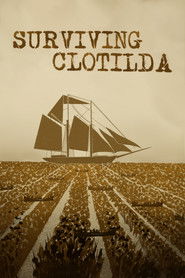
In July 1860, the schooner Clotilda slipped quietly into the dark waters of Mobile, Ala., holding 110 Africans stolen from their homes and families, smuggled across the sea, and illegally imported to be sold into slavery. Surviving Clotilda is the extraordinary story of the last slave ship ever to reach America's shores: the brash captain who built and sailed her, the wealthy white businessman whose bet set the cruel plan in motion, and the 110 men, women, and children whose resilience turned horror into hope.
This MGM Passing Parade series short presents how separate events led to the creation of three provisions - freedom of speech, freedom of the press, and prohibition of the infliction of cruel and unusual punishments - in the U.S. Constitution's Bill of Rights.
Zilan, a young woman, returns to her home town looking for traces of her dead brother, killed by ISIS. But her town is not what it used to be: social and political tensions have escalated into a state of war. The people have risen up to demand their political autonomy and the police and army repress them with brutal force. But the city’s resistance will go on for more than 100 days and Zilan will not remain a passive witness. Based on the diaries of those who died fighting and the testimony of survivors, who are the protagonists of the film, Çelik's first feature explores concepts such as hope, friendship, sacrifice and loss in the struggle for freedom of a group of young people.
We have detected that you are using an ad blocker. In order to view this page please disable your ad blocker or whitelist this site from your ad blocker. Thanks!