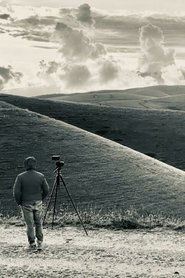
The vastness of space boggles the mind, and the beauty and diversity we find there demands a Creator. Take an awe-inspiring tour through our own solar system plus nebulae, galaxies, and more with this just-released new version of Created Cosmos—the popular creation-based planetarium program from the Creation Museum. This special edition has brand new effects plus more vivid colors in striking high definition. The drastically improved graphics make the Created Cosmos Special Edition look like a completely new program. Bonus features include a new full-length commentary by Created Cosmos author Dr. Jason Lisle, and the Special Edition Featurette compares new graphics to those from the original release. Features updated content and graphics. 22 minutes plus bonus features.
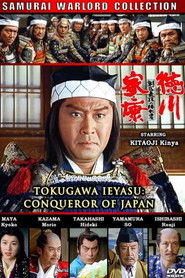
The life story of Japan’s greatest leader, Tokugawa Ieyasu, whose shogunate ruled the nation for almost 300 years has never been told like this before. From the early days as a supporter of Imagawa Yoshimoto, then on to his days with Oda Nobunaga, leading to his wars against and ultimate victory over the Toyotomi to become shogun is a fascinating tale of his military genius coupled with a native intelligence that allowed him to become the last of the great warlords and ultimately the leader of the nation. With great performances from an all-star cast featuring names like Kitaoji Kinya and Takahashi Hideki this is history come to life on the screen.
Set in the Middle East in 1919, a group of European Jews planning on settling in the Sinai Desert are attacked by Bedouin tribesmen. As they fight for their lives they realize that they are beginning a struggle for a new Jewish nation. This film chronicles the beginning of the modern Jewish struggle for a homeland.
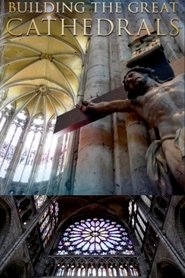
These skyscrapers of stone dominated skylines for nearly a thousand years. Now, a team of scholars and builders investigates how they we went up, and why some of the tallest fell down. Embedded in stone and stained glass, they uncover a hidden mathematical code — ripped from pages of the Bible — that was used as a blueprint to build the great Gothic Cathedrals.
The true story of Dr. Takashi Nagai, scientific pioneer, war hero, Christian convert and survivor of the atomic bombing of Nagasaki, who worked tirelessly in his efforts to heal the wounds of a country utterly devastated by war.
In 19th century Victorian England, Mrs. Isabella Beeton produced what became an essential book for housewives of the day. She was married at a relatively young age to Sam Beeton, a publisher of books and magazines on a variety of subjects. Not someone to sit at home in the traditional role of a housewife, Mrs. Beeton started work in her husband's business, initially as an editor correcting English but then writing some of the columns herself. It as at this point that she developed an idea for a cookbook and Mrs. Beeton's Book of Household Management was born. Her life was not an easy one however. The publishing business went bankrupt, she lost two children at a young age and had several miscarriages. She died at the age of 28.
Jean Valjean is released from prison after nineteen years of hard labor, violence, and suffering. Filled with anger and a deep sense of injustice, he has become a dangerous man who trusts no one and nothing. When he arrives in a small village in Provence, he is repeatedly turned away. Desperate, he unknowingly finds refuge at the house of Bishop Bienvenu, who lives simply, with his sister and a single servant. There, he is surprised by their warm welcome, and his inner demons start to waver. But the temptation to be what society sees in him still haunts him, and he steals the Bishop’s silverware. When the police ultimately catches him, the Bishop forgives him and gifts him the candlesticks. This acts becomes the starting point of Jean Valjean’ transformation into a new man who reclaims his humanity.
This is the story of two teenage women affected by violence and the painful journey to become full and liberated. One, Maruja is a young rape victim. The other Carmen Luisa is beaten by violence within her own family.
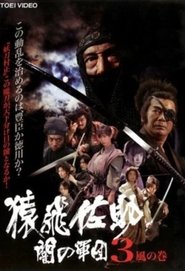
The day of the final battle approaches and, to guarantee the uncertain victory, Sarutobi Sasuke is asked to retrieve the legendary sword Muramasa. Sighted in three different locations, the army splits up and goes on a journey after it, but new faces show up, dubious allies and dangerous enemies, and the fight begins. Part 3 of 4 about Sarutobi Sasuke.
Thirty years after the massacre of Doce de Pebrero in 1945, an aging survivor struggles to maintain his quiet life as he is haunted by the shadows of his past-memories of violence and fear that refuse to fade, forcing him to confront the lasting scars of his trauma.
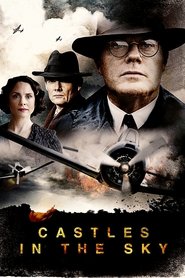
England, while the storm clouds of Nazism menace Germany. Robert Watson Watt and a team of eccentric and brilliant meteorologists struggle to turn the mere idea of radar into a functional reality.
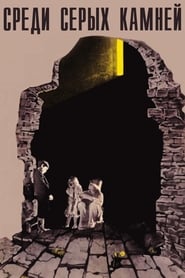
A judge is devastated after the death of his wife and is neglectful of his children. His son befriends the children of a street beggar who live in an abandoned, derelict church. After his experience with his new friends, the young boy begins to feel sorry for his father and sympathizes with his loneliness.
Part journalistic investigation and part performance documentary, "Who Killed The Federal Theater?" tells the story of the Federal Theatre Project within the context of a volatile period in the political, social and cultural history of the United States. The film features interview segments with playwrights, including Arthur Miller, and with actors, directors, designers, and historians. It also incorporates rare archival materials and dramatic sequences, including professionally re-created scenes from Federal Theatre productions that transport viewers back in time to a bygone era in American history and entertainment.
A biopic of Ananta Singha. Some calls him dacoit, some calls him a rebellion. This adaptation gives the viewer a chance to know him as a whole, a person and as a revolutionary communist leader.
The sinking of the German fleet interned at Scapa-Flow (Orkney Islands), June 21, 1919. We know that one of the stipulations of the armistice signed with Germany on November 11, 1918 was that that power's surface warships were to be "immediately decommissioned and interned in neutral or Allied ports, and remain there under the supervision of the Allies and the United States, guard detachments only being maintained on board". In fact, all the ships designated by the Allies - 11 battleships, 5 battlecruisers, 7 light cruisers and 50 destroyers - had, a few days after the armistice, been assembled in Scapa-Flow Bay, in the center of the Orkney archipelago, i.e. north of Scotland, and had remained there ever since, under the supervision of the English naval authorities, but under the effective authority of German Admiral von Reuter.
Journeying across Varanasi, Lucknow, and Muzzafarpur in India, this documentary film traces the lost traditions and the culture of tawaifs (courtesans of North India), particularly through a song sung by Rasoolan Bai, "Lagat karejwa ma chot, phool gendwa na maar" and its lesser known, earlier version "Lagat jobanwa ma chot, phool gendwa na maar" (recorded in a 1935 Gramophone recording). Weaving the past with the present, the film spans between personal stories as it interacts with historical events, ultimately leading to the decline of a great art form.
We have detected that you are using an ad blocker. In order to view this page please disable your ad blocker or whitelist this site from your ad blocker. Thanks!