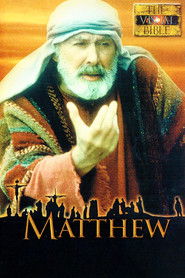
The only dramatization using the actual scriptures...word for word from the New International Version (NIV). In Israel, then known as Judea of the Roman Empire, Nazarene Jesus Christ travels around the country with His disciples preaching to the people about God and salvation of their souls.
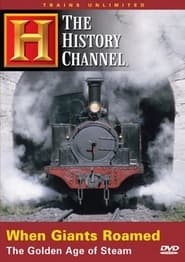
In the first half of the 20th century, America's railroads were radically
transformed by the innovation of gargantuan steam locomotives.
Pushed by the need to haul ever longer and heavier trains, the nation's
locomotive works responded with the invention of awe-inspiring articulated
engines. Delivering up to 7,500 horsepower, these steel behemoths could
haul mile-long, 15,000-ton trains. In this riveting program, journey back to the
golden age of steam for an up-close look at these legendary locomotives. See
the Union Pacific's famed "Big Boy" in action and ride the rails of the
Chesapeake & Ohio and Norfolk & Western railways. Meet the men who
drove engines like the Allegheny and Yellowstone, and visit the museums
and yards where the largest steamers ever built remain preserved in time.
THE HISTORY CHANNEL' proudly presents this rollicking
retrospective, sure to set any rail fan's heart pounding
Part of ESPN's 30 for 30 Shorts. On October 30, 2001, with the United States of America still reeling from the aftermath of the September 11 terrorist attacks, George W. Bush took to the mound at Yankee Stadium to throw the "first pitch" of the 2001 World Series' third game. Includes interviews with former United States Secretary of State, Condoleezza Rice; former New York City mayor, Rudy Giuliani; Yankees shortstop, Derek Jeter; former Yankees manager, Joe Torre; former United States Director of Central Intelligence, George Tenet; members of the Bush family; and the 43rd President of the United States, George W. Bush.
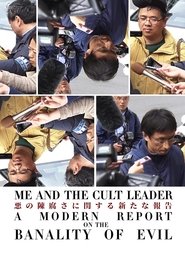
Atsushi Sakahara, a victim of the 1995 sarin gas attack in Tokyo's subway system, travels with Hiroshi Araki, an executive of Aleph (formerly Aum Shinrikyo), the attack's perpetrators, visiting their respective hometowns and the university they both attended. Conversations unfold, building intimacy: we learn why Araki joined the infamous organization led by Shoko Asahara and why, still, Araki remains an executive member of the cult, even though he was not directly involved in any of the crimes.The beginning of a friendship, a trip for redemption, or the confirmation that each human has to go their own way.
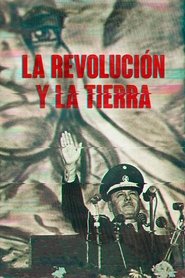
The long fight over the land, which demolished the wall between master and serf, continues to divide Peru to this day. But the 1969 agrarian reform marked a before and after in the country's story - a profound change that Peruvian cinema reflected and encapsulated, creating great imagination we continue to discover today. 50 years after the social experiments of the revolution, we ask ourselves whether Peru really messed up or not with Juan Velasco Alvarado.
Disintegration Loop 1.1 consists of one static shot of lower Manhattan billowing smoke during the last hour of daylight on September 11th, 2001, set to the decaying pastoral tape loop Basinski had recorded in August, 2001. Shot from Basinski's roof in Williamsburg Brooklyn, this is an actual documentary of how he and his neighbors witnessed the end of that fateful day. It is a tragically beautiful cinema verite elegy dedicated to those who perished in the atrocities of September 11th, 2001.
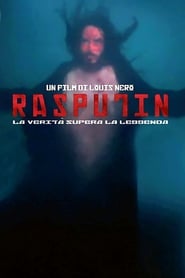
Grigorij Efimovic Rasputin (1869-1916) the mystic and self-proclaimed holy man. The saint-demon and the simple peasant. About the plot against Rasputin, hated and feared at the highest levels of government because of his surreal influence on the Tsar.
During the Nazi-occupied Ustasha regime "NDH" in former Yugoslavia during WWII, little girl Dara is sent to the concentration camp complex Jasenovac in Croatia also known as "Balkan's Auschwitz".
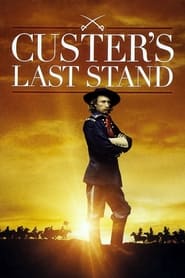
Follow General George Armstrong Custer from his memorable, wild charge at Gettysburg to his lonely, untimely death on the windswept Plains of the West. On June 26, 1876, Custer, a reputation for fearless and often reckless courage ordered his soldiers to drive back a large army of Lakota and Cheyenne warriors. By day's end, Custer and nearly a third of his army were dead.
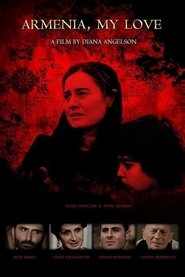
The destiny of a happy Armenian family will change forever in 1915, Ottoman Empire, (Armenian land), now Turkey and whose beautiful dreams will become memories in the eyes of the most famous Armenian American painter, who lives to paint the story of his shattered childhood.
Lavish documentary in which historian Dr Suzannah Lipscomb unfolds the extraordinary story of the tumultuous love affair between Henry VIII and Anne Boleyn, and asks: was it really love that brought them together – and was it love that tore them apart?
A lecture by G. Edward Griffin, given in the late '60s, exposes the hidden plan that shapes U.S. foreign policy and that the ultimate objective of that policy is the same then as it is now — disarmament and world government.
Acquired in July 1909 by art collector Wilhelm von Bode (1845-1929), director general of the Prussian Art Collections and founding director of the Kaiser-Friedrich-Museum, now the Bode-Museum, the Bust of Flora, Roman goddess of flowers, has been the subject of controversy for more than a century.
We have detected that you are using an ad blocker. In order to view this page please disable your ad blocker or whitelist this site from your ad blocker. Thanks!