Chile, September 1986. Tamara, commander of the communist guerrilla group Manuel Rodríguez Patriotic Front, and her comrades-in-arms set out to overthrow the military regime installed in 1973 by assassinating the dictator Augusto Pinochet.
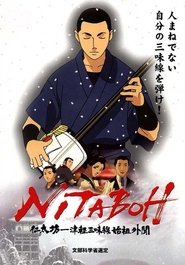
At a young age, Nitaroh is stricken with an illness that leaves him blind. He inherits the shamisen guitar once used by his mother and is taught its basics by a blind travelling shamisen player. In time with the help of friends old and new, he walks the paths that leads to his ultimate fate - that of founder of the Tsugaru style of shamisen play.
In pre-Soviet Russia, Boris Savinkov leads a terrorist faction of Socialist-Revolutionary Party members responsible for the deaths of governors and ministers.
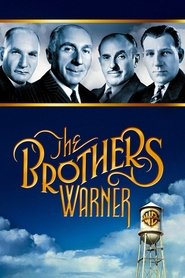
An intimate portrait and saga of four film pioneers--Harry, Albert, Sam and Jack who rose from immigrant poverty through personal tragedies persevering to create a major studio with a social conscience.
After 20 years seeking Cleopatra's tomb, archaeologist K. Martinez's search shifts to an underwater Mediterranean site. She's joined by Titanic finder Bob Ballard, Egyptian Navy and dive teams to explore the location.
On September 1, 1923, an unprecedented earthquake hit the Kanto region. The streets are filled with victims, and rumors are circulating around. The military seized the opportunity to round up and kill many socialists, anarchists, and Koreans, culminating in the arrest and murder of Sakae Osugi. His comrades and students are outraged by this atrocity. The young man Furukawa also becomes stronger in his determination to overthrow the military...
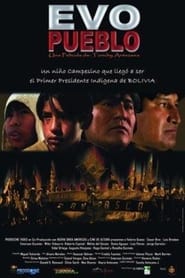
This is the history of a young farmer of the Bolivian plateau that becomes the first indigenous president of Bolivia. His childhood consists of shepherding ewes in the small school located in Orinoca where he befriends Reneco and Jamie, as well as his first love Wilma. All of them partake in different stages of each others lives. At the young age of 17 he is transferred to Oruro mining city in the heat of the Bolivian plateau. In order to survive he will have to work as a brick maker, baker, and trompetista in the Imperial band. The poverty and continuous droughts in the Moral field force the family Ayma to migrate towards the cochabambino tropic. In the tropical Chapare, Evo will become the biggest coca grower, soon to be delegated and win in the elections for president in 2005 with 54% votes. Evo Pueblo depicts the reality of our country, accounting for the common man that inhabits Bolivia through his fights, joys, poverty, exclusion and marginamiento.
Ordered to seduce French captain and steal from him classified papers, Mata Hari, an exotic dancer and a spy, instead falls in love with him and blows the cover.
In 1668 Polish colonel Michał Wołodyjowski, who recently retired to a monastery, is recalled to active duty and takes charge of Poland's eastern frontier defenses against invading Tatar hordes and Ottoman armies.
The film covers a hundred years in the lives of the Ricordi family, the Milan publishing house of the title, and the various composers and other historic personalities, whose careers intersected with the growth of the Ricordi house. It beautifully draws the parallel between the great music of the composers, the historic and social upheavals of their times, as well as the "smaller stories" of the successive generations of Ricordi.
The true story of Assis Chateaubriand, the first magnate of communications in Brazil. Due to his influence during the late 1930s up to the early 1960s, he has come to be called 'the Brazilian Citizen Kane'.
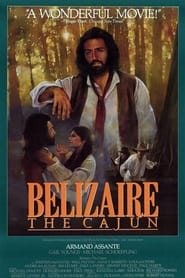
In 19th-century Louisiana's Cajun country, Belizaire is the informal spokesman for his citizens, who don't see eye to eye with local racists who wish to eradicate all Cajuns. Complicating matters is that Belizaire's former flame is now married to his biggest rival, an affluent landowner's son. Before he knows it, Belizaire is caught up in a web of murder, lies, and prejudice.
The Lark Farm is set in a small Turkish town in 1915. It deals with the genocide of Armenians, looking closely at the fortunes, or rather, misfortunes of one wealthy Armenian family.
We have detected that you are using an ad blocker. In order to view this page please disable your ad blocker or whitelist this site from your ad blocker. Thanks!