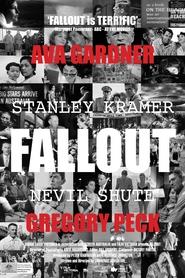
During the 1940s, Nevil Shute had a steady job as an engineer in the British military but in his spare time, he wrote novels that were being well-received. Once the war was over, Shute choose to move to Australia and focus on writing, soon becoming an internationally acclaimed novelist. His novel On The Beach, particularly hit a chord with the international community, depicting the impact of global nuclear destruction. This documentary studies Shute's career and the adaptation of his most famous novel into a feature film in Melbourne, as his predictions of a post-Hiroshima world seem to be foreboding in their accuracy.
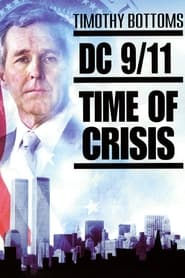
This is the story of the days directly after 9/11, and the president's whereabouts. Scheduled to air shortly before the second anniversary of the September 11 attacks, DC 9/11 takes an inside look at the Bush Administration, beginning with the day of the attacks, and following the President's journey to Ground Zero, culminating with his now famous national address nine days after the attacks.
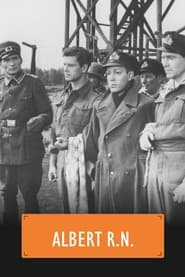
The British inmates of a POW camp think they have an informer among them after several escape attempts fail. One of the prisoners constructs a dummy which they christen "Albert" and use at roll call in order to foil the German guards.
At the beginning of the summer of 1905, representatives of the Socialist-Revolutionary Party Krasilnikov and Elkonen turned to Captain Zhanis Trautman, a Latvian political emigrant living on the outskirts of London, with a proposal to lead a steamer with a cargo of weapons to the shores of Russia. Having recruited a team of old and tried comrades, Trautman changes the crew of an English cargo ship bought by the front men. In the course of the squabble that arose on this occasion, a sailor of the old crew, David Blake, was stabbed. The wounded Blake and the veterinarian Gruber, who accompanied the cargo of anthrax drugs, are forced to leave on board. On the high seas, weapons and explosives were loaded on board. The steamer headed for the Oresund Strait, where a messenger was to meet him.
With Trident renewed for another generation, A Very British Deterrent tells the story of the remarkable events, eye-watering costs, power relationships and secret deals done half a century ago to secure Britain's very first submarine-launched nuclear missiles.
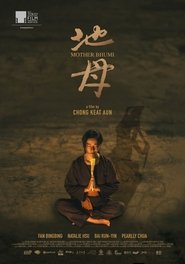
In a community of farmers living on the Malaysia-Thailand border, Hong Im recently lost her husband under mysterious circumstances. Hong Im uses black magic to address villagers’ everyday issues until she encounters a ghost that reveals a secret about her husband’s death.
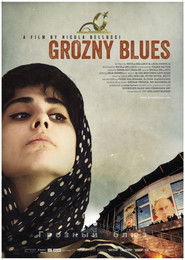
«Grozny Blues» follows a few people around Grozny, the capital of war-torn Chechnya where daily life is defined by political repression, constricting customs, forced Islamification and the failure to come to terms with recent history. The film revolves around four women who have been fighting for human rights under worsening conditions for many years but get more and more disillusioned with the situation in Putin’s Russia. The building where they work is also home to a Blues Club that is frequented by a group of young people. Having only vague memories of the Chechen wars in the 90s, they try to make sense of the strange things that are happening in their country. In linking the personal and intimate to the political, Nicola Bellucci shows in a dramatic and yet very poetic way what it means to live in a divided society that navigates a no-man’s land between war and peace, repression and freedom, archaic traditions and modern life.
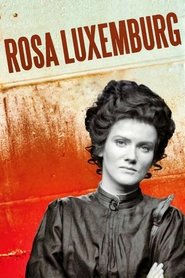
Polish socialist and Marxist Rosa Luxemburg works tirelessly in the service of revolution in early 20th century Poland and Germany. While Luxemburg campaigns for her beliefs, she is repeatedly imprisoned as she forms the Spartacist League offering a new vision for Germany.
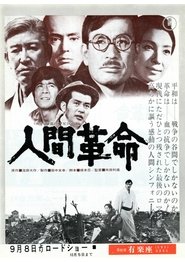
In the 14th year of the Genroku period, Asano, the head carpenter of Edo Castle, attacked Kira, the master of ceremonies, with a sword, leading to Asano's forced suicide and Kira's punishment being overlooked. Over a year later in Edo city, Shimohashi Hyogo, a carefree ronin and the nephew of Yagyu Yoshitaka, is ordered by his uncle to investigate the activities of the Ako Ronin, a group sympathetic to Asano's cause. However, Hyogo, who sympathizes with the Ronin's plight, helps out in times of need, rescuing Oishi Kuranosuke and Horibe Yahei from danger. He also teams up with Yaenosuke, a newspaper publisher, and Otaki, a geisha, to plan an attack on Kira's estate.
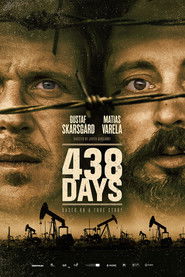
On the eve of June 28th, 2011 Swedish journalists Martin Schibbye and Johan Persson put everything at stake by illegally crossing the border from Somalia into Ethiopia. After months of research, planning and failed attempts, they were finally on their way to report on how the ruthless hunt for oil effected the population of the isolated and conflict-ridden Ogaden region. Five days later they lay wounded in the desert sand, shot and captured by the Ethiopian army. But when their initial reportage died, another story began. A story about lawlessness, propaganda and global politics. After a Kafkaesque trial they were sentenced to eleven years in prison for terrorism. And they were far from alone. Their cellmates were journalists, writers and politicians persecuted for not bowing down to dictatorship. Their reportage about oil was transformed into a story about ink, and their daily lives turned into a fight for survival inside the notorious Kality prison in Addis Ababa.
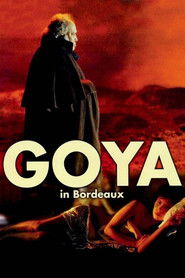
Francisco Goya (1746-1828), deaf and ill, lives the last years of his life in voluntary exile in Bordeaux, a Liberal protesting the oppressive rule of Ferdinand VII. He's living with his much younger wife Leocadia and their daughter Rosario. He continues to paint at night, and in flashbacks stirred by conversations with his daughter, by awful headaches, and by the befuddlement of age, he relives key times in his life.
Trains opens with a quote from Franz Kafka: “There is plenty of hope. An infinite amount of hope. But not for us.” These words hang like a dark cloud over this found footage documentary, which creates a collective portrait of people in 20th century Europe, capturing their hopes, desires, dramas, and tragedies.
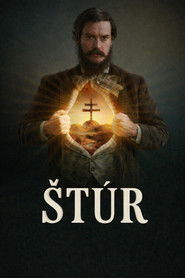
While visiting her uncle in Zemianske Podhradie, Adela, the only daughter of a respected nobleman and owner of an estate in Ostra Lúka, meets an extraordinary man. Scholar, philosopher and poet Ludovít Štúr rebels against social conditions in Hungary and, by drawing attention to political injustice, teeters on the edge of the law. 20-year-old Adela falls passionately in love with him against all common sense. She believes that if she manages to get him close to her, the proud and sarcastic man will begin to love her back. So she provides him with a temporary home in her mansion, pays for his private philosophy lessons and uses her father's influence to have Štúr elected to the Hungarian Diet. Just when it seems that Adela's plan is starting to succeed, a revolution breaks out and Ludevít is swept up in a whirlwind that will forever change Europe and their fate.
This biopic follows Silvio Santos in his 1989 presidential race, as a young journalist joins his campaign to uncover his past and what drives him to run.
The fourth and final part of a cycle of horror and barbarism. The ultimate progression of an inexorable march of evil before the restoration of peace. It's not just about the magnetic and fascinating character: it's more the painting of a bruised and devastated society, conducive to the hatching of a monster in question.
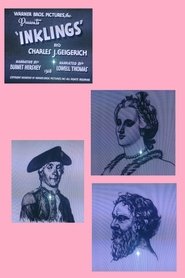
An animator is in the process of creating a series of three drawings of prominent historical figures. As the animator goes about his drawings, a narrator tells some stories about the historical figure in question. The drawings come to life as the narrator tells some anecdotes about the historical figure. As each drawing nears its completion and as the story about that figure nears its end, it becomes more and more apparent who the historical figure in question is.
We have detected that you are using an ad blocker. In order to view this page please disable your ad blocker or whitelist this site from your ad blocker. Thanks!