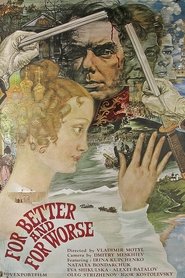
An animator is in the process of creating a series of three drawings of prominent historical figures. As the animator goes about his drawings, a narrator tells some stories about the historical figure in question. The drawings come to life as the narrator tells some anecdotes about the historical figure. As each drawing nears its completion and as the story about that figure nears its end, it becomes more and more apparent who the historical figure in question is.
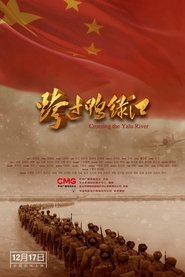
"Crossing the Yalu River" is a monumental war epic that offers a comprehensive and visually stunning portrayal of the Chinese People's Volunteer Army's involvement in the Korean War. Directed by Dong Yachun, the film is a tribute to the heroes and veterans who fought with unwavering courage and sacrifice.
The inside story of SpaceX's plan to get humanity to Mars, providing an unprecedented glimpse into one of the world's most revolutionary companies. A behind-the-scenes journey with Elon Musk and his engineers as they persevere amidst both disheartening setbacks and huge triumphs to advance the space industry faster than we ever thought possible.
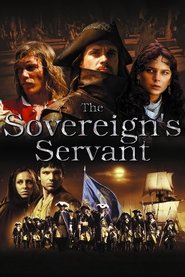
Europe, 1709. Russia and Sweden are at war. Two French duelists are exiled by King Louis XIV of France: one to the side of Czar Peter the Great of Russia, the other to the side of King Charles XII of Sweden. Although separated by war and allegiance, fate has not finished with them.
Inuk filmmaker Zacharias Kunuk (Atanarjuat: The Fast Runner) returns with this Arctic epic inspired by the classic John Ford western of the same name, about a vengeful husband who sets off in pursuit of the violent men who kidnapped his wife and destroyed his home.
Born in 1932, Keiko Kishi has been one of the first Japanese actresses known worldwide. Her decision to move to France and to marry director Yves Ciampi in 1957 – after he filmed her in Typhoon Over Nagasaki starring Jean Marais and Danielle Darrieux – caused a huge scandal in Japan. Despite this transgression, Keiko Kishi continued acting in her home country with Kon Ichikawa, Yasujiro Ozu, Masaki Kobayashi… building unique bridges between Japanese and European cultures. Free and rebellious, she emancipated herself from the many obstacles she encountered in the film industry, and created her own production company in her early twenties. Let’s look back at the story of a pioneer, an inspiration for many generations.
Captured and subjected to severe torture, Çal Hasan manages to escape from the castle where he is imprisoned after a great struggle. After receiving the sultan's orders and will, Çal Hasan sets out to complete his unfinished mission, find Genç Osman, who is on the border, and raise the Turkish flag in Estergon without becoming a sacrifice.
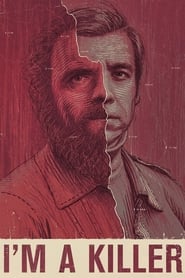
Inspired by true events from the 1970s, the story revolves around a young detective who becomes the head of a police unit focused on catching a rampant serial killer of women, nicknamed 'The Silesian Vampire'.
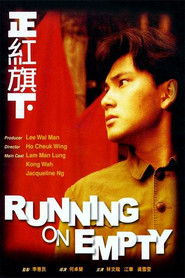
Based on a true story, and recreated from the personal account of one of the robbers, the film follows an immigrant from mainland China in 1975 as he works with a team to plan to rob an armored car carrying seven million dollars from the Hang Seng Bank in Hong Kong.
A toymaker in Poland specializes in building lifesize mechanical men. He builds a chess-playing "automaton" to hide a pretty young Polish activist who is being hunted by occupying Russian forces.
In December 1825, distinguished members of the Russian military, most of whom were quite affluent and of noble lineage, took it upon themselves to stir revolution against the autocratic and tyrannical Czar Nikolai I in the wake of his not honoring the drafting of a constitution for the Russian people. The revolution failed miserably and the conspirators (known as the Decembrists) were weeded out by the czar himself. One by one, each of the conspirators confess and are systematically exiled to the harsh winters of Siberia, slated to work and wither in a prison/mine. The wives of the conspirators are faced with the prospect of leaving the bosom of wealth and family (including their own children) to be with their husbands in the brutal Siberian locale. If they agree to this, they face having their illustrious social stations stripped away and certain disdain from everyone around them...
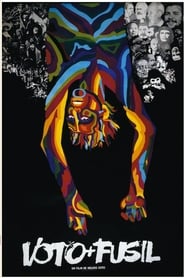
The political evolution in Chile seeing from three different times: 1937, 1947 and 1970. A film that shows how a revolution cannot be accomplished by electoral means, and how the wealthy class will always attempt to destroy that revolution, with the help of the armed forces, as soon as their privileges are threatened.
A biopic focusing on to the childhood and the early years of the military career of the founder and the first President of the Turkish Republic, Mustafa Kemal Atatürk.
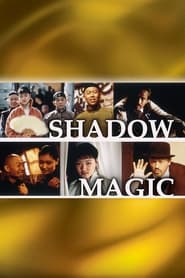
Beijing, 1902: an enterprising young portrait photographer named Liu Jinglun, keen on new technology, befriends a newly-arrived Englishman who's brought projector, camera, and Lumière-brothers' shorts to open the Shadow Magic theater. Liu's work with Wallace brings him conflict with tradition and his father's authority, complicated by his falling in love with Ling, daughter of Lord Tan, star of Beijing's traditional opera. Liu sees movies as his chance to become wealthy and worthy of Ling. When the Shadow Magic pair are invited to show the films to the Empress Dowager, things look good. But, is disaster in the script? And, can movies preserve tradition even as they bring change?
The 100-year story of the iconic restaurant chain Horn & Hardart, the inspiration for Starbucks, where generations of Americans ate and drank coffee together at communal tables. From the perspective of former customers, we watch a business climb to its peak success and then grapple with fast food in a forever changed America.
Sophia Augusta's marriage to Peter III, the Emperor of Russia, is anything but the fairy-tale life that she had been promised. In a historical tale of political intrigue, sex and murder, she takes control of her life, her marriage, and her kingdom, becoming one of Russia's most celebrated and beloved monarchs.
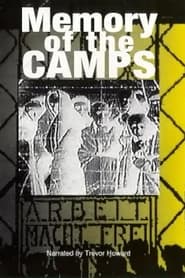
In 1945, Allied troops invaded Germany and liberated Nazi death camps. They found unspeakable horrors which still haunt the world’s conscience. A film was made by British and American film crews who were with the troops liberating the camps. It was directed in part by Alfred Hitchcock and was broadcast for the first time in its entirety on PBS FRONTLINE in 1985.
It's 1947 in Estonia. After the suicide of her friend, young student Marie starts to feel threatened by the Stalinist regime. She tries to find ways to escape across the sea, but it turns out to be more difficult than she expected.
We have detected that you are using an ad blocker. In order to view this page please disable your ad blocker or whitelist this site from your ad blocker. Thanks!