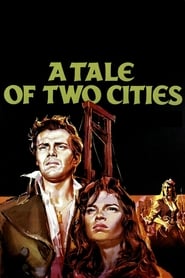
Set against the conditions leading up to the French Revolution and the Reign of Terror, French doctor Alexandre Manette serves an 18-year imprisonment in the Bastille in Paris, followed by his release to live in London with the daughter he has never met.
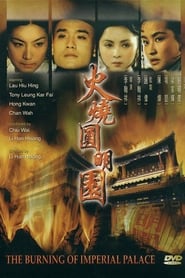
Dramatization of events from the Second Opium War which culminated in the looting and destruction of imperial estate "Yuan Ming Yuan", AKA the Old Summer Palace by invading English and French troops.
Set in the Ottoman Empire, it deals with the Caesar's (Pande) army and its skirmishes with the local Muslim rulers. The Sultan's (Asooji) son Ziyad (Kumar) is arrested by the Roman army. The Roman princess Rahil falls in love with him. A Muslim maid Leela (Sitara Devi) and the princess help him escape. Long chase scenes and fights follow, which ultimately lead to success for Ziyad and his people.
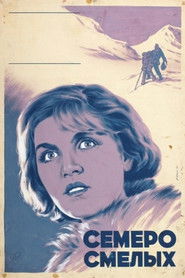
Six polar explorers arrives to a remote island in Arctic for a year-long scientific expedition. When their ship departs, they unpack only to find a young stowaway, who romanticized Arctic heroes, and tried to join them on multiple occasions finally succeeding. That's how six became seven. Life of polar explorers is tough, and full of danger. During one year they are largely isolated from the mainland, and should survive using their resourcefulness, smarts, knowledge, and existing supplies with occasional unreliable radio communications. The Seven are resilient, cheerful, they forged a true friendship. Now they are ready to face the unforgiving Arctic.
In the polarized and violent Medellín (Colombia's 'City of Eternal Spring') of the 1970s, doctor Héctor Abad Gómez is concerned about both his children and children from less favored classes. After a devastating loss in the family, Héctor gives himself to the greater cause of public health programs for the poor in Medellín to the consternation of the city's authorities.
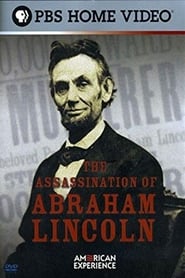
Just days after the Civil War ended, President Abraham Lincoln was assassinated at Ford's Theatre. As a fractured nation mourned, a manhunt closed in on his assassin, the twenty-six-year-old actor, John Wilkes Booth. The Assassination of Abraham Lincoln tracks the converging paths of the president and his killer, then tracks and draws connections between their last journeys, in the forms of Lincoln's funeral train route and Booth's desperate efforts to escape.
The U.S. scholarships Austrian student Inge and young mining student from Burma Sao Kya Seng fall in love. But it's only at the lavish wedding ceremony that Inge discovers her husband is the ruling prince of the Shan state of Burma. After a coup staged by the Burmese military, Sao is imprisoned. Inge does everything she can to free him. Base on the true story of Inge Sargent.
In the nine months prior to World War II, 10.000 innocent children left behind their families, their homes, their childhood, and took the journey... to Britain to escape the Nazi Holocaust.
The Mandrin Cave in the Rhône Valley is a fascinating excavation site. Archaeologist Ludovic Slimak discovered fossils and flints here, proving that Neanderthals inhabited the cave for over 80,000 years. The first Neanderthal in France for half a century was also unearthed in the cave: He was given the name Thorin.
For centuries, Stonehenge has been cloaked in mystery. Who built it? How did they do it? Why did they do it and what is its significance? Now, a team of archaeologists takes a high-tech approach to find out, and their discoveries will exceed all expectations. Learn the full story of the world's most investigated prehistoric site, featuring a forgotten people who were meticulous planners, profound believers and true warriors. It's a 10,000-year-old tale, pieced together by state-of-the-art survey equipment and compelling archaeological evidence.
During the Ming dynasty, Japan invaded China with an army equipped with guns. The union chief of the martial arts clans revealed in his deathbed that there is a rare book containing secrets that will make a person immune to gunfire. His last words sparked the clans to contend with each other to find it. Also in search of the book were the Japanese who dispatched a team of ninjas to go after the book. The imperial court also secretly intervened in this dispute. The emperor secretly dispatched a Kung fu Master and ordered him to find the book within seven days.
Two siblings lose their parents amidst turmoil in revolutionary France and are adopted by a peasant family. Once grown up, the older brother enlists in the Napoleonic Wars.
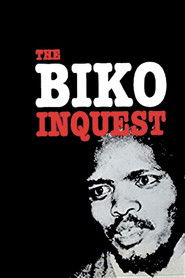
Based on the official transcripts of the investigation that followed after the very suspicious notorious death in prison of one of the most important leading men of the South African anti-apartheid movement, Steven Biko.
Pathologist Abrikosov gets a phone call that a fly has taken a refuge inside Lenin's sarcophagus. No one knows how to get rid of it. Its Mayday 1936 and Stalin himself is about to come to inspect the body prior to Mayday festivities.
Urania Cabral returns to Santo Domingo, after several years, and remembers her and her family's relationship to Rafael Trujillo, the Dominican dictator, as well as the events surrounding his assassination.
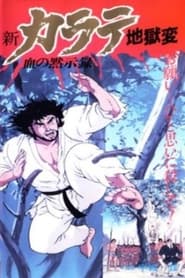
A returning veteran and karateka from WW2 starts working for the yakuza, looking for a man strong enough to kill him. After becoming a karate champion, he joins an Italian woman who is looking for revenge against the nazis who killed her family.
Told on the premise that the United States has always been a refuge from those seeking a reprieve from poverty and bigotry, this Miniature short from M-G-M is the story of a young Polish boy, unable to speak English, just arriving in New York City with hie parents. He leaves his lower east-side tenement to go play. Passing an open field he sees a sight unfamiliar to him; a group of boys playing baseball. When the boys drop their bats and gloves to hitch a ride on a passing ice-wagon, the Polish boy goes over to the baseball diamond and starts examining the baseball equipment. The boys come back and think he is about to steal their belongings but, when they learn he is a new immigrant and doesn't understand English, they invite him to play base ball with them..and he gets a base-hit his first time at bat.
The Doctor contemplates a journey to see an old acquaintance and digs a well. Released in cinemas alongside the 3D double-bill of Dark Water and Death in Heaven.
We have detected that you are using an ad blocker. In order to view this page please disable your ad blocker or whitelist this site from your ad blocker. Thanks!