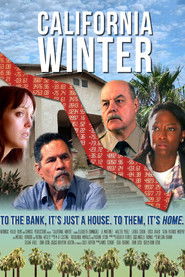
Young real estate agent Clara Morales encouraged risky loans to her clients during the housing boom. She must now rescue her father’s home from foreclosure - a consequence of the loan she advised him to take.
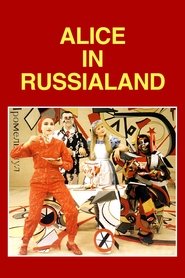
Documentary by Ken Russell that shows Alice traveling through a century of Russian's history, from the period of Tsarism, through Socialism and Glasnost. Alice's original characters embody ideological conflicts crossing politics, art and cultural movements.
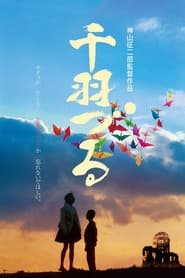
April 1954. 12 year old schoolgirl Sadako thinks her main problem is being unable to pass the baton in relay races. But just as her team starts winning, she starts getting tired more easily. She is sent back to the American Base Victory Hospital, where the diagnosis is lymphatic leukemia. And she has no more than a year left to live. Her parents agree with the doctor that Sadako should not be told, but will she find out anyway ?
1935 Los Angeles, community leader Sei Fujii uncovers the corrupt activities of his community's underground mafia. He must choose between saving the face of his deteriorating community and confronting the issues head on through his newspaper. Based on a true story.
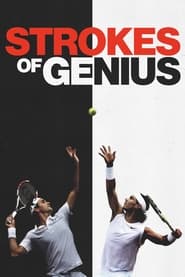
The film intertwines Roger Federer and Rafael Nadal's lives with their famed 2008 Wimbledon championship - an epic match so close and so reflective of their competitive balance that, in the end, the true winner was the sport itself.
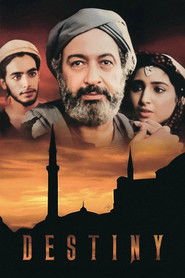
In the 12th century's Andalusia lives Ibn Rushd a prominent Islamic philosopher with his wife Zeinab and daughter Salma. The principality is ruled by Khalifa ElMansour who has two sons, ElNasser, an intellectual that likes Ibn Rush and is in love with his daughter Salma. The younger son Abdallah is more into dancing and poetry, spending most of his times with the gypsy family and getting the daughter pregnant. The Khalifa is depending on the extremists to build his army granting them more power which they use to combat artists and philosophers. The extremists succeed in recruiting Abd Allah and train him to kill his father. Events go on where Marawan, the gypsy singer, is killed and Ibn Rushd's books are burnt. Adapted from the real life of Ibn Rushd AlMasir is Chahine's statement against extremism.
Alexander, a student of the brilliant philosopher Aristotle, worshiped the god Amun which he believed to be his father. He suffered from epilepsy and was gay, when his partner died he sacrificed all 5,000 inhabitants of a village for him. Alexander's legacy was that a man could be a god, by he has many peoples, cultures and beliefs influenced his vast empire. Alexander the Great had a vision: one civilized world with him as absolute leader! An ambition which had all districts with enormous bloodshed as a result. His craving for power was so great that in our modern world has no equal! While his influence is still noticeable, we know still very little about him. Greek and English archaeologists searching for years for one of the world's greatest mysteries:. the last resting place of Alexander the Great and his golden sarcophagus Alexander The God King is a fascinating journey through time and separate the truth from the legends. The ambition of one man, the course changed our history!
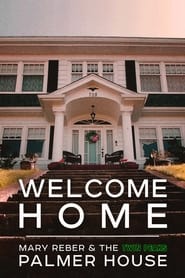
An extensive interview with Palmer house owner and one-time Twin Peaks performer Mary Reber, with newly unearthed history and information about the home, and the behind the scenes surrounding the iconic location.
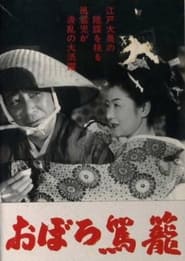
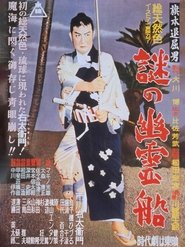
A period mystery in which an unconventional priest exposes the truth behind the bizarre death of a maid in the shogun's harem. Kinuyo Tanaka stylishly plays a constantly intoxicated geisha in this all-star entertainment film.
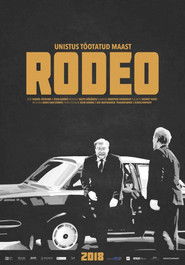
A documentary exploring the difficulties the newly-independent Estonia faced in the early 1990s after emerging from decades of Soviet rule. The film focuses especially on then-32-year-old and inexperienced Mart Laar, who became country's prime minister while there still were tens of thousands of Soviet soldiers in the country.
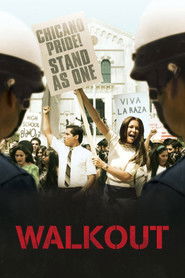
Walkout is the true story of a young Mexican American high school teacher, Sal Castro. He mentors a group of students in East Los Angeles, when the students decide to stage a peaceful walkout to protest the injustices of the public school system. Set against the background of the civil rights movement of 1968, it is a story of courage and the fight for justice and empowerment.
A group of German boys is ordered to protect a small bridge in their home village during the waning months of the second world war. Truckloads of defeated, cynical Wehrmacht soldiers flee the approaching American troops, but the boys, full of enthusiasm for the "blood and honor" Nazi ideology, stay to defend the useless bridge.
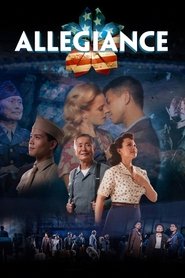
Inspired by the true-life experience of its star George Takei, Allegiance follows one family's extraordinary journey in this untold American story following the events of Pearl Harbor. Their loyalty was questioned, their freedom taken away, but their spirit could never be broken.
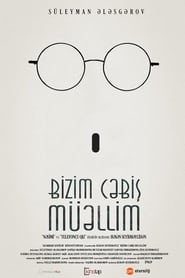
Events are happening in WW2. Jabish is a teacher at primary school. His complaining wife drives him mad about not bribing. Then she makes him to cook a soap for making the money. Also other processes are shown in the course of the war.
We have detected that you are using an ad blocker. In order to view this page please disable your ad blocker or whitelist this site from your ad blocker. Thanks!