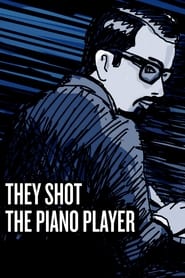
New York, 2010. Jeff Harris, a music journalist, sets out to uncover the truth about Francisco Tenório Júnior, a young Brazilian samba-jazz pianist who disappeared in Buenos Aires on March 18, 1976.
Between 1930 and 1945, Eastern Europe experienced mass violence on an unprecedented scale. Hitler and Stalin exploited the vast region for their respective expansionist plans. It is estimated that around 14 million civilians were murdered—primarily Jews, Poles, Balts, Belarusians, and Ukrainians.
Historical biographical religious drama film based on the memoirs of Ignatius of Loyola, founder of the Jesuit order who was also canonized as a saint in Roman Catholicism.
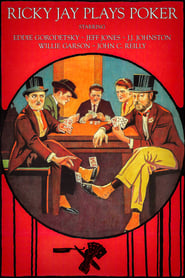
This is the companion video to Ricky Jay's selection of poker tunes entitled "Ricky Jay plays poker." It features John C. Riley and other famous people, sitting around a table headed by the incomparable Mr. Jay, discussing poker, sleight of hand, and proposition bets.
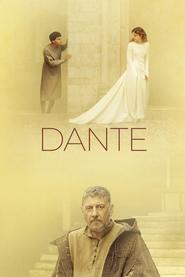
The tormented life of Dante Alighieri, from solitary childhood to death in exile, seen through Giovanni Boccaccio’s journey to rehabilitate his memory.
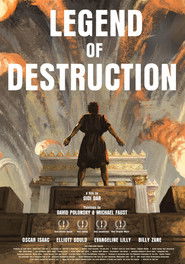
What had initially started out as a Jewish revolt against the Roman occupation, quickly turned into a fierce civil war. The combination of religious messianic zeal and the friction between social classes proved disastrous and resulted in the destruction of Jerusalem and the Holy Temple.
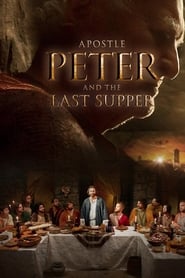
The film portrays Saint Peter reflecting on his time with Jesus and his fellow Apostles during his final imprisonment in Rome. In particular, Peter attempts to convert one of his jailers, Martinian, by relating the life, teachings, and sacrifice of Jesus.
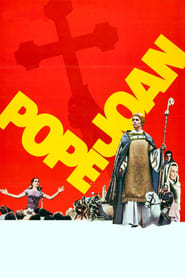
Based on the medieval legend of Pope Joan, who was made Pope for a brief period around 855 A.D. The movie presents her existence as fact, though it is questionable that Pope Joan really did exist, and portrays her relationships with other notables of the time.
Biopic about American stunt performer and entertainer Evel Knievel, best known for his motorcycle jumps (and bad temper). The story is set in a single year, 1974, and tackles Knievel’s ambitious planning to jump across Idaho’s Snake River on his motorcycle.
Aspiring actress Eva Duarte rises from a minor celebrity to the wife of a powerful Argentine dictator, but her all consuming fiery rage, ambition, and hatred eventually become her downfall.
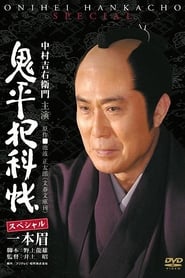
Heizo "The Demon" investigates the shop of Toshimaya the swordsmith, where 280 ryo was stolen and twelve people murdered. This particular group of theives are most dangerous because of the willingness to kill for money, but what about this mysterious unibrow, who is he? What is he up to?
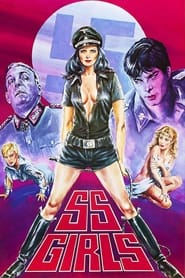
Top Nazi officials, intent on rooting out traitors and those in the military who may be plotting to overthrow Adolf Hitler, recruit and train a group of beautiful prostitutes whose mission is to use any means necessary to uncover plots against the Fuhrer.
Brussels, Belgium, 1959. Michel and Charly Kichka, two Jewish brothers, enjoy a happy childhood with their parents and their two sisters. Henri, their discreet and usually silent father, does not speak at all about his past, so they imagine that as a young man he was an adventurer, a pirate or a treasure hunter.
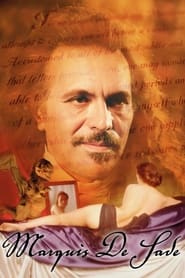
Based on the true story of the notorious Marquis de Sade. In 18th century Paris, an innocent beauty's search for her missing sister leads her into the deadly sensuous realm of the infamous Marquis de Sade. Imprisoned for his sordid crimes, the Marquis likewise has the beauty morally trapped... for she must help him complete his banned book of lust, or never learn the fate of her sister. It becomes a test of wills and wit, as the Marquis attempts to convert her to his deviously sexual philosophy. When the Marquis escapes his prison, she must follow him to his remote chateau of sin to finally discover her sister's fate, and to face her own.
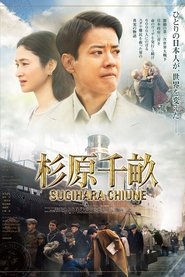
The story of a Japanese diplomat, sometimes called the Schindler of Japan, and his life lading up to and after his decision to issue over 2,000 visas to Jewish refugees in Kaunas, Lithuania resulting in saving the lives of over 6,000 people. This is the story of a man who believed in doing all he could do for the benefit of his beloved Japan, including trying to keep her from becoming embroiled in a worldwide conflict he saw as inevitable. Along the way, he came face to face with the plight of the European Jews as they tried to escape the onslaught of the Nazi's and the rapidly advancing German army. Caught between the unbending policies of his country now bound by treaty with Nazi Germany and his awakening moral responsibilities, we follow his life from his early days in Manchuria to his eventual posting in Lithuania and his appointment with destiny which would forever brand him a hero.
Experimental movie, where a man comes home and experiences LSD. His kaleidoscopic visions follow, with readings inspired by the Tibethan Book of the Dead.
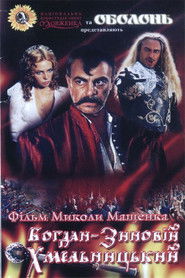
Film tells the story of one of the most difficult and tragic moments of the liberation war of Ukrainian people against the rule of Poland (1648 - 1657 years) - Battle of Zbarazh.
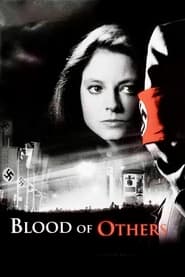
In the German-occupied Paris, Helene is torn between the love for her boyfriend Jean, working for the resistance and the German administrator Bergmann, who will do anything to gain her affection.
We have detected that you are using an ad blocker. In order to view this page please disable your ad blocker or whitelist this site from your ad blocker. Thanks!