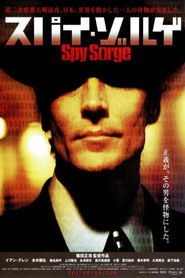
A foreign spy using the Sorge alias is assigned to Tokyo the capital of Japan just prior to the outbreak of World War II and in the midst of the Japanese imperial ambitions in Eastern Asia. The spy becomes acquainted with a sympathetic communist who like he is attached to the ideals of freedom and rule of the masses. Sorge is able to feed the Soviet Union useful information regarding the Axis allies and their movements in Asia and beyond.
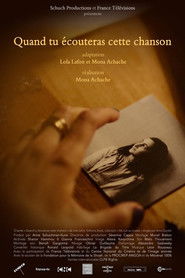
In August 2021, writer Lola Lafon spent a night alone in the Annex of the Anne Frank Museum, where the young girl and her family hid from 1942 to 1944. This experience gave rise to a book, Quand tu écouteras cette chanson, and now its documentary adaptation. Over the course of a night, the author revisits her story. An inner journey around the figure of Anne Frank and the power of writing in the face of oblivion.
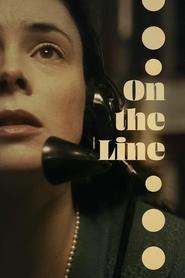
Alderney, Channel Islands. 1964. A telephone operator ends up being the pivotal piece of a drama unfurling which puts professional integrity, and relationships, to the test.
Set in the first century in India, a prince is troubled by visions and a desire to master the ways of Buddha. After his father dies, he forsakes the throne to become a monk and, after studying Buddhism for sixty years, travels to China to preach Zen and teaches the Shaolin monks the exercises that become the foundation of
Stuttgart, 1942: Nazis have cleared Jewish communities from towns and Villages. Two German-born Jewish children flee Nazis who have killed their family, escorted by Gisella, part of the Lebensborn, an SS Master Race program.
In the late 19th-century, the Tippel family moves to rural Stavoren in search of greener pastures. However, their dreams are quickly shattered, as teenage Katie is terrorized by a male-dominated society who only see her as an object. Her situation worsens when, following her father's sacking and her elder sister's descent into alcoholism, her mother decides that, rather than starving, Katie becomes a prostitute.
First feature-length documentary about the Archangel Michael in the annals of cinema, with large ensemble cast and multiple story lines in five languages. Filmed on location in eight countries.
On July 14, 1789, a mob of angry Parisians stormed the Bastille and seized the King's military stores. A decade of idealism, war, murder, and carnage followed, bringing about the end of feudalism and the rise of equality and a new world order. The French Revolution is a definitive feature-length documentary that encapsulates this heady (and often headless) period in Western civilization. With dramatic reenactments, illustrations, and paintings from the era, plus revealing accounts from journals and expert commentary from historians, The French Revolution vividly unfurls in a maelstrom of violence, discontent, and fundamental change. King Louis XVI, Marie Antoinette, Maximilien Robespierre, and Napoleon Bonaparte lead a cast of thousands in this essential program from THE HISTORY CHANNEL®. Narrated by Edward Herrmann (The Aviator, Gilmore Girls), The French Revolution explores the legacy that--now more than ever--stands as both a warning and a guidepost to a new millennium
The story revolves around the relationship of Italian immigrants and Argentines. Nostalgia for his country of origin and life in a strange country. It is a call for the union of immigrants that evokes sentimentality. The film conveys the sensation of the musician, whom an Italian immigrant listens to, and feels "understood and unconditionally loved"
In June 1808, Napoleon's troops invade Spain. A boy named Isidro will beat his drum in the mountains of El Bruc, making the French army believe that thousands of armed men are waiting to confront them.
Furuta Oribe is ordered to become tea master under Toyotomi Hideyoshi after his teacher Sen no Rikyū, the former tea master, was ordered to commit suicide. Princess Goh, daughter of the lord but adopted by Hideyoshi, is outraged when Rikyū's severed head is thrown in the Nijo River. She sends Usu, Oribe's servant, to retrieve the head and deliver it to Rikyū's adopted daughter.
We have detected that you are using an ad blocker. In order to view this page please disable your ad blocker or whitelist this site from your ad blocker. Thanks!