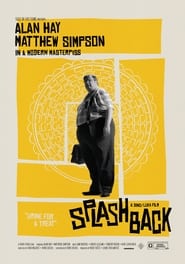
In the midst of one of the most significant moments in human history - the Moon landing - a guy working at a NASA warehouse has his own little passion project: the invention of the first urinal net.
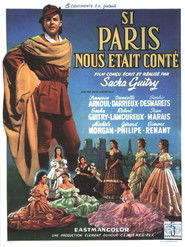
Historical film directed and written by Sacha Guitry follows the the history of Paris from its founding through the significant events in the city's history.
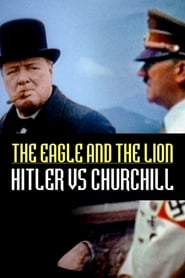
Winston Churchill, one of the most revered men of the twentieth century. Adolf Hitler, one of the most hated leaders in contemporary history. Between 1940 and 1945, these two enormously contradictory personalities faced each other in both politics and war. A clash of giants whose story begins in the trenches of the World War I and ends with the debacle of the World War II.
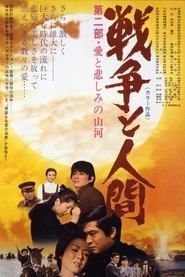
Second part of an epic drama of war and its effects upon human beings, follows the fortunes of the Godai family from 1935 through Japan's invasion of China. Based on the novels by Jumpei Gomikawa, who also penned The Human Condition.
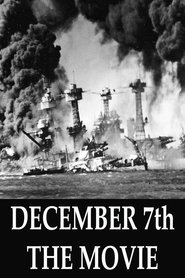
"Docudrama" about the bombing of Pearl Harbor on December 7th, 1941 and its results, the recovering of the ships, the improving of defense in Hawaii and the US efforts to beat back the Japanese reinforcements.
Starting in 1913 movie director Connors discovers singer Molly Adair. As she becomes a star she marries an actor, so Connors fires them. She asks for him as director of her next film. Many silent stars shown making the transition to sound.
Fernando, a journalist, and his friend César join terrorist group MR8 in order to fight Brazilian dictatorial regime during the late sixties. César, however, is wounded and captured during a bank hold up. Fernando then decides to kidnap the American ambassador in Brazil and ask for the release of fifteen political prisoners in exchange for his life.
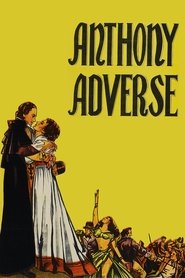
Based on the novel by Hervey Allen, this expansive drama follows the many adventures of the eponymous hero, Anthony Adverse. Abandoned at a convent by his heartless nobleman father, Don Luis, Anthony is later mentored by his kind grandfather, John Bonnyfeather, and falls for the beautiful Angela Giuseppe. When circumstances separate Anthony and Angela and he embarks on a long journey, he must find his way back to her, no matter what the cost.
This 1981 NFU film is a tour of the contemporary world of Aotearoa’s tangata whenua. It won headlines over claims that its portrayal of Māori had been sanitised for overseas viewers. Debate and a recut ensued. Writer Witi Ihimaera felt that mentions of contentious issues (Bastion Point, the land march) in his original script were ignored or elided in the final film, and withdrew from the project. He later told journalists that the controversy showed that educated members of minority groups were no longer prepared to let the majority interpret the minority view.
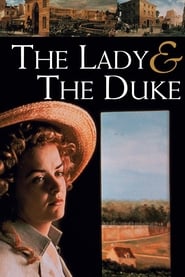
Grace Dalrymple Elliot is a British aristocrat trapped in Paris during the French Revolution. Determined to maintain her stiff upper lip and pampered life despite the upheaval, Grace continues her friendship with the Duke of Orléans while risking her life and liberty to protect a fugitive.
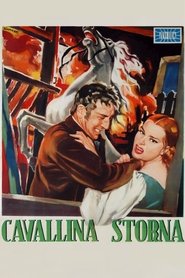
Ruggero Pascoli, the father of poet Giovanni Pascoli, is killed by a corrupt officer. His body is brought back home by a mare that will, several years later, reveal the one responsible for the murder.
In the year 2000, Nevenka Fernández, 24 years old, Councilor for Finance in the Ponferrada City Council, suffered relentless persecution, both sentimental and professional, by the mayor, a man accustomed to doing his will politically and personally. She never decides to report, although she knows that she will have to pay a very high price: her environment does not support her, the society of Ponferrada turns its back on her and the media subjects her to a public trial. A story inspired by real events that turns its protagonist into a pioneer by taking an influential and popular politician to court for sexual and workplace harassment for the first time.
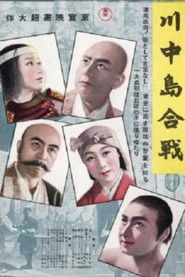
This epic depicts the battle between Uesugi Kenshin and Takeda Shingen. The focus of the story is the struggle by the unit leader in charge of the main supply wagons and the supply troops to transport materiel to the Uesugi army. To this are added episodes involving an itinerant woman.
In 1458, five years after the fall of Constantinople to the Turk, eighteen cardinals meet to elect a new pope. Rodrigo Borgia, a 27 year old cardinal learns to play a very dangerous game.
A story of forbidden love. An LGBTQ drama set in Ancient Rome. Arena tells the incredible true story of adopted son of one of Rome's cruelest emperors who must choose between his life as the future ruler of the Ancient world or a love and friendship once forcefully forgotten.
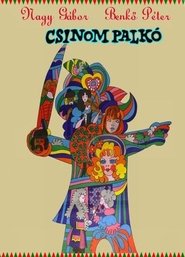
The musical adventure film goes back to the early eighteenth century, the times of the battles between the Hungarian insurrectionists and the pro-Austrians. Palkó and Jankó are about to join the insurrectionist army when they clash with a pro-Austrian troop. Jankó is captured and put in Count Koháry's prison.
We have detected that you are using an ad blocker. In order to view this page please disable your ad blocker or whitelist this site from your ad blocker. Thanks!