Brings to life the diaries of young people who witnessed first-hand the horrors of the Holocaust. Through an emotional montage of archival footage, personal photos, and text from the diaries themselves, the film celebrates a group of brave, young writers who refused to quietly disappear.
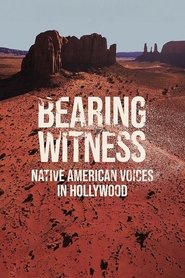
For over 100 years, Hollywood cinema has crafted the ultimate "villain"- the Indian, as they were labeled in early Westerns. Confined almost exclusively to this genre, the Western became a vehicle for American racism, obscuring the genocide upon which the United States was built. In this documentary, only Native Americans are given a voice to share their story, one that has been overshadowed by Hollywood's portrayal. Their narrative, part of the larger American story, highlights how cinema has long been used as a powerful propaganda tool, distorting history and perpetuating harmful stereotypes.
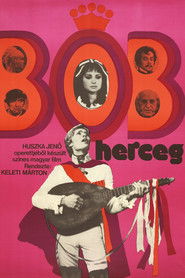
George, Prince of Wales mingles with the crowd in Bowie Street in disguise under the pseudonym Bob. He falls in love with the poor Uncle Tom's daughter, Annie. But to save his business, the indebted Uncle Tom promised her to the usurer Plumpudding.
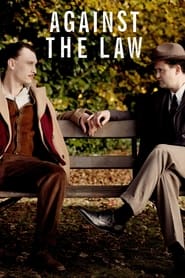
United Kingdom, March 24, 1954. Ten years before the decriminalization of homosexuality, journalist Peter Wildeblood and his friends Lord Montagu and Michael Pitt-Rivers are convicted and imprisoned for indecency and sodomy.
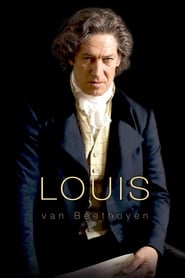
1779. Eight-year-old Ludwig van Beethoven, called "Louis", is already known as a musical prodigy. He learns to go his own way - much to the dismay of the people around him. Some years later, he meets Mozart during times of political upheaval. The unconventional genius and French Revolution are sparking a fire in Louis' heart; he doesn't want to serve a master - only the arts. Facing times of family tragedies and unrequited love, he almost gives up. However, Louis makes it to Vienna to study under Haydn in 1792, and the rest is history. Who was this man, whose music has since touched countless hearts and minds? At the end of his life, the master is isolated by loss of loved ones and hearing. Surely though, he was way ahead of his times.
Biography of the famous saint of Portuguese origin recalled from the readings of a young boy who one day goes to church with his mother to pray for the return of his father, who is missing in action.
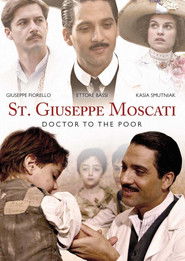
Giuseppe Moscati, Doctor saint of Naples, was a doctor of the early twentieth century, from an aristocratic family devoted his career to serving the poor. The film focuses on the human side, partially leaving aside the spiritual part.
Coexist tells the emotional stories of women who survived the Rwandan genocide in 1994. They continue to cope with the loss of their families as the killers who created this trauma return from jail back to the villages where they once lived. Faced with these perpetrators on a daily basis, the victims must decide whether they can forgive them or not. Their decisions are unfathomable to many, and speak to a humanity that has survived the worst violence imaginable.
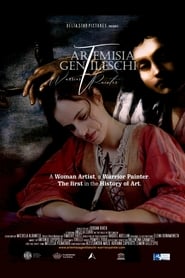
An account of the life of the Italian painter Artemisia Gentileschi (1593-1653), the first female artist to get international acclaim, recognized as a modern icon, due to her personality and her unyielding defense of her professional integrity.
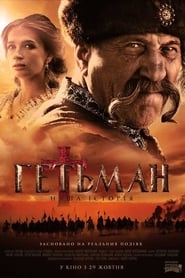
Artistic portrayal of the difficult personality of Bohdan Khmelnytsky and his dramatic life against the backdrop of National-liberation war in the mid-17th century and the Cossack state building. The main storyline shows Khmelnytsky not only as hetman and commander, but reveals his private life and his complicated relations with his beloved woman.
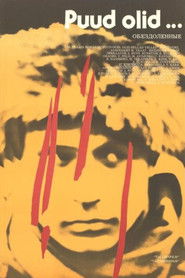
Typhus has killed the father, mother and older son of Palanumäe farm. Hind, younger son, realizes that he won't be able to manage the shabby farm alone. Paabu, the wife of older son, is good at housework and Hind likes her; however, more help than that is needed for maintaining the farm. Jaak, the farmhand, does more harm than good. The rumour is around that when converting to orthodoxy one will lead better life in a warm country - this, of course, attracts Hind, but angers the estate owners. How come this young inexperienced man wants something else than serving the Livonian feudals?
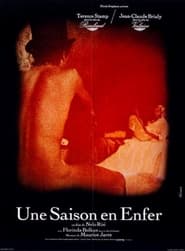
The tumultuous life of Arthur Rimbaud, the cursed poet, who completed his masterwork at the age of twenty, became an arms dealer and died at thirty-seven; and his passionate relationship with Paul Verlaine, full of wanderings, storms and falling out.
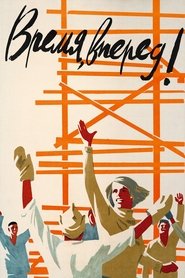
The film is set in the 1930s in the USSR. The film tells about one day of the construction of the Magnitogorsk Iron and Steel Works. The heroes of the film are simple construction workers who are burning at work. Upon learning that their colleagues in Kharkov have set a record, they mobilize to break it. The entire construction site was engulfed in immense socialist competition. The teams are ready to complete the work on time at any cost. A Moscow journalist who has come to cover the scale of the great construction project is looking for the hero of his report...
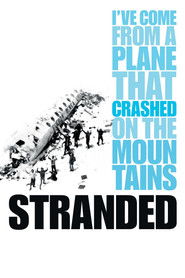
The story, told by the survivors, of a group of young men, members of a Uruguayan rugby team, who managed to survive for 72 days, at an altitude of almost 4,000 meters, in the heart of the Andes Mountains, after their plane, en route to Chile, crashed there on October 13, 1972.
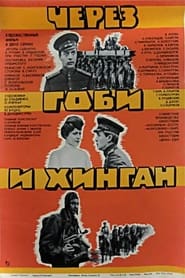
About the events of the final stage of the Second World War — the defeat by Soviet and Mongolian troops of the selected Kwantung army. Bacteriological weapons were created in the laboratory of Japanese General Ishii Shiro. Experiments were conducted on prisoners of war and political prisoners. Epidemiologist Dmitry Sokolov was assigned to solve the mystery of this laboratory. At the cost of his own life, he completed the task. The march of Soviet and Mongolian formations through the Gobi sands and the Khingan spurs was not only a brilliant military operation, but also a warning of the use of bacteriological weapons by Japan.
We live at a moment in time when the Israeli-Palestinian conflict, now more than a century old, continues to be of overwhelming international political and societal importance. From its inception, that conflict has also, of course, had powerful and deeply troubling consequences for Israelis and Palestinians themselves. The story at its most basic level is one that involves two peoples struggling for national recognition and expression in a small but richly significant piece of land. The tragedy of this history, as both the Israeli novelist, Amos Oz, and the Palestinian scholar, Sari Nusseibeh, have each pointed out, stems from a conflict between the rights of two peoples with equal and legitimate aspirations to nationhood and self-expression in a single small territory to which they can both lay claim.
The troubled story of the Churruca family, a noble lineage of brave seamen, descendants of Cosme Damián Churruca, the Spanish hero of the Battle of Trafalgar; from the Spanish-American War (1898) to the end of the Spanish Civil War (1936-39). (In 1950, a new cut of the film was released with less ideological depth and ten minutes shorter.)
We have detected that you are using an ad blocker. In order to view this page please disable your ad blocker or whitelist this site from your ad blocker. Thanks!