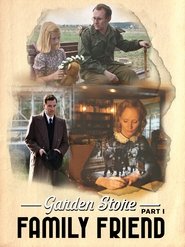
Cultural mistrust and false accusations doom a friendship in British colonial India between an Indian doctor, an Englishwoman engaged to marry a city magistrate, and an English educator.
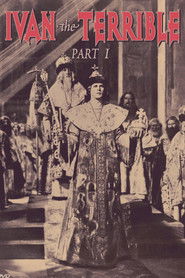
Set during the early part of his reign, Ivan faces betrayal from the aristocracy and even his closest friends as he seeks to unite the Russian people. Sergei Eisenstein's final film, this is the first part of a three-part biopic of Tsar Ivan IV of Russia, which was never completed due to the producer's dissatisfaction with Eisenstein's attempts to use forbidden experimental filming techniques and excessive cost overruns. The second part was completed but not released for a decade after Eisenstein's death and a change of heart in the USSR government toward his work; the third part was only in its earliest stage of filming when shooting was stopped altogether.
The mother of a feudal lord's only heir is kidnapped away from her husband by the lord. The husband and his samurai father must decide whether to accept the unjust decision, or risk death to get her back.
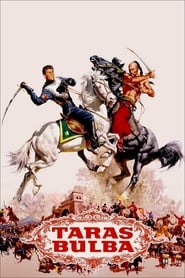
Ukraine, 16th century. While the Poles dominate the Cossack steppes, Andrei, son of Taras Bulba, a Cossack leader, must choose between his love for his family and his folk and his passion for a Polish woman.
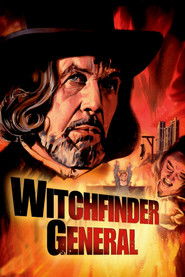
England, 1645. The cruel civil war between Royalists and Parliamentarians that is ravaging the country causes an era of chaos and legal arbitrariness that allows unscrupulous men to profit by exploiting the absurd superstitions of the peasants; like Matthew Hopkins, a monster disguised as a man who wanders from town to town offering his services as a witch hunter.
When Mari Gilbert's daughter disappears, police inaction drives her own investigation into the gated Long Island community where Shannan was last seen. Her search brings attention to over a dozen murdered prostitutes.
Love & Sex under Nazi Occupation questions the burning mystery of intimate heterosexual and homosexual relations in times of war... and shows how being close to death reinforces the yearning for passion, for pleasure, for transgression, for desire as a last burst of freedom, as an ultimate call to life. Nearly two hundred thousands children are thought to be born of the union of French women with German soldiers. Women weren't the Germans' only conquests; indeed, occupied Paris swarms with all kinds of homosexuals—from Genet to Cocteau—who treated with the occupier. The fate of those women who were shaved at the end of the war for fraternizing with Germans is the punishment of a France that lied down and slept with the enemy.
Once upon a time, a poor woodcutter and his wife lived in a great forest. Cold, hunger, poverty, and a war raging all around them meant their lives were very hard. One day, the woodcutter's wife rescues a baby. A baby girl thrown from one of the many trains that constantly pass through the forest. This baby, this "most precious of cargoes", will transform the lives of the poor woodcutter's wife and her husband, as well as those whose paths the child will cross—including the man who threw her from the train. And some will try to protect her, whatever the cost. Their story will reveal the worst and the best in the hearts of men.
Activist Bayard Rustin faces racism and homophobia as he helps change the course of Civil Rights history by orchestrating the 1963 March on Washington.
Sharpe, with his new commanding officer, is sent to capture a castle when news comes of locals who will rise against Bonaparte. However, he is somewhat distracted by thoughts of his wife whom he was forced to leave while stricken with fever.
Inspired by the real life rescue of over 300 British soldiers in 1942, Dongji Rescue is a rousing, action-packed story of heroism on the high seas. When the Japanese warship Lisbon Maru is torpedoed off the coast of Dongji Island, the lives of over 300 British POWs on board are at risk of being claimed by the sea. Their only hope is a small group of defiant Chinese fisherman who will do anything to rescue and protect them from their captors.
Louis XI of France drafts Paris's popular "king" of criminals as Provost Marshal in his fight against usurper Charles of Burgundy and the traitorous nobles who rally around him.
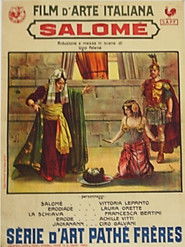
Based on Oscar Wilde's version of the story, what is noteworthy is the sheer luxury of the production, an attempt to capture the wild and weird Aubrey Beardsley illustrations that transfigure the work. The sets are elaborate, with stonework and palm trees and draperies. There seem to be dozens of dress extras, courtiers at Salome's dance and soldiers.
In the summer of 2014, a World War II veteran sneaks out of his care home to attend the 70th anniversary commemoration of the D-Day landings in Normandy.
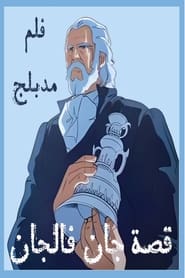
In 19th century France, an escaped convict seeks redemption while caring for a young woman whose mother he once protected, and aligning himself with a band of student revolutionaries.
We have detected that you are using an ad blocker. In order to view this page please disable your ad blocker or whitelist this site from your ad blocker. Thanks!