As a result of the Holocaust and later, AIDS, the male homosexual community has sustained bitter losses and, according to Praunheim, lesbian women have now placed themselves at the head of the so-called queer movement. The female protagonists in the film represent two different generations; they also incorporate the past and present status of homosexuals in society.
In this evocative, atmospheric biography, Roberto Rossellini brings to life philosopher and mathematician Blaise Pascal, who, amid religious persecution and ignorance, believed in a harmony between God and science.
Zeitgeist: Addendum premiered at the 5th Annual Artivist Film Festival. Director Peter Joseph stated: "The failure of our world to resolve the issues of war, poverty, and corruption, rests within a gross ignorance about what guides human behavior to begin with. It address the true source of the instability in our society, while offering the only fundamental, long-term solution."
A tale of a young impoverished nobleman, who with his uncle returns from a war against the order of the Teutonic Knights in Lithuania. He falls in love with a beautiful woman and pledges an oath to bring her "three trophies" from the Teutonic Knights.
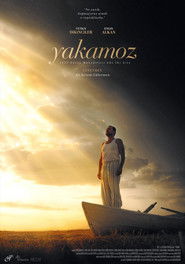
An exchanged Turkish fisherman finds himself in the middle of Anatolia. While starting a new life here, he will share their home with the Greek family for a while.
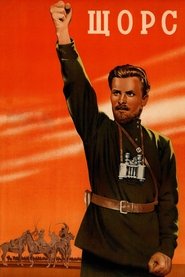
Cheered up by the revolutionary zeal, courage and energy of their leader, Nikolai Alexandrovitch Shchors, in 1919 the peasants and workers' groups gathered in the civil war- devastated Ukraine, to defeat the foreign conquerors and enemies of the revolution. However, it does not take long until a new danger threatens: this time the Polish Pans enter Ukraine, and General Dragomirov marches to Kiev. Shchors, however, gathers the revolutionary forces of the country and brings them to a victorious counter-attack.
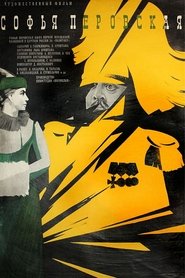
Douglas is a foreign entrepreneur, who ventures to Russia in 1885 with dreams of selling a new, experimental steam-driven timber harvester in the wilds of Siberia. Jane is his assistant. On her travels, she meets two men who would change her life forever: a handsome young cadet Andrej Tolstoy with whom she shares a fondness for opera, and the powerful General Radlov who is entranced by her beauty and wants to marry her.
An analysis of what the role of the Chief of Staff is in his position at the service of the President of the United States of America and how it has been in the past: a in-depth look, through the corridors of White House, at the internal affairs of nine presidential administrations.
The Nomad is a historical epic set in 18th-century Kazakhstan. The film is a fictionalised account of the youth and coming-of-age of Ablai Khan, as he grows and fights to defend the fortress at Hazrat-e Turkestan from Dzungar invaders.
Green Flake, a southern slave, joins Church of Jesus Christ of Latter Day Saints as a child. Later on in his life he is sent to pave the way to what is now the Salt Lake Valley and his faith sustains him.
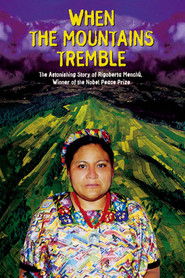
A documentary on the war between the Guatemalan military and the Mayan population, with first hand accounts by Nobel Peace Prize winner Rigoberta Menchú.
Fact-based war drama about an American battalion of over 500 men which gets trapped behind enemy lines in the Argonne Forest in October 1918 France during the closing weeks of World War I.
During the warring period of the three kingdoms, ancient China is in turmoil. To unify the country, general Cao Cao, the real power behind the Emperor, enlists the aid of the greatest warrior in the land, Guan Yu. However, Guan Yu is a loyal friend of Cao Cao's enemy Liu Bei so to persuade the peerless warrior to fight, Cao Cao takes his beloved Qi Lan hostage. After leading Cao Cao's forces to victory Guan Yu sets out with Qi Lan to rejoin Liu Bei. Now Cao Cao has deemed him too great a threat to live, and on the journey he must face all the forces at the Emperor's command sent to destroy him.
“Marilyn vs. Marilyn” tells the story of a little-known period of Marilyn’s life – the years she spent in New York, trying to became a ‘serious”’ actress, taking lessons with Lee Strasberg and setting up a production company with her photographer and trusted friend, Milton Green. Based on hitherto unpublished – and magical - photos from the Greene archives, the film focuses on the photographic image of a woman who remains one of the greatest legends in the history of cinema… and an enduring enigma.
Set during Japan's Shogun era, this film looks at life in a samurai compound where young warriors are trained in swordfighting. A number of interpersonal conflicts are brewing in the training room, all centering around a handsome young samurai named Sozaburo Kano. The school's stern master can choose to intervene, or to let Kano decide his own path.
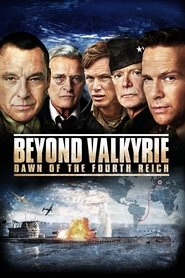
An intense thriller from the frontlines of World War II. As Operation Valkyrie prepares to assassinate Adolph Hitler, an Allied special ops team prepares to extract the man destined to lead post-war Germany. But after Valkyrie fails, everything changes. Now, unlikely allies must work together to stop a group of Nazi Officers from fleeing to Argentina and establishing the Fourth Reich.
We have detected that you are using an ad blocker. In order to view this page please disable your ad blocker or whitelist this site from your ad blocker. Thanks!