March 1945. The Japanese army launches a sudden and extremely brutal assault against the French garrisons in the Far East. Thousands of civilians and soldiers were executed. Hunted by the Japanese enemy, a column of legionnaires already weakened by alcohol and disease decides to enter the jungle to try to reach China and the allied bases.
The true story of the rise to power and brutal assassination of the formerly vilified and later redeemed leader of the independent Congo, Patrice Lumumba. Using newly discovered historical evidence, Haitian-born and later Congo-raised writer and director Raoul Peck renders an emotional and tautly woven account of the mail clerk and beer salesman with a flair for oratory and an uncompromising belief in the capacity of his homeland to build a prosperous nation independent of its former Belgian overlords. Lumumba emerges here as the heroic sacrificial lamb dubiously portrayed by the international media and led to slaughter by commercial and political interests in Belgium, the United States, the international community, and Lumumba's own administration; a true story of political intrigue and murder where political entities, captains of commerce, and the military dovetail in their quest for economic and political hegemony.
After a botched robbery results in the brutal murder of a rural family, two drifters elude police, in the end coming to terms with their own mortality and the repercussions of their vile atrocity.
In 1849, the liberation war against the Habsburg Empire is close to its end in Hungary. Having hidden from military draft, Barnabás leaves his hometown and walks across the country to find and save his wounded brother who has been hiding with a guerilla group deep in the forest. Despite their exhaustion, lack of food or information, they are still fighting for their cause. Barnabás finds his brother alienated and distrustful. The tension between the boys further increases when they turn out to be attracted to the same nurse in the camp. Hoping he can earn his brother's trust and take him home, Barnabás decides to stay and lie about his past. In the meantime, he has to face the cruelty of war.
Doctor John Manangsang has to perform a caesarean section to Agustina, who had given birth nine times. Tragically, the health center and have no adequate means and personnel for this operation.
1402. Queen Margrete I has gathered the Nordic kingdoms in a union, ruled through her adopted son, Erik. But a conspiracy is in the making and Margrete finds herself in an impossible dilemma that could shatter her life's work: The Kalmar Union.
The defeated remnants of vile Ukrainian nationalists, headed by the leader of the Ukrainian liberation movement, Symon Petliura, cannot accept their historical fate and are plotting an insurrection against the Soviet regime in Ukraine. There is nothing Petliura and his cohorts would not do to win back control over Ukraine, including selling it to the highest bidder, in this case, the Polish dictator Jozef Pilsudski. A group of plotters are coordinating an insurrection in Kyiv with an attack from Poland headed by Petliura’s general Yurko Tiutiunnyk. Predictably, the invincible Red Army defeats the nationalist plotters and proves that the Soviet borders are impregnable.
Fanny is a Jewish girl in a French orphanage in 1943. When she and her friends are no longer safe from the Nazis, they try to flee to Switzerland. After their guide disappears, Fanny has to take the lead and help the other kids make it over the mountains.
Based on the true story of the Azari war hero, Satar Khan, during the time of the Constitutional Revolution. The story follows Satar and Heidar as they join another hero Bagher Khan.
A thousand years ago, one boy with a dream of becoming a great warrior is abducted with his sister and taken to a land far away from home. Thrown into a world where greed and injustice rule all, Bilal finds the courage to raise his voice and make a change. Inspired by true events, this is a story of a real hero who earned his remembrance in time and history.
For nearly a decade, Gilbert and Sullivan’s collaborations have delighted the English people. But in 1884, as a London heat wave cuts into the theater trade, their latest work, "Princess Ida", receives lukewarm press. In an effort to reconcile their creative differences and drawing inspiration from Japanese culture, they went on to create the hit opera "The Mikado", one of the duo's greatest successes.
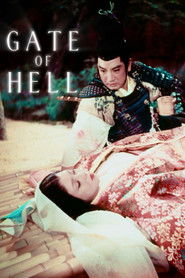
Japan, 1159. Moritō, a brave samurai, performs a heroic act by rescuing the lovely Kesa during a violent uprising. Moritō falls in love with her, but becomes distraught when he finds out that she is married.
Poland, 1945. Mathilde, a young French Red Cross doctor, is on a mission to help the war survivors. When a nun seeks for her help, she is brought to a convent where several pregnant sisters are hiding, unable to reconcile their faith with their pregnancy. Mathilde becomes their only hope.
Produced by the Army Pictorial Service, Signal Corps, with the cooperation of the Army Air Forces and the United States Navy, and released by Warner Bros. for the War Activities Committee shortly after the surrender of Japan. Follow General Douglas MacArthur and his men from their exile from the Philippines in early 1942, through the signing of the instrument of surrender on the USS Missouri on September 1, 1945. Preserved by the Academy Film Archive in 2013.
In the turbulent Joseon dynasty, army commander Min-jae watches ambitious Prince Yi Bang-won while becoming entwined with Ga-hee, a vengeful gisaeng. Fate collides as power shifts.
We have detected that you are using an ad blocker. In order to view this page please disable your ad blocker or whitelist this site from your ad blocker. Thanks!