Angela Merkel's decision in autumn 2015 to open the borders for refugees split the country - some praised the moral stance, others criticized the surrender of sovereignty. Yet what would appear to be well-planned activity is in reality a policy of muddling along, chance, trial and error. The Driven Ones is a chronicle of the refugee crisis which shows that the political actors are being driven along, crushed between self-imposed constraints and events that have spun out of control.
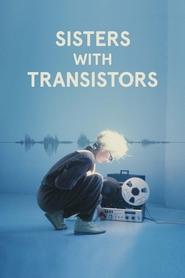
Think of early electronic music and you’ll likely see men pushing buttons, knobs, and boundaries. While electronic music is often perceived as a boys' club, the truth is that from the very beginning women have been integral in inventing the devices, techniques and tropes that would define the shape of sound for years to come.
World War II was not just the most destructive conflict in humanity, it was also the greatest theft in history: lives, families, communities, property, culture and heritage were all stolen. The story of Nazi Germany's plundering of Europe's great works of art during World War II and Allied efforts to minimize the damage.
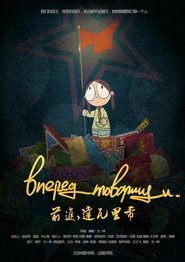
A young girl who treated her pets as comrades and liked to play with construction blocks, experiences her life changing after the dissolution of the Soviet Union.
Captain James Sutherland was a hockey pioneer who believed Kingston, Ontario could be the ‘Cooperstown’ of hockey. What he unleashed was a battle over the origins of the game and where best to honor hockey's greats. Eventually two “Halls of Fame” were established; one in the hockey metropolis of Toronto; the other in Kingston, Ontario. This is the Battle for Hockey's Hall of Fame!
Reveals an alternate history of the post-war world. This is a version of history where, in contrast to what we are all told, fascist ideology prevailed. The story of Klaus Barbie, Nazi torturer, American spy, tool of repressive right-wing regimes, is symbolic of the real relationship that the "Western" governments had with fascism and makes us see the world as it is today - and the politicians that inhabit it - in a different way.
James Brown was the jewel in the crown, but the throne of Cincinnati’s King Records always belonged to its irascible founder, Syd Nathan. This is the 70th anniversary of the legendary record label and studio. It closed shop nearly 40 years ago, in a now long-neglected warehouse on the neighborhood border of Evanston and Walnut Hills, but its impact still reverberates across today’s music.
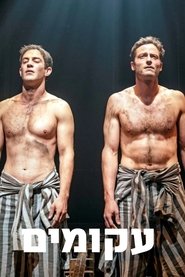
Max and Rudy are a couple living a decadent lifestyle in pre-war Berlin, enjoying the nightlife and hedonistic parties: cocaine, orgies, and drag shows. After the rise of the Nazi party to power, Max is caught and sent to a concentration camp, where gay prisoners wear the pink triangle and have a status inferior even to Jewish prisoners. Max disguises himself as a Jew and wears the yellow star, hoping that his sexual orientation will not be revealed. Within the daily oppression of the concentration camp, Max meets Horst, a fellow prisoner to whom he confesses his true identity. Soon a forbidden love develops between them.
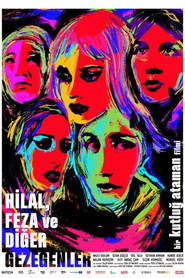
After Turkey’s february 1997 military intervention, Hilal and Fatma left their town to study at university in Istanbul. Feza lives downstairs in their lodgings, has fled as village where was cruelly bullied for being a transgender woman. Hilal chooses to help Feza and Fatma.
Set against a backdrop of a turbulent, war-torn Ireland in the early 1920s, this is a story of three people and the unfolding events from a crucial time in their extraordinary and tragic lives.
This program provides, through 1st hand accounts & contemporary films & photographs, a rare insight into what really happened. Together with meticulously researched stories, it provides a unique analysis of the Gallipoli campaign, including never-seen before interviews with the last 10 Gallipoli Anzacs, rare film footage showing the beach & trenches at Gallipoli.
Set in Burma in the year 1945, Netaji Subhash Chandra Bose plans to launch the INA to fight the British. This is also the time when Adi comes back to Burma to take care of his family business. Upon his arrival, he gets engaged to a British Tasildar’s daughter. Just as he is set to get married, the atrocities of the British keep growing and Adi is forced to fight the British.
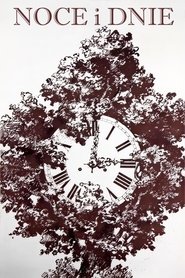
A family saga of Barbara Ostrzeńska-Niechcic and Bogumił Niechcic against the backdrop of the January Uprising of 1863 and World War I. The film is a rather straightforward and faithful adaptation of a novel by Maria Dabrowska with the same title. The plot is woven around the changing fortunes of a noble (upper-class) Niechcic family in the pre-WWI Poland. There are two main crossing threads: a social history one and an existential one.
Unless Marion Norman's intended husband can support her in the same style in which her father has, Mr. Norman will not agree to her marriage with Billy Wallace, and threatens to disinherit her if she disobeys him.
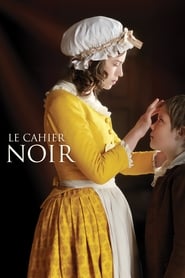
The story of the adventures, in the twilight of the eighteenth century, of a singular couple formed by a little orphan with mysterious origins and his young Italian nurse of a similarly uncertain birth. They lead us in their wake, from Rome to Paris, from Lisbon to London, from Parma to Venice. Always followed in the shadows, for obscure reasons, by a suspicious-looking Calabrian and a troubling cardinal, they make us explore the dark intrigues of the Vatican, the pangs of a fatal passion, a gruesome duel, banter at the court of Versailles and the convulsions of the French Revolution.
TAKE (te reo Maori: issue, promise, challenge) weaves mana wahine (female knowledge), dance and archival materials to retell the story of the removal of the ancestral Maori meetinghouse, Hinemihi o te Ao Tawhito, from Aotearoa, New Zealand to England in 1892. It is a call to return Hinemihi, embodied by Australian born Maori dancer and performance artist, Victoria Hunt. Set in the liminal spaces between history and emotion TAKE unfolds a story of origins, of traumatic events and colonial violence.
We have detected that you are using an ad blocker. In order to view this page please disable your ad blocker or whitelist this site from your ad blocker. Thanks!