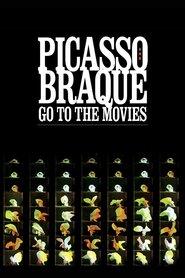
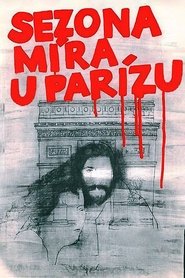
The influence that artists Pablo Picasso and George Braque had on the world of cinema is the subject of this documentary from filmmaker Arne Glimcher. A lifelong lover of film, Picasso was intrigued by the machines used to create moving pictures, as well as the images they produced. In this film, artists such as Martin Scorsese, Julian Schnabel, Chuck Close, and the late Robert Rauschenberg reveal how Picasso and Braque's shared love of film helped to create some of the greatest art of the 20th Century. ~ Jason Buchanan, Rovi
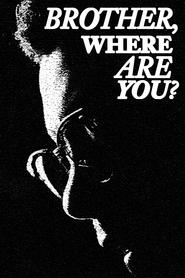
A Yugoslavian man meets a woman in Paris, where he has come to do some research, and their mutual attraction leads to a liaison and shared adventures, not many good.
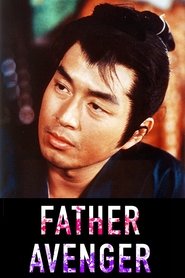
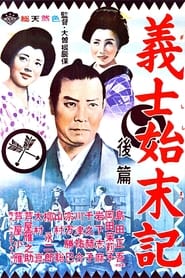
Master director Sadao Nakajima brings to life the adventures of Shohachi, a ronin (masterless samurai) searching for his father's enemy. O-Tama, the star of a light acrobatics hut in the back mountains of Asakusa, falls in love at first sight with a ronin named Shohachi who appears out of nowhere and, impressed by his skills, asks him to become the troupe's bodyguard. Shohachi, who is searching for his father's enemy Hyoto, follows the troupe on their provincial tour and finally finds him. But it seems that his enemy is quite skilled.
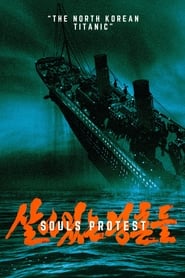
Billed as a North Korean "Titanic". On August 15, 1945, Japanese Imperialists were defeated and there echoed in Japan, too, shouts of victory of thousands of Korean people who had been drafted to Japan. They formed a repatriation autonomy to return to their dear homeland. The Japs plot to blow up their ship on the way which is overloaded with thousands of Koreans who requested repatriation; whose number in fact is twice as many as the ship's fixed capacity. Cha Myong Jin and other Koreans who are ignorant of this fact set out with great joy and hope, talking and laughing. Cha Myong Jin meets his fiance on the ship and whispers their future life. But they dream breaks out. The Japs turn the ship to the Maizuru Port under the pretext of refilling the drinking water and drive the Koreans below deck while preparing to blow up the ship.
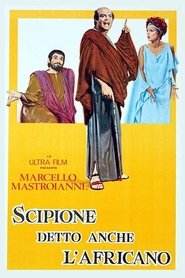
Years after the Second Punic War, Scipio Africanus finds himself generally unliked, despite his defeat of Hannibal Barca. He and his brother, Scipio Asiaticus, are accused by Marcus Porcius Cato of the theft of 500 talents intended for Rome.
In the 15th year of the Genroku era (1688), the world praised the 47 ronin who avenged the death of their master Asano Takumi-no-kami. Shogun Tsunayoshi, who ruled at that time, experienced difficulties in what punishment to impose on the soldiers. As a result, it was decided to sentence them to seppuku (ritual suicide).
Could a nineteen-year-old girl change the course of history simply by faith? From ordinary farm girl to extraordinary hero, the life of Joan of Arc was one of conviction and courage. Fifteenth-century France was devastated by an ongoing war in which women did not fight. Yet Joan heeded the counsel of angels and transformed into a military leader, something her country needed but many feared. In this BYUtv original special, discover the stalwart spirit, military prowess, and enduring influence of Joan of Arc.
A film about America’s first serial killers. These brothers terrorized Kentucky and went across the state on a killing spree. The film is loosely based on the true story of the brothers. Filmed in historically accurate locations.
Tsui Hark stars as Chinese artist and Buddhist monk Li Shutong, a.k.a. Master Hong Yi. Li travels to Japan to study Western artistic practices, and revolutionizes the teaching of art in China upon his return. Set during the turbulent era of the Russo-Japanese War circa 1905.
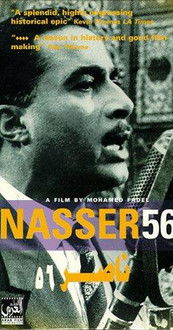
Nasser 56 is a 1996 Egyptian historical film directed by Mohamed Fadel, starring Ahmed Zaki. The film focuses on the nationalization of the Suez Canal by Egypt's second President, Gamal Abdel Nasser, and the subsequent invasion of Egypt by Israel, the United Kingdom, and France.
Mr. and Mrs. Warner Bros. Pictures and their precocious offspring, Little Miss Vitaphone, host a dinner in honor of Warner Bros. Silver Jubilee, attended by most of the major players and song writers under contract to WB at that time.
The film documents a debate about early 20th century films, mainly 1910 to 1920, from short news reels to excerpts from full-length movies. At Amsterdam's Film Museum, film directors, students, and film researchers and archivists look at the moving images and discuss their meaning, in the social and technical contexts. Moody live music was added to the edited film.
We have detected that you are using an ad blocker. In order to view this page please disable your ad blocker or whitelist this site from your ad blocker. Thanks!