THE GOSPEL OF LUKE, more than any other, fits the category of ancient biography. Luke, as "narrator" of events, sees Jesus as the "Savior" of all people, always on the side of the needy and the deprived. Narrated in the NIV by British actor Richard E. Grant and in the KJV by Sir Derek Jacobi, this epic production featuring specially constructed sets and the authentic countryside of Morocco has been critically acclaimed by leading religious scholars as a unique and highly authentic telling of the Jesus story.
As they begin their journey home from their student exchange term, Charlie Brown and the gang find themselves sidetracked. They have severe car trouble and more importantly, they pass by various monuments to World Wars I & II. With Linus guiding them through these memorials, they learn about the events of the wars and the sacrifices required of the troops who fought them.
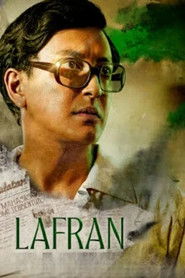
A biopic about the founder of the Himpunan Mahasiswa Islam (Islamic Student Association), Lafran Pane in building the Islamic Students Association (HMI). The national and Islamic values instilled by Lafran became the foundation for HMI in contributing to Indonesia.
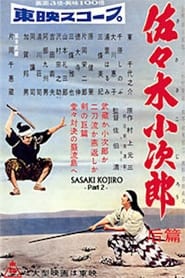
The conclusion of the story of famed swordsman, Sasaki Kojiro. After surviving a series of daring adventures, Kojiro seems to have finally discovered the ultimate happiness in life when he is reunited with Tone, the love of his life. However, his days of happiness are overshadowed by an upcoming duel with his fateful enemy Miyamoto Musashi.
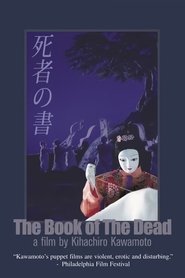
A sheltered aristocratic woman in feudal Japan, bored and unfamiliar with the world outside her estate, passes the time copying a special Buddhist sutra sent by her father who has been absent on official business for years. While gazing out her window one late afternoon, the setting sun creates a vision of a holy figure in the distant mountains.
“Who Killed Tupac?” is a six-hour limited series, focusing on the investigation, twenty years after the death of the prolific and influential rapper and actor, Tupac Shakur. Each installment of this investigative series will include aspects from the legendary artist’s life as well as follow famed civil rights attorney Benjamin Crump as he conducts a full-scale, intensive investigation into key theories behind his murder
Foxes Ken and Chin become the proud parents of cubs, Koro and Kan, who enjoy a carefree life on the northern Japanese island of Chironup. They befriend a fisherman and his wife but are forced to run for their lives when soldiers on a military exercise decide to take home some fox pelts as souvenirs. A sweet little film that obliquely symbolizes the plight of Japan's aboriginal Ainu people and the northern islands that have been contested with Russia since they were occupied by Stalin's soldiers in 1945.
Examines documents and traces of the atrocities that took place at the Auschwitz concentration camp. Years after the end of the war, expert analysis of the remnants of these documents has helped shed light on the stories of prisoners.
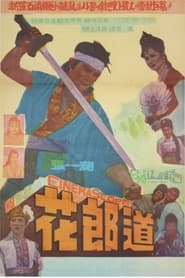
His parents captured by the Baekje armies, prince Eo-jin infiltrates the enemy castle alone to seek revenge. His plot is ruined when he falls in love with a princess there and is forced to choose between betraying his parents and nation or the woman he loves.
The story of America's rise to power starting with 1959, using archival footage and US pop music to highlight the consequences to the rest of the world and in the peoples' minds.
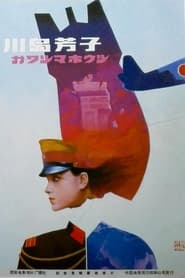
This film is based on the life of Kawashima Yoshiko, originally Manchu princess who was the 14th daughter of Emperor Xu, later brought up as a Japanese and served as a spy in the service of the Japanese Kwantung Army and Manchukuo during the Second World War.
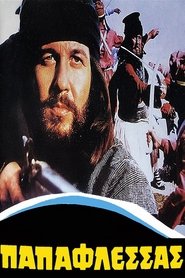
The life and work of the hero of 1821 Papaflessas that during the liberation struggle of the Greeks against the Turks, revolutionizing the elders and the world to declare war!!! Up to the heroic battle Maniaki.... A movie that shows the heroism and sacrifice of the Greeks for their homeland and their freedom
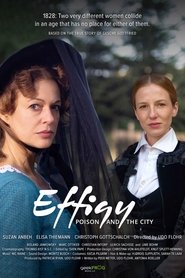
1828 in the German port city of Bremen: Two very different women collide in an age that has no place for either of them. One strives for a career in law, at a time when women aren't even admitted to universities. The other has lived life outside the law and may now have to pay the tab. One of them needs to get her head together – while the other would do anything not to lose hers. -- Based on a true story.
In May of 1941, a group of young army volunteers is recruited in Chumpon south of Bangkok. Many high-school students apply to join the group. When the Japanese army lands at Chumpon in December, they bravely fight against the army. The film is based on the true story of how young army volunteers fought to defend their country from the Japanese Army. A misunderstanding between the two nations caused the unnecessary war to break out.
We have detected that you are using an ad blocker. In order to view this page please disable your ad blocker or whitelist this site from your ad blocker. Thanks!