A gripping story about a man who was the terror of the Russian Empire: the legendary figure of a Polish priest, chaplain and general - Father Stanislaw Brzoska.
A drama set in the year 1516 in Tuscany. Niccolo Machiavelli, stripped of office, remains in exile awaiting his return to favor by the new duke. When this moment finally arrives, Machiavelli discovers himself to be the victim of a plot hatched by the duke.
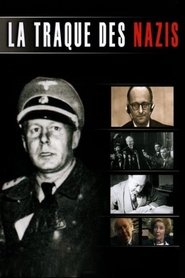
For the first time, a film recounts the story of the long pursuit of Nazis in hiding from 1945 to the present day. Sixty years of investigations, set-backs trials and dramas, brought about principally by three extraordinary individuals—the Austrian Simon Wiesenthal, and the German-French couple, Beate and Serge Klarsfeld.
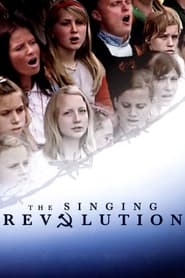
Most people don't think about singing when they think about revolutions. But song was the weapon of choice when, between 1986 and 1991, Estonians sought to free themselves from decades of Soviet occupation. During those years, hundreds of thousands gathered in public to sing forbidden patriotic songs and to rally for independence. "The young people, without any political party, and without any politicians, just came together ... not only tens of thousands but hundreds of thousands ... to gather and to sing and to give this nation a new spirit," remarks Mart Laar, a Singing Revolution leader featured in the film and the first post-Soviet Prime Minister of Estonia. "This was the idea of the Singing Revolution." James Tusty and Maureen Castle Tusty's "The Singing Revolution" tells the moving story of how the Estonian people peacefully regained their freedom--and helped topple an empire along the way.
Pushing the limits of the human race: that is what runners aspire to when they take to the Olympic 100-meter track every four years. But for Usain Bolt, the record holder for the distance with his explosive 9.58 seconds, to become the fastest sprinter in history, crossing the finish line at some 44 km/h, it took more than a century of technical refinement. From the early days of sprinting to Usain Bolt's records, directors Jean-Christophe Rosé and Benoît Heimermann trace the history of the 100 meters, the flagship event of the Olympic Games, and its champions.
Through the use of spectacular, never-before-seen nuclear test footage, travels to ten former testing sites and explores the history, physical changes resulting from the tests and current condition of these amazing and important places. Visit the notorious Nevada Test Site, known as the most bombed place on earth. Over 900 nuclear explosions where detonated at this location – an area larger than the State of Rhode Island. Once upon a time these locations were kept top secret, but today, with this 60th Anniversary Diamond Edition of Atomic Journeys: Welcome to Ground Zero, you will finally see these historic hot spots. Preserving the incredible legacy of America’s nuclear testing program stands as a reminder of the fine line between the progress of mankind and the destruction of the earth. Once you understand what really happened at the Ground Zero nuclear testing sites, you will never be the same.
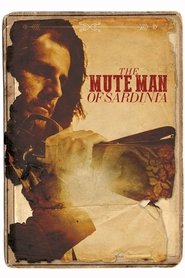
Gallura, the mid-1800s. The feud between the Vasa and Mamia families – historically documented – is causing bloodshed in the region. Bastiano Tansu, a deaf-mute since birth, is one of its protagonists. Mistreated and marginalized since his childhood, after his brother Michele was murdered he joined forces with one of the two leaders of the factions, Pietro Vasa, and put at his service his fury and his amazing aim, becoming a highly feared assassin. The State and the Church try to stem the wave of terror and only after more than 70 deaths, the peace of Aggius arrives. At first, Bastiano finds peace in his love for a pastor's daughter, but in a violent and superstitious world that already labeled him the devil's son when he was just a boy, someone like him cannot be found innocent. Thus, he chooses to confront his own destiny.
"In 1904, disgusted by the aftermath of the Spanish-American War and the subsequent Philippine-American War, Mark Twain wrote a short anti-war prose poem called "The War Prayer." His family begged him not to publish it, his friends advised him to bury it, and his publisher rejected it, thinking it too inflammatory for the times. Twain agreed, but instructed that it be published after his death, saying famously: None but the dead are permitted to tell the truth."
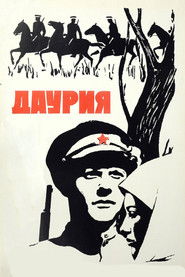
A chronicle of life in a small village in the Baikal Region on the eve of World War I and at the time of the October Revolution. The age-old foundations are crumbling, the process of social stratification is underway and, as a result, some people go to defend the revolution, and others - to fight against it. The main hero is the young Cossack Roman Ulybin. At first, this carefree daredevil is preoccupied only with one problem: whether his sweetheart, Dashutka, is to marry him or a merchant’s son, Alyoshka. Roman is killing time fist-fighting with his rival. But little by little, the young man realizes that the world around him has changed, that people are fighting for equality and social justice, and, being a real Cossack, he can’t remain on the sidelines…
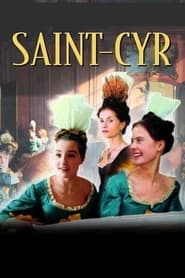
Late 17th Century: Anne de Grandcamp and Lucie de Fontenelle, two little girls from Normandy, arrive at the Saint-Cyr school founded by Madame de Maintenon for educating the daughters of impoverished nobles ruined in wars and making them into free women. Madame de Maintenon is the secret wife of Louis XIV, and empowered by his support, she offers "her" two hundred fifty girls a playful and avant-garde education. Anne and Lucie, two inseparable friends, allow themselves to be carried away by the promise of a bright future. But Maintenon has arrived at the pinnacle of power through scheming and debasing herself and she now fears the fires of hell. She is counting on her model school to atone for her past sins.
The brothers of Yusuf (Joseph), jealous of their father Yaqub’s (Jacob's) love for him, throw him into a well. A caravan rescues Yusuf, and years later he is sold as a slave in the market of Egypt. Zulaikha, Yusuf's owner, falls in love with him, and after an incident, the Aziz of Egypt (Zulaikha’s husband) has him imprisoned. Seven years later, Yusuf is released due to his interpretation of the Pharaoh’s dream and rises to the rank of Aziz of Egypt.
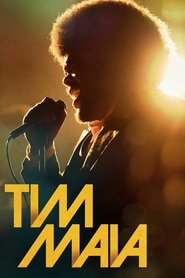
Biopic of Brazilian singer Tim Maia, from his childhood in Rio de Janeiro until his death at age 55, including his passage by the US, where he discovers a new style of music and is arrested for theft and drug possession.
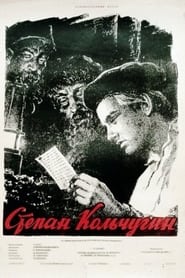
The film is set in old Yuzovka on the eve of 1905. After searching the Kolchugins' apartment, where money from the strike fund was hidden, the police arrest Anna Kolchugina and her lodger, the miner and revolutionary Kuzma. Anna's teenage son, Stepan, is forced to go to work in the mine. There he learns about the existence of the revolutionary underground and joins its struggle.
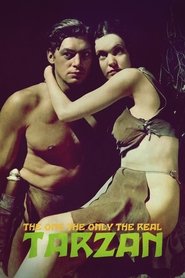
The glorious and tragic story of American athlete and actor Johnny Weissmuller (1904-84), Olympic swimmer, water polo player and the only true Tarzan, an archetypal character and myth of cinema, that of the original Hollywood blockbusters (1932-48).
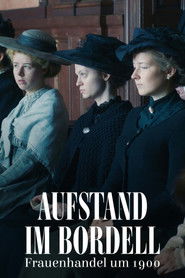
In the spring of 1902, Viennese working-class daughter Marie König runs away from her beating father and is lured into a high-class brothel by an agent. Instead of the promised self-determined life "with horse-drawn carriage rides and silk dresses", she experiences closed doors, violence and exploitation. Only after years of agony does Marie confide in the journalist Emil Bader, who makes the conditions in the brothel public and takes the owner, Regine Riehl, to court.
We have detected that you are using an ad blocker. In order to view this page please disable your ad blocker or whitelist this site from your ad blocker. Thanks!