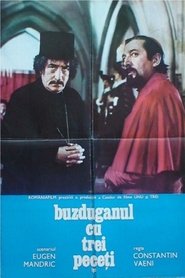
At the end of the 16th century, Wallachia's ruler Michael the Brave dreams of uniting the kingdoms of Wallachia,Transylvania and Moldavia into a single country known as The United Principalities.
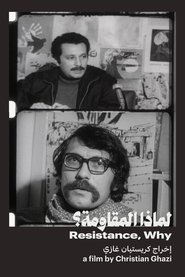
In 1970, Christian Ghazi and Noureddine Chatti met with a number of Arab political figures, especially Palestinians residing in Lebanon, resulting in this piece of armed (alternative or third) cinema that captures a crucial cross-section of the Palestinian resistance in Lebanon in 1970. The film features footage of Ghassan Kanafani, Sadiq Jalal El-Azm, Nabil Shaath and other personalities who share their vision of the Palestinian revolution, tracing its history back to the early 20th century. These testimonies describe the numerous strikes and popular protests that took place in Palestine under the Ottoman occupation, followed by the British colonization and the settlement of the Jewish state in 1948. They enumerate the objectives of the struggle, emphasising the necessity for a free and democratic Palestine, defended through armed or non-armed struggle by all its citizens, men and women of various affiliations.
Documentary film about the "zanja de Alsina", a long trench dug in the Argentinian Pampa in 1876 as way to separate the "civilized" from the "barbarians" during the massacre of indigenous peoples known as "campaña del desierto".
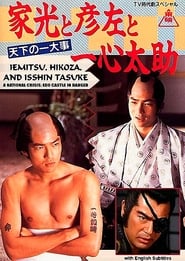
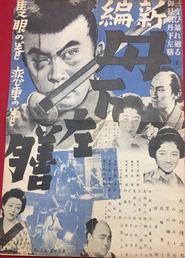
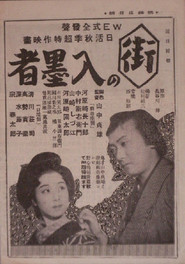
Yagyu Jubei, the finest swordsman in the land, is called upon to bare his blade to help Iemitsu keep his post. Meanwhile a fishmonger named Isshin Tasuke who bears an amazing resemblance to Shogun Iemitsu may be called upon to put his life on the line by acting as the Shogun's double. At the same time, the tragic story of Banzuiin Chobei and Mizuno Jurozaemon is unfolding.
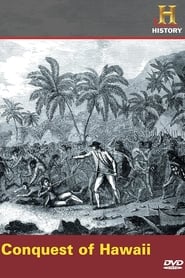
History Channel documentary which chronicles the history of Hawai'i and the rarely told story of the overthrow of the Hawaiian monarchy by the American government.
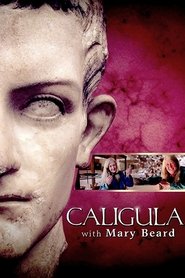
What is true and what is false in the hideous stories spread about the controversial figure of the Roman emperor Gaius Julius Caesar Augustus Germanicus (12-41), nicknamed Caligula? Professor Mary Beard explains what is accurate and what is mythical in the historical accounts that portray him as an unbalanced despot. Was he a sadistic tyrant, as Roman historians have told, or perhaps the truth about him was manipulated because of political interests?
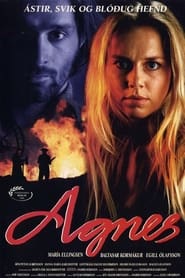
In a barren land ruled by oppression and ignorance, a spirited woman driven by hope of a better life must fight against the odds. Agnes is a servant in the house of the county sheriff. There she is constantly sexually harassed by him and treated with contempt by his wife. Agnes falls in love with Natan, a self taught homoeopathic doctor. The sheriff takes revenge on Natan by making it illegal for him to practice his profession. The dramatic relationship between the three main characters ultimately leads to a fatal web of events where a love affair turns into a nightmare of brutality and destruction.
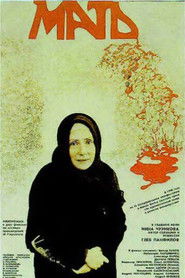
The social ferment in late 19th century Russia which led to the 1917 Russian Revolution is movingly portrayed in this lengthy historical drama, which is very faithful to the 1907 novel The Mother by the celebrated Marxist writer Maxim Gorky (1868-1936). In the story, "the mother" (Inna Tchourikova) has no other recourse than to watch her decent, kindly husband turn into an animalistic, drunken brute as a result of working in the inhuman conditions of a steel mill in the town of Sormovo. When he begins to express his suppressed rage by beating her, she is defended by her teenaged son Pavel (depicted Viktor Rakov as an adult, Sacha Chichonok as a boy). After his father's death, Pavel is forced to go to work in the same factory. However, Pavel and his friends begin investigating Marxism and socialist thought, and work to organize their fellow workers.
We’ve all heard of the Warsaw Ghetto Uprising, but most people have no idea how widespread and prevalent Jewish resistance to Nazi barbarism was. Instead, it’s widely believed “Jews went to their deaths like sheep to the slaughter.” Filmed in Poland, Lithuania, Latvia, Israel, and the U.S., Resistance – They Fought Back provides a much-needed corrective to this myth of Jewish passivity. There were uprisings in ghettos large and small, rebellions in death camps, and thousands of Jews fought Nazis in the forests. Everywhere in Eastern Europe, Jews waged campaigns of non-violent resistance against the Nazis.
She left school at 14, married at 17, divorced at 26, then became a striper and married a billionaire. But she lost all when her husband died. However, when she won 450 million judgement, she became a reality show star. However, when her judgement was overruled by a Texas court, she fell on hard time and met her third husband. Her 20 year old son died then she died. Do you know who did it?
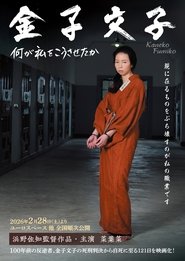
Why did she die? The Supreme Court first sentenced her to death, but then commuted her sentence to life imprisonment and sent her to Tochigi Women's Prison. What happened before she took her own life there? Based on her tanka poems, which convey her raw voice, the film explores her lone fight during the 121 days between her death sentence and suicide, a period that has remained obscure to date.
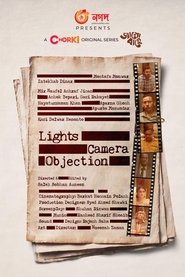
Second episode of the anthology series 'Jaago Bahey', set in 1970s Bangladesh. A filmmaker is put under the trial of the Pakistani Censor board. The regime tries to control both the artist and the art. Will he succumb to their demand?
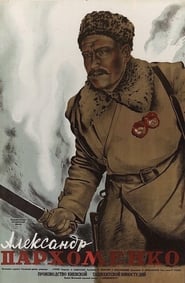
About the life and heroic death of the old Bolshevik-Lugansk resident, participant in the civil war, Aleksandr Yakovlevich Parkhomenko. In 1918, capturing Ukraine, the German occupiers sought to use the Haidamaks, the White Guards and the Greens in their struggle. By order of Voroshilov, Aleksandr Parkhomenko from Lugansk arrives in Tsaritsyn. At the same time, the Germans launched an active offensive. The "red" battalions are poorly armed, however, Parkhomenko manages to raise them to the attack and put the enemy to flight.
Hard things were said. Incredible things were said. It is time to think about everything that was said. An account of Kirchnerism, a left-wing populist movement that ruled Argentina from 2003 to 2015, led by Néstor Kirchner (1950-2010) and his wife Cristina Fernández de Kirchner.
A poignant drama set in 1970s Australia about a newly-single father’s efforts to weather the turbulence of change – in his life and in the world around him – while a new immigrant endeavours to find her place in a foreign land.
We have detected that you are using an ad blocker. In order to view this page please disable your ad blocker or whitelist this site from your ad blocker. Thanks!