After the battle of Sky City, Feng Ren declares war on the human tribe. Seeing that the human tribe has no means of retaliating, Fang Qiwu, the queen of Human tribe, tries to use a time machine device to return to the past so that she can possess the body of Nan Yinmeng, Feng Ren's beloved consort, and kill Feng Ren. However when she wakes up in another timeline, she is told that Feng Ren is dead.
Robert Burns was well aware of the revolution taking place across the Atlantic as he grew up. The poet was inspired. And America was to be inspired by him. From Abraham Lincoln to Frederick Douglass, and Walt Whitman to Bob Dylan, some of the most significant figures in American politics and culture have cited Burns as an influence.
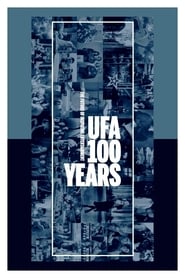
The intricate history of UFA, a film production company founded in 1917 that has survived the Weimar Republic, the Nazi regime, the Adenauer era and the many and tumultuous events of contemporary Germany, and has always been the epicenter of the German film industry.
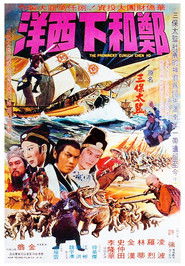
Cheng Ho was a Chinese mariner, explorer, diplomat, fleet admiral, and court eunuch during China's early Ming dynasty. This film depicts some of the adventures and battles he had when he explored the southern Asian regions.
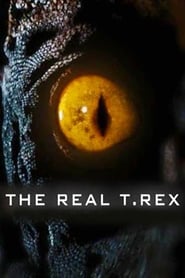
A documentary examining what the Tyrannosaurus Rex was really like - both appearance and behaviour - using the recent palaeontological and zoological research.
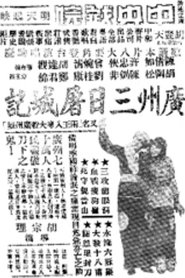
It was assisted by the Qing army and some traitors (Fan Cheng-En), who captured Guangzhou and massacred the civilians for three days until Sun Yat-Sen established the Republic of China and Chiang Kai-Shek succeeded in the Northern Expedition.
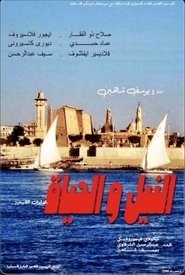
Renegotiating the representational paradigm of nationhood the film draws a heterogeneous picture of Egyptian society as well as Soviet workers as they embarked on the momentous dam enterprise. The films presents a vision of a nation deep rooted in unity as well as diversity. The films projection of a renewed imagining of the nation inadvertently acknowledges a new and nuanced understanding of its goals, political objectives, and how these impact the personal within it. (KHOURI)
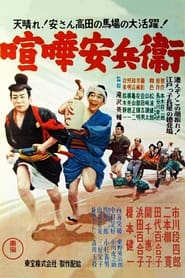
Yasube Nakayama left the clan and lives in Edo. One day, Yasubei visits his uncle Rokuroemon Kanno to borrow money from a moneylender in the amount of 13 ryo in order to save Oteru, the daughter of a merchant. However, the next day, Rokuroemon was killed in a fight by the Murakami brothers. Yasubei rushed to the scene, took revenge and became the husband of Miya, the daughter of Horibe Yahei.
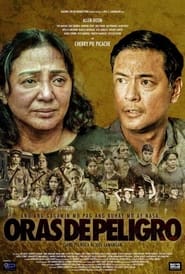
As the EDSA Revolution unfolds, a mother, son, and daughter who live in a slum near Malacañang Palace grapple with the murder of their patriarch in the hands of corrupt policemen, turning from passive victims of social injustice into active participants in the final hours of the uprising.
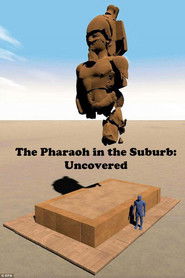
A chance find in a suburb of Cairo has shed new light on an all but forgotten Pharaoh, Psamtik I. Discovered in 2017, an eight-tonne fragment of a statue has led experts to believe that he was, in fact, one of Egypt’s greatest leaders, as this documentary reveals
Set in the Middle Ages the film tells the story of a wonder child, the little sculptor Wawrzek, who goes to work for a great master, Wit Stwosz. The story culminates in the unveiling of Stwosz's greatest masterpiece, the Altar of St. Mary's Church in Cracow.
Pattinathar is 1962 Tamil biographical film was directed by K. Somu and produced by Film center with distribution by J. R. Productions. The film script was written by Thanjai Ramaiah Doss and Akilan.
This film traces the history of major league baseball's one year team, the Seattle Pilots, who after their lone season of 1969 were moved to Milwaukee and became the Brewers.
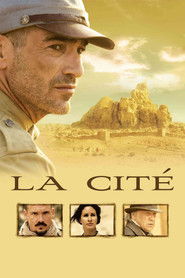
A doctor broken by 8 years of war in North Africa tries to come back home. On his way, he is faced with a bigger challenge: save a city from the plague... and from madness.
We have detected that you are using an ad blocker. In order to view this page please disable your ad blocker or whitelist this site from your ad blocker. Thanks!