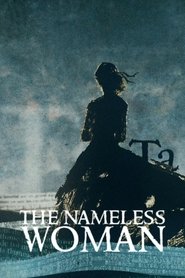
The story, hidden by historians and biographers, of Jeanne, a black woman, whose real name is unknown, who was the muse and companion of the mythical French poet Charles Baudelaire (1821-1867).
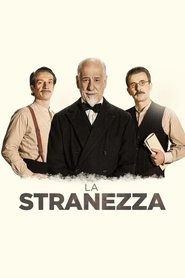
During a trip to Sicily in 1920, Luigi Pirandello meets two gravediggers-turned-playwrights rehearsing a play with their amateur dramatics. Pirandello takes an interest in the odd couple, having been suffering from writer's block while working on his eventual masterpiece, Six Characters in Search of an Author.
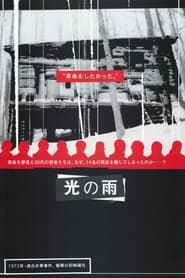
This documentary-style film recreates the infamous Asama Sanso Incident of 1972 wherein an extreme faction of the Students Allied Red Army holed themselves up in a mountainous cabin in the dead of winter. By the time the police finally caught up with them, it was discovered that they had murderously turned upon themselves in a bizarre extension of their radical philosophy. This event virtually marked the end of the Student Revolution.
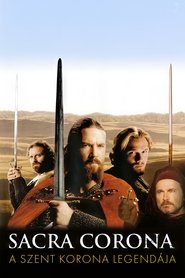
Sacra Corona is a historical feature film released to commemorate the millennium of the state's founding. The story deals with the 11th-century throne struggles of the House of Árpád.
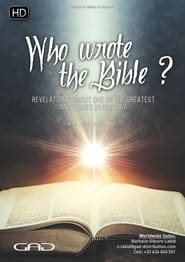
A fascinating archaeological and scientific investigation on the world's best-selling book.
When was the Bible written ? Who wrote it? Under what circumstances ? For what purpose ? These questions have long remained unanswered. With the discovery of the Dead Sea Scrolls in 1947, the thorough study of the texts, the advances in science, and the recent archaeological discoveries, one of the greatest historical mysteries is gradually being unveiled.
Meet the most eminent specialists in the Bible who try to unearth brand new information and answer the enigmatic and fundamental question : who wrote the Holy Book ?
Syed Mīr Nisār Alī, better known as Titumir, was a Bengali freedom fighter who developed a strand of Muslim nationalism coupled with agrarian and political consciousness. He is famed for having built a large bamboo fort to resist the British, which passed onto Bengali folk legend. Titumir died on 19 November 1831 at Narikelbaria.
Essentially an adaptation of Gaston Leroux's classic The Phantom of the Opera, Mid-Nightmare is set in a Huangmei diao teahouse theatre, which an embittered and horribly disfigured ex-performer ‘haunts', looking to extract revenge on his enemies and falling in love with a talented and beautiful, but ultimately unattainable, ingénue.
German composer Richard Wagner wrote Parsifal, which is a three-act opera that tells the story of the title character's quest to save the Knights of the Holy Grail by returning the Holy Spear, healing King Amfortas, and carrying out the sacred ceremony of uncovering the Holy Grail.
The legend of King Naresuan continues with this third of four chapters and tells the story of King Naresuan, Thai's chivalric king and warrior in the Ayutthaya era who fought against the invasion of Burmese troops that wanted to overpower the Ayutthaya Kingdom.
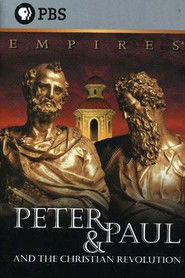
Two thousand years ago, in the Roman province of Judea, Jesus was crucified by imperial troops. Thousands before him had suffered the same fate. But unlike his predecessors on the cross, Jesus did not disappear from history. Instead, his memory was kept alive by a small band of Jews - men and women who held fast to their conviction that Jesus was the Messiah.
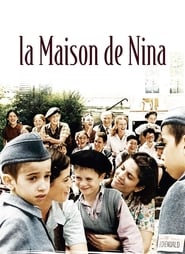
Starting in 1944 in the wake of the Liberation and continuing into the '60s, 'houses of hope' were established to lend a semblance of continuity to youngsters orpahaned by the war. Nina's Home takes place between September 1944 and January 1946 in an orphanage housed in a chateau outside Paris. At the outset, the country residence is run by Nina who has a core population of French Jewish children whose parents are probably dead. Food is scarce. News of the Concentration Camps hasn't hit yet, but some months later, a contingent of youths arrive form the liberated camps. The children are a disparate, wild, damaged group and conflicts ensue. Nina's challenge is to help them make their first delicate moves toward the future and in the process restore all of them, including herself, to life.
A team of archaeologists examines an ensemble of finely crafted gold and silver artifacts from a temple in Laos. The expedition takes the researchers from the vault where the treasure is now housed to ancient temples hidden deep in the jungle. The team makes spectacular discoveries at excavation sites scanned from the air...
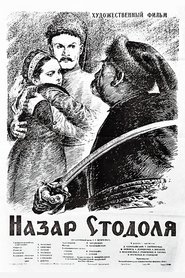
The beautiful Galya and the brave Cossack Nazar Stodolya fell passionately in love. But Gali's father, centurion Khoma Kichaty, wants to marry his daughter to an old but rich colonel. Next events are in movie.
The opera lady singer Ema Destinnová is in all her splendor at the American stages. But in Europe there rages war and she decides to return home to Bohemia.
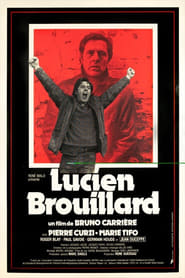
Solitary anarchist, Lucien Brouillard ceaselessly fights for his rights and those of his societal peers. His subversive whistleblower activities will bring him endless troubles, and he will begin a real descent into Hell after his former childhood friend, and now judge, Jacque Martineau.
We have detected that you are using an ad blocker. In order to view this page please disable your ad blocker or whitelist this site from your ad blocker. Thanks!