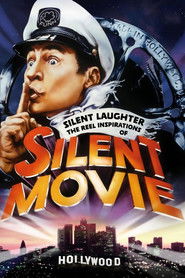
A featurette about the origins of "Silent Movie," as well as its inspirations and development, direct cinematic influences, cast and performances, gag specifics and cut scenes, Brooks’ directorial style and a few other tidbits.
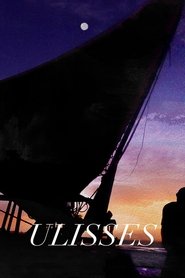
A poetic observational documentary that follows the lives of a community of “jangadeiros” —fishermen typical to the dune-lined Northeastern Coast of Brazil.
Tupac Shakur’s final performance, the July 4, 1996 concert at the House of Blues. Tupac: Live at The House of Blues is an all out hip house party on stage and a final chance to catch Tupac at the top of his game before his untimely death. Aided by appearances from Snoop Dogg and a booming lossless soundtrack, this one should please hip hop lovers for sure.
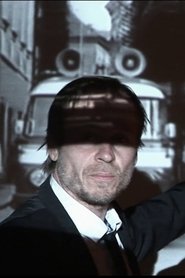
It's nighttime in Prague, 21 August 1968. Soviet troops and tanks are occupying the city - random attacks, soldiers shooting, bodies lying dead on the sidewalk. With an impromptu crew, the director (Karel Roden) captures some unique evidence - material which is, however, worthless in occupied Prague; it has to be shown to the rest of the world. So, while the Soviets are concocting false reports of heartfelt receptions without military resistance for propaganda purposes, the director sets off on a risky trip across the closed Czech-Austrian border to Vienna.
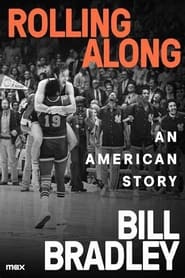
Bill Bradley has experienced many lives and has worn many hats throughout his lifetime. After becoming an accomplished college and professional basketball player, he made a major move into Democratic politics and advocacy. This might sound like an unexpected career change, but to Bradley it was the next logical step. The same can be said for how he worked on an oral history of his life and career for three years, excruciatingly committing it to memory, before premiering it in New York City in December 2021. Rolling Along is the live theatrical recording of this monumental performance. Interspersing archival footage with Bradley’s performance, the film honors a uniquely American life, paying tribute to the act of storytelling in a way that hasn’t been done in a very long time. In our times of division and uncertainty, perhaps we can all learn something from Bradley’s stories about perseverance, acceptance, and unity.
This 'rock and roll'-style documentary film explores the anime subculture in North America with footage from anime conventions and interviews with fans, voice actors and artists.
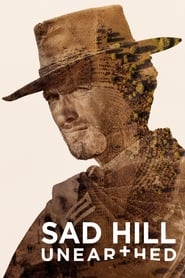
Province of Burgos, northern Spain, October 2015. A group of fans undertake the titanic task of restoring the location of the last scene of The Good, the Bad and the Ugly, the mythical spaghetti western directed by Italian filmmaker Sergio Leone in 1966.
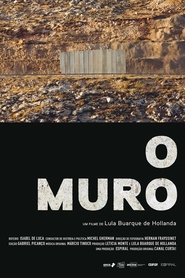
Envisioned in the midst of the greatest political crisis in Brazil’s history, this documentary investigates the polarization that has unprecedentedly inflamed a country in which miscegenation and cordiality are considered to be founding myths and its parallel in the world. Edging the border of documentary, the film builds an urgent portrait of Brazil today.
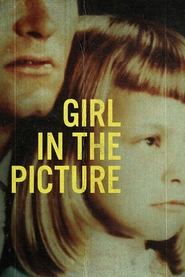
A young mother’s mysterious death and her son’s subsequent kidnapping blow open a decades-long mystery about the woman’s true identity, and the murderous federal fugitive at the center of it all.
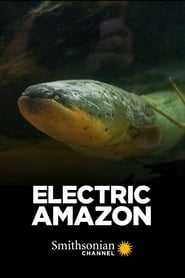
The Amazon is one of the wildest and least explored parts of the planet. Encompassing 6 countries and 2 million square miles of forest, river and floodplain, it has the highest diversity of life on the planet, but what lies below it is truly shocking. In its deep muddy rivers, clear streams and expansive floodplains a freak-show of fish life has exploded, with some of the strangest shapes and weirdest adaptations on Earth. Hiding in the vast rivers and streams is an electric grid, a bizarre community of fish with a highly sophisticated electric sixth sense. Using electricity, these "Super" fish can communicate wirelessly, control each other remotely and emit shocks that can stop a human heart. This cryptic world has mystified scientists throughout the ages. Now an intrepid scientist, Will Crampton ventures back into the dark jungles where the inspiration for our technology driven world first emerged, in an attempt to unravel their secrets and unlock the electric code.
The film portraits a writer-amateur Bora Joksimović, a heating maintenance mechanic in the Zrenjanin theatre. Unhappy with the shows he sees in his theatre, he decides to try his luck as a playwright. And as a result he has written 53 plays with "mighty plots", like "Hitler and Stalin Conversations in Hell", "Life of a Croat Woman in Belgrade", "Fratricide" etc.
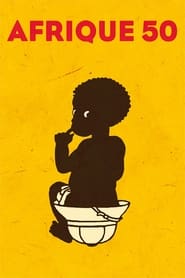
The first French anti-colonialist film, derived from an assignment in which the director was to document educational activities by the French League of Schooling in West Africa. Vautier later filmed what he actually saw: “a lack of teachers and doctors, the crimes committed by the French Army in the name of France, the instrumentalization of the colonized peoples.” For his role in the film, Vautier was imprisoned for several months. The film was banned from public screening for more than 40 years.
We have detected that you are using an ad blocker. In order to view this page please disable your ad blocker or whitelist this site from your ad blocker. Thanks!