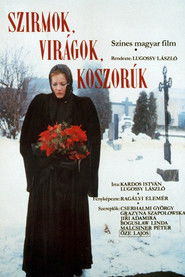
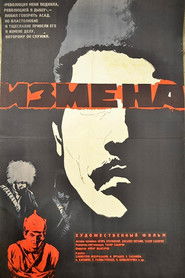
The seeming hopelessness of combatting an all-powerful government that will not tolerate political dissension is the focus of this excellent historical drama set in the mid-19th century in Hungary. In the opening scenes, Hungary has just lost its bid for independence from Austria and a Magyar officer, unable to bear the tragedy of defeat and what it means, says an affectionate good-bye to his beloved horse and then shoots the animal and himself. Two years later, Ferenc (Gyorgy Cserhalmi) is trying to eke out a living for his wife and her family -- and at the same time avoid any hint of sympathy for Hungarian independence because the Secret Police are everywhere. Just as life seems to be going well, Ferenc's former commanding officer (Lajos Oze) arrives and begins discussing revolution again -- a futile pursuit at this point in time. The next day, Ferenc is thrown into an insane asylum and everyone else is arrested as well.
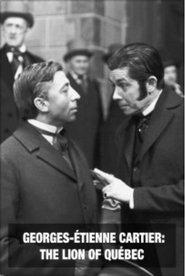
This short biopic profiles Montreal lawyer-turned-politician George-Étienne Cartier as he campaigns to unite English and French Canada under Confederation. The political world of a century ago comes to life as we hear debates in the Parliament of Upper and Lower Canada amidst political strife and personal feuds. Ultimately, Cartier skilfully allays the fears of party and sectional leaders, convincing them that federal union would protect, rather than weaken, Quebec’s cherished rights of language and religion. The eloquent and enigmatic Cartier was instrumental in shaping the Canada that was soon to emerge.
Found memories decayed by the shock patterns of childhood trauma. This films is made mostly with footage found in the bin of an ophanage. The white progressivelly disolve within a darknest more and more dense. Faces progressivelly disolves within one another.
The amazing story of electronic music: its epic journey from its origins in Europe, at the hands of the great artists of the post-war classical avant-garde, to the great post-industrial cities of the USA, where this genre of genres took over music stores, shady clubs and, eventually, the big stages.
After the Stonewall riots and at the height of the gay liberation movement in America, an entire generation were busy celebrating their newfound emancipation, unaware of an impending epidemic. A disease that seemed determined to wipe out an entire generation of gay men, was largely ignored by politicians and the mainstream media. Gaetan Dugas was a French-Canadian flight attendant, who offered to help early scientific research into the origins of AIDS. An unfortunate series of events followed and he would be vilified as Patient Zero, the man who gave us AIDS.
This short film is an ode to the women who settled the Prairies, from the days of early immigration to 1916 - when Manitobans became the first women in Canada to receive the provincial vote - and beyond. Recollections of women are complemented by a series of quotations drawn from letters, diaries, and newspapers of the day, which are spoken over re-enacted scenes and archival photographs.
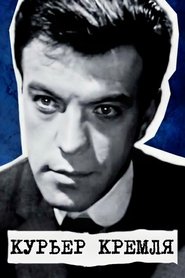
Bolshevik Mravin, under the name of engineer Pyotr Ivanovich Lednev, risking his life, takes V.I. Lenin’s “Letter to the American Workers” to America. With the help of John Reed, he publishes it in one of the newspapers.
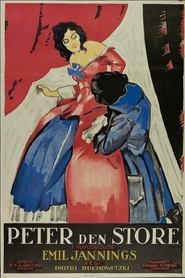
Peter the Great, having become Tsar of Russia, using his shipbuilding knowledge acquired in a foreign country to establish a navy, and being able to use it, provokes a war with Sweden, defeating that country at the Battle of Poltava. This battle marks a turning point between Peter and Russia. His only son turns out to be a coward, meets a refugee girl and makes her his Empress, alienating himself from the church and many nobles. All these factors lead to a conspiracy...
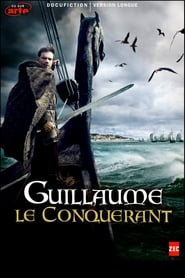
England, 11th century. William the Conqueror (ca. 1027-1087) wins the Battle of Hastings (1066), changing the shape of medieval Europe and the course of English history. An account of the life of the extraordinary Norman warrior who became king.
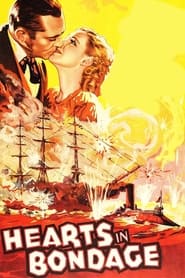
Best friends Kenneth Reynolds and Raymond Jordan are U.S. Navy officers, and Kenneth is engaged to Raymond's sister. But the eruption of the Civil War divides them, as Raymond stands by his native Virginia while Kenneth remains on duty as a Northern officer. Kenneth's uncle, John Ericsson, designs a new kind of ship, an ironclad he calls the Monitor. Eventually the war pits Kenneth, on board the Monitor, against his friend Raymond, serving aboard the South's own ironclad, the Merrimac (as it is called here). A naval battle ensues, one that will go down in history.
Autumn 1941. The Soviet army flees Kyiv, chaos reigns, soldiers attempt to trade their uniforms for civilian clothes in order to escape unnoticed. The war and pending capture of Kyiv by the Germans is the only topic of discussion. Everyone has heard of the horrible things that have happened in other areas, where Jews were brutally and inhumanely murdered. Indecision and despair spread like wildfire among the population. As the German army marches in, fear and horror take over.
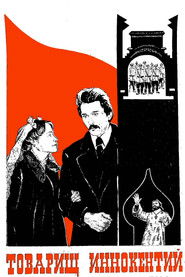
About the initial period of the revolutionary activity of the Russian revolutionary Joseph Dubrovinsky (1877-1913, Innokenty is one of the underground nicknames of the Bolshevik), about the years of active propaganda work, a duel with the "king of the Okhrana" Zubatov, exile and the resumption of work underground.
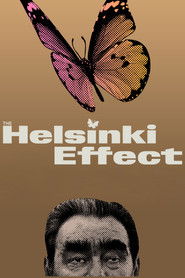
The Conference on Security and Cooperation in Europe (CSCE) was the starting point for the slow but sure collapse of communist authoritarian rule in Eastern Europe. The Helsinki Effect offers new perspectives on the events of the Cold War. The film tells the story of the CSCE process, which had a major impact on the end of the Cold War, and sheds light on secret top-level discussions behind closed doors, through voice simulations using artificial intelligence.
We have detected that you are using an ad blocker. In order to view this page please disable your ad blocker or whitelist this site from your ad blocker. Thanks!