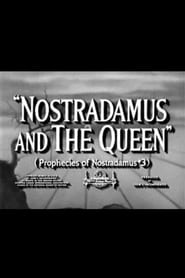
An elderly Catherine de Medici reflects back on how the prophecies of Nostradamus accurately predicted the fates of her husband, her three sons and herself.
In São Paulo, in the late 1960s, the convent of the Dominican friars became a trench of resistance to the military dictatorship that governs Brazil. Moved by Christian ideals, frets Betto, Oswaldo, Fernando, Ivo and Tito came to support the guerrilla group Ação Libertadora Nacional, commanded by Carlos Marighella.
American Experience looks at the 1968 Democratic National Convention in Chicago where Vice President Hubert Humphrey won his party's nomination for president amid massive civil unrest and violence perpetrated by Chicago Police and anti-Vietnam War protesters.
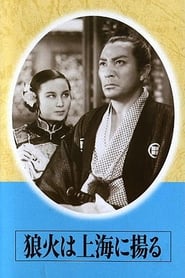
During the Taiping Rebellion of the mid-19th century, anti-Qing (Manchu) Chinese forces led by Taiping commander Li Xiucheng march on Shanghai. Although the Western powers are officially neutral, the British consul in Shanghai sides with the Qing imperial government, and counter to his own government's policy he retains American adventurer Frederick Townsend Ward to raise a mercenary force of foreigners in Shanghai and oppose the Taipings. Ward's force is routed, with heavy casualties, but since many of the casualties are British, the British army soon is drawn in on the side of the Qings. The only support for the Chinese comes from Japanese in Shanghai and anti-imperialist demonstrations in Japan. A family drama plays out against this historical background. After a Chinese home is destroyed by careless British shelling, killing the father and crippling a daughter, the surviving son vows revenge but begins to see that his true friends may be the Japanese.
On a December night in 1943, three Jewish children escape from Nazi-occupied France and are given refuge by Sister Gabrielle at a Catholic school in which the Gentile students must face their fears about harboring Jews from the Nazis. As the students become acquainted with their Jewish peers, they grow more sympathetic to their situation and eventually go to great lengths -- and take serious risks -- to save the lives of their newfound friends.
A monk renounces his role to become King after his brother is killed. His new Queen is forced to choose sides between her husband and her father from a rival land, which eventually leads to an all out war for sovereignty.
The Castro revolution was just consolidating its power when, in 1961, over 100,000 students were sent from their schools into the countryside to teach the peasants there how to read. Coinciding with the Bay of Pigs invasion, in this docudrama, 15-year-old Mario (Salvador Wood) has come to a tiny village in the Zapata swamps and gradually wins the villagers over to his task. At the same time, he receives an education in the realities of rural life from the hard-working peasants.
The ronin, Sako Kanbei has to rescue the beautiful Princess Tsubaki from danger while young samurai of the Numata Clan stand up against their corrupt Chief Retainer and evil clan mistress. Kanbei wants to develop his swordsmanship only for himself, he finds that he has been implicated in a crime and must fight for justice in the ultimate battle to redeem his innocence. The swordplay in this film is reminiscent of the Lone Wolf and Cub series with its brutal and extended action sequences and awesome finale. A powerful motion picture about honor, love and cold steel!
Well-educated, New Hampshire mother, Linda Bishop, was determined to stay free of the mental health system after her early release from a 3 year commitment to New Hampshire State Hospital. Instead, she became a prisoner of her own mind, a fate which she documents in one of the most evocative and chilling accounts of mental illness and of our systemic failure to protect those suffering from it.
Destroyed in a dramatic and highly-publicized implosion, the Pruitt-Igoe public housing complex has become a widespread symbol of failure amongst architects, politicians and policy makers. The Pruitt-Igoe Myth explores the social, economic and legislative issues that led to the decline of conventional public housing in America, and the city centers in which they resided, while tracing the personal and poignant narratives of several of the project's residents. In the post-War years, the American city changed in ways that made it unrecognizable from a generation earlier, privileging some and leaving others in its wake. The next time the city changes, remember Pruitt-Igoe.
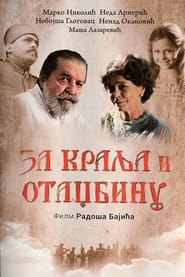
The film is picturing the faith of the old Serbian warrior Milisav Janjic, who fought against the German occupation in the Second World War as a member of the "Ravnogorski pokret". The storyline narrates his memories of the past and the war events in the spring of 1941 interwoven with the contemporary moments, the author features the attack of fascist Germany, the April war and the fall of the Kingdom of Yugoslavia, the misfortune placed upon the Serbian people, loss of freedom, birth of the freedom movement in Serbia and one Serbian soldier, who after 70 years of expatriation in America returns to his homeland.
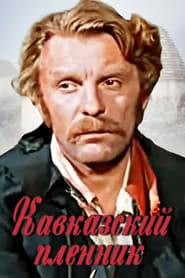
Officer Zhilin, a Caucasus officer, receives a letter from his mother and returns home. He and another Russian officer are attacked by mountaineers, and Zhilin is captured without ransom money.
The life story of Japan’s greatest leader, Tokugawa Ieyasu, whose shogunate ruled the nation for almost 300 years has never been told like this before. From the early days as a supporter of Imagawa Yoshimoto, then on to his days with Oda Nobunaga, leading to his wars against and ultimate victory over the Toyotomi to become shogun is a fascinating tale of his military genius coupled with a native intelligence that allowed him to become the last of the great warlords and ultimately the leader of the nation. With great performances from an all-star cast featuring names like Kitaoji Kinya and Takahashi Hideki this is history come to life on the screen.
We have detected that you are using an ad blocker. In order to view this page please disable your ad blocker or whitelist this site from your ad blocker. Thanks!