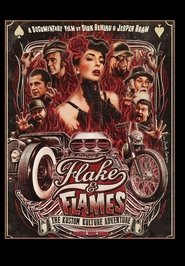
Flake & Flames is a feature length documentary film about the astonishing Kustom Kulture movement around the globe. Spending a year traveling U.S. and Europe in search of the coolest Kustom Kulture people and events on the planet. Picking the brains of living legends, up and coming artists and builders within the culture. Seeking out some of the hottest Kustom Kulture spots and get some of the worlds best car and motorcycle builders, tattoo artists, pinstripers, custom painters and pin-up models to share their tricks and experience.
James Powell, a college senior, falls for Bess Gunther, a sophomore. However, the attractive Bess is deeply in love with F. Scott Fitzgerald, or "Scotty", as she likes to call him. The obsession leads Bess down a road James prefers not to follow. Years later, he wonders whether she's the one that got away.
In 1889, Gustave Eiffel decides to attempt the impossible for the Universal Exhibition in Paris: to build the tallest tower in the world. Before this project, this pioneer and visionary had created more than 300 metal structures around the world.
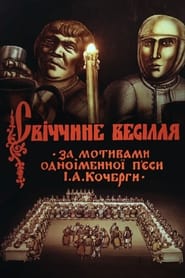
The story is based on a play by Ivan Kocherha about love against the backdrop of the craftsmen's uprising in Kyiv in the 16th century. The drama and the animation take place simultaneously in Podil, the center of bourgeois and craftsman life, and on mount Vzdykhalnytsia, where the Lithuanian castle is located. The director Tadeush Pavlenko takes the last three acts of Kocherha's play as a basis, placing the female character Melanka, the beloved of Ivan Svichka, at the center of the plot.
Six months after the genocide in Srebrenica and after the Peace Treaty was signed, the women still don’t know the whereabouts of their sons. Out of desperation, they organize protests and private investigations. Despite being emotionally fragile, often under-informed and lacking education, these women embody an incredible strength that overcomes all political and bureaucratic barriers. They demand their sons, the truth, and justice, and nothing can stand in their way.
Taikoki is a legendary biography of Toyotomi Hideyoshi, who rose to the office of taikō. And the story of this film is about the rise to power of Toyotomi Hideyoshi from a farmer's son.
Jagiello and his squire meet with representatives of the Teutonic army. Both sides do not want conflict and intend to resolve their dispute peacefully, but the language barrier is an obstacle for them.
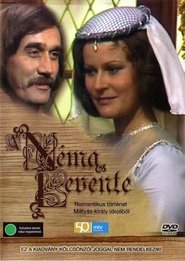
A romantic story from the time of King Matthias. Hungarian soldier Peter Agárdi falls in love with the beautiful Italian widow Zilia Duca. The virtuous lady accepts the stranger only through the persuasion of her friends and the wiles of the soldier's henchman, Beppo. The noble lady rejects Péter Agárdi's declaration of love. He then asks her to kiss him, invoking an old Piedmontese folk custom. Zilia demands three years of silence for her single kiss.
In 2001, Jimmy Wales published the first article on Wikipedia, a collaborative effort that began with a promise: to democratize the spreading of knowledge, monopolized by the elites for centuries. But is Wikipedia really a utopia come true?
October 24, 1944, the world’s greatest battle at sea begins in the Philippines. Japan’s navy gambles on a decisive victory against the United States to turn the tide of World War II. Instead, Musashi, its top-secret super battleship, ends up at the bottom of the ocean.
The Sino-Japanese War at Sea 1894 is set in the late 19th century and revolves around the events of the First Sino-Japanese War (1894–1895), which was fought between the Qing Empire of China and the Empire of Japan.
1645. Guadeloupe. Ibátali, a Kalinago native and wife of a French colonist, leads Olaudah, an escaped African captive, on a journey where he may lose his freedom and his life. She is ready to sacrifice him to save her own skin. But their wounds bring them together. Will this be enough to make them something other than what colonisation has decided they should be: a savage to be exterminated, an African to be enslaved?
Stall-Erik och snapphanarna is a Swedish film project that began filming in 1996 with a preliminary premiere in 2025. Director, producer and lead actor is Anders Olofsson. Olofsson is entirely responsible for the financing of the project and the casting.
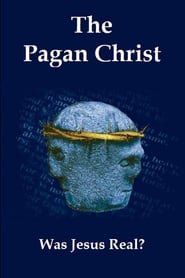
There are 2.1 billion Christians on the planet – roughly one-third of the entire human population. At the heart of their religion is the New Testament and the birth, life, death, and resurrection of Jesus of Nazareth. To Christianity, the written word is the glue that binds the faith of its followers. So what if it could be proven that Jesus never existed? What if there was evidence that every word of the New Testament – the cornerstone of Christianity – is based on myth and metaphor?
When an international military treaty fell apart in the mid 1930s, America rebounded by building the most legendary battleships ever constructed; the Iowa class of battleship. USS Iowa BB-61 was the lead ship of the class and was of service for nearly 50 years. Ultimately, an on board catastrophe cut her service short, but her story continues today as the Iowa is a living museum. Together, veterans and historians tell her stories of tragedy and triumph.
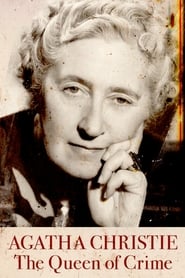
British author Agatha Christie (1890-1976) is the world's most translated author: her heroes, private detective Hercule Poirot and amateur sleuth Miss Marple, are known the world over. But who is the woman behind her bestsellers? A biographical search for clues, the unraveling of an iridescent personality whose existence and works were shaped by the tragic history of the 20th century: the eventful life of the Queen of Crime.
We have detected that you are using an ad blocker. In order to view this page please disable your ad blocker or whitelist this site from your ad blocker. Thanks!