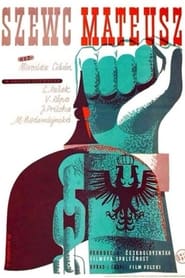
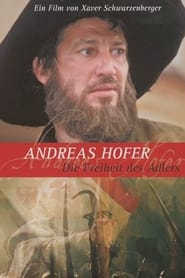
The revolutionary year of 1848 brought great hopes among the hitherto silent classes, awakening social and national hopes. The response also penetrated the remote countryside, even as far as the Podkrkonoše Mountains. The young shoemaker there began to take an interest in social and political events, and he also experienced disappointment in later developments.
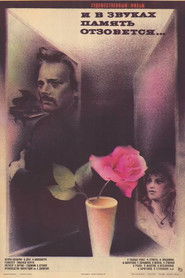
Ukrainian composer Mykola Lysenko goes for a walk in Kyiv. Along the way, his memory takes him back in time: first to his childhood in the village of Hrynky; to May 1861, when he attended Taras Shevchenko's funeral; to a trip to Leipzig; to the time when he was working on the opera "Taras Bulba"; to the images of Olha O'Connor and Olha Lypska, who gave him love, happiness, and inspiration.
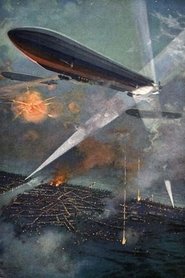
Engineer Dr Hugh Hunt revisits the little-known story of the First World War's Blitz, when the Zeppelin waged an 18-month terror campaign on the people of London.
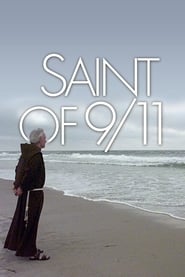
Saint of 9/11 presents the turbulent, restless, spiritual and remarkable journey of Father Mychal Judge. Compassionate champion of the needy and forgotten, a beloved Fire Department Chaplain, rousing Irish-American balladeer and iconoclast, Father wrestled with his own private demons while touching others in powerful and miraculous ways. Mychal Judge knew the pain of loss and suffering. He struggled with alcoholism and was an outspoken AA advocate. Father Judge was a gay man who loved his priestly work. Saint of 9/11 portrays Mychal's life as a spiritual adventure and an honest embrace of life, where alcoholism and sexuality were acknowledged. Saint of 9/11 is the story of a life's journey interrupted. Inspired by his life, the documentary embraces Mychal's full humanity.
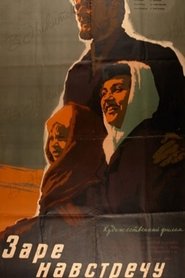
Siberia, 1916-1917. Bolshevik Pyotr Sapozhkov is engaged in revolutionary propaganda and agitation in a small Siberian town after the end of his exile. He is assisted by his wife Varya. After the February Revolution, the Bolshevik party is still outlawed, Pyotr and Varya go into hiding and face arrest. The guards manage to capture their son Timu and the boy is taken to an orphanage.
Growing up in a Ukrainian peasant family, knowing all hardships of serf life, young artist and poet Taras Shevchenko in the years of study clearly identifies the meaning of true art, which is to serve the interests of the people. The poems of Shevchenko are imbued with love for the common people. Fiery freedom-loving creativity of Taras Shevchenko is known throughout Russia. Nicholas I exiles the poet to the distant Caspian fort where he is to serve as an ordinary soldier and is banned from writing or drawing. In the poet's difficult days he has the support of Ukrainian soldier Skobelev, Polish revolutionary Sierakowski, captain Kosarev and the commandant of the fortress, Uskov. For the sake of his release Chernyshevsky and Dobrolyubov are hard at work. And so, the sick and aged Shevchenko is finally free. Together with Chernyshevsky and Dobrolyubov, he dreams of a bright future of the motherland, when the Russian and Ukrainian peoples throw off the chains of slavery.
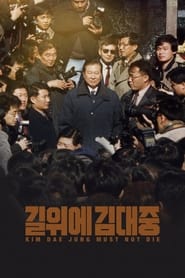
Kim Dae Jung, who stands next to people in the middle of caotic history! A young businessman Kim Dae Jung recognized the victims of ideology. He decided to be a politician to make his country where people's politic and democracy are rooted. The price of being leave from a guaranteed future and take the first step on a bumby road was kidnapping, death threats, imprisonment, and a death sentence that shook him to the core, but even in his final moments, when he was sentenced to death, Kim never wavered. "Democracy will be recovered. I believe in it." The life of President Kim Dae-jung, a death row inmate who survived from the throes of death, four parliamentary elections, and three unsuccessful presidential campaigns, is etched into the modern history of South Korea.
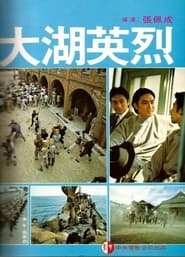
After the cession of Taiwan to Japan in 1895 by the Manchu government, people on the island staged a series of anti-Japanese revolts to oppose the tyrannical rule of the Japanese militarists.
1917, the eve of the February Revolution. Kirill Astakhov, a Bolshevik, one of the organizers of the suppressed riot, is transferred from the Siberian Archinsk prison to the Kutuisky stockade. He is accompanied by the warden Stepan Filimonov, who has his own scores to settle with politicians.
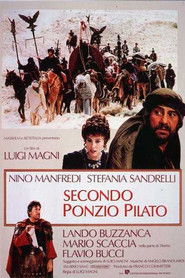
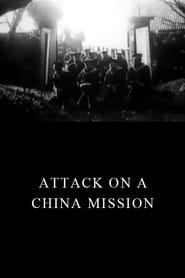
The titles tell us this film is based on an incident in the Boxer Rebellion. A man tries to defend a woman and a large house against Chinese attackers. They attack with swords, guns, and paddles. He's over-matched. What will become of the mission, its defenders, and its occupants?
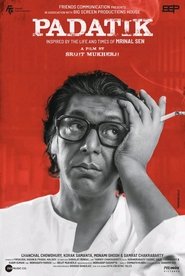
The film follows Mrinal Sen in his early days around the time of India’s independence, where he is a struggling idealist with an all-consuming hunger for cinema but unable to feed himself or his young wife, to 1950s Calcutta, where (alongside Satyajit Ray) he helped start the Indian New Wave cinema movement.
Forty years after the abolition of the death penalty in France, voted on September 18, 1981, the guillotine remains in the collective imagination as the instrument of the death sentence. This machine, developed during the Revolution to render justice more equal, was presented as progress. Over time, opinion has been divided on the subject of the death penalty, the guillotine becoming the object of man's cruelty, a remnant of an archaic way of dispensing justice and fuelling the many debates around the death penalty and its abolition.
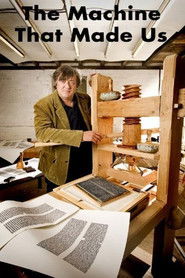
The printing press was the world's first mass-production machine. Its invention in the 1450s changed the world as dramatically as splitting the atom or sending men into space, sparking a cultural revolution which shaped the modern age.
On October 4, 2018, France celebrated the 60th anniversary of the Fifth Republic. It is a republic born in the throes of the Algerian War and one which—from the day it was founded by General de Gaulle until the presidency of a very Jupiterian Emmanuel Macron—has been assailed as a “Republican monarchy” by partisans of a more assertive parliamentarian state. By revisiting the struggle of those who dared oppose the new regime — only to suffer a crushing defeat on September 28, 1958, when they were barely able to garner 20% of the vote against the constitutional text — this film shines a powerful new light on the origins of the Fifth Republic and its consequences for the next 60 years. It is a constitutional debate that planted the seeds for a complete upheaval of the French political landscape, on the left in particular, and set the country in motion toward what would be called the Union of the Left.
The extraordinary story of the 1971 Women’s World Cup, which was held in Mexico City and witnessed by more than 100,000 fans. This landmark tournament was dismissed by FIFA and written out of sports history – until now, with dazzling archival footage and interviews with the former players.
We have detected that you are using an ad blocker. In order to view this page please disable your ad blocker or whitelist this site from your ad blocker. Thanks!