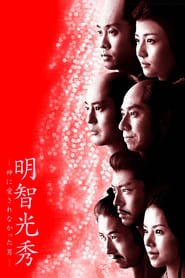
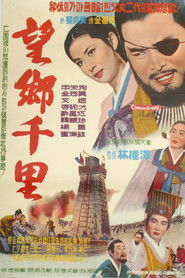
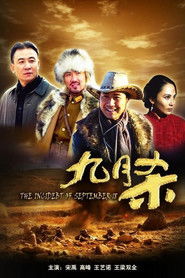
The famed leader Oda Nobunaga had two right-hand men who contributed to unifying the nation. One was Akechi Mitsuhide and the other Kinoshita Tokichiro, both rivals of each other for higher promotions. Eventually Mitsuhide was recognized for his work and was given a castle. However, Nobunaga's ambition to conquer the nation did not allow Mitsuhide to live happily in his territory. That is when an idea flashed across Mitsuhide's mind… Akechi Mitsuhide, the man who was considered to be the most intelligent general of the warring states era. What was the truth about him, Oda Nobunaga's best general and murderer?
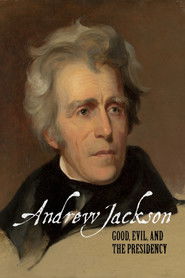
A fascinating account of the presidency of Andrew Jackson, who was both one of America's great presidents and a borderline tyrant. The seventh president shook up the glossy world of Washington, DC with his "common-man" methods and ideals, but also oversaw one of the most controversial events in American history: the forced removal of Indian tribes, including the Cherokees, from their homes.
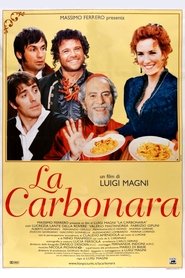
Cecilia is a commoner who runs an inn, where the specialty is the "spaghetti alla carbonara". Moreover, the woman is tied to the movement of young patriots, named "Carbonari", who want a united Italy, and are struggling against the power of the pope. Cecilia believes she lost her husband in a fatal accident, and has made a new lover: Fabrizio, who is also a patriot. One day the guy's saved by a monk, when he is about to be imprisoned by the soldiers of Cardinal Rivarola. The monk is the husband of Cecilia, not dead in the accident, and now he helps her to fight against the power of Rome with the Carbonari.
The film tells the story of the fight for a national soccer team in West Germany and East Germany. It tells of the forgotten lifetime achievements of the German female soccer pioneers and the fight for their place "on the pitch". A fight full of unbelievable, almost absurd twists and turns and stories that reveal a great deal about male heroic images and clichéd images of women in East and West.
The scholar Wang Zifu fell in love with the girl Ying Ning at first sight. By coincidence, he found Ying Ning's residence and the two became husband and wife. The scholar's mother was afraid of Ying Ning. After learning that he was a fox demon, she separated the two of them
The compelling story of an extraordinary woman's journey from her birth in a paper thin shack in the cotton fields of Georgia to her recognition as a key writer of the twentieth Century.Walker made history as the first black woman to win a Pulitzer Prize for her groundbreaking novel, The Color Purple.
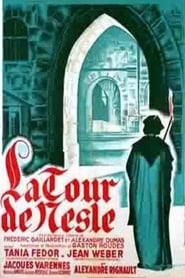
In the 13th century, lovers hurried to the door of Marguerite de Bourgogne. The aristocrat who every day was indulged in orgies that were famous throughout the country. What the suitors do not know is that they will inevitably be executed the day after these festivities and thrown to the Seine.
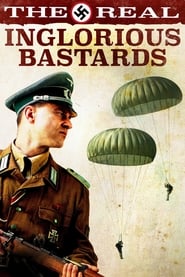
The truth is way stranger than fiction,” muses one interviewee in this unbelievable true account of an incredible war time saga. As the Second World War was coming to a close, the US Office of Strategic Services trained and parachuted two Jewish refugees and a German deserter deep into Nazi occupied Austria. Through vivid first-person accounts, re-enactments, archival footage and learned commentary, the film reveals how their efforts disrupted a vital supply route between Germany and the Italian front to bring about the surrender of Innsbruck to Allied Forces. Their unbelievable adventure has a finale that beats any Hollywood movie hands down — but a story so powerful that it became the basis for Quentin Tarantino’s mega hit.
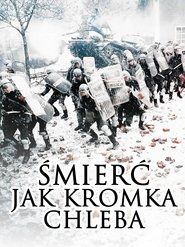
Katowice, the night of December 12-13, 1981. Military units occupy strategic points in the city. A group of Zomovniks, smashing union security, drags the chairman of the Company Commission of the NSZZ Solidarity in the Wujek mine out of his apartment. The news quickly spreads to the miners. Initially surprised, they soon react with spontaneous protest. On December 14, a strike breaks out at the plant. The miners demand the lifting of martial law and the release of the chairman. When negotiations fail, the army, ZOMO and militia storm the mine.
A film history sensation! A chance find in the city archives brings an almost forgotten chapter of St. Pölten's film history from 1937 to the big screen. The 16mm films survived the decades in tin cans. A remarkable contemporary document that shows the production and printing of the St. Pölten newspaper as well as rare moving images of the city shortly before the upheaval of the Nazi era.
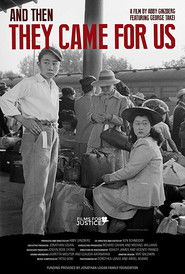
Seventy-five years ago, Executive Order 9066 paved the way to the profound violation of constitutional rights that resulted in the forced incarceration of 120,000 Japanese Americans. Featuring George Takei and many others who were incarcerated, as well as newly rediscovered photographs of Dorothea Lange, And Then They Came for Us brings history into the present, retelling this difficult story and following Japanese American activists as they speak out against the Muslim registry and travel ban. Knowing our history is the first step to ensuring we do not repeat it.
We have detected that you are using an ad blocker. In order to view this page please disable your ad blocker or whitelist this site from your ad blocker. Thanks!