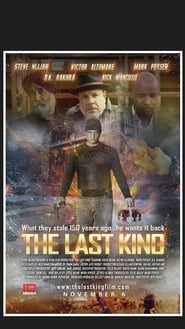
A descendant of the Maharaja Ranjit Singh attempts to recover the fabled Koh-I-Noor diamond from Britain's crown jewels when they make a tour stop at a Toronto museum.
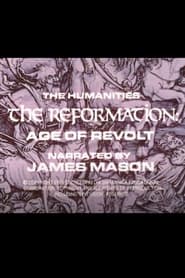
This educational documentary describes the political, social, and religious conditions of sixteenth century Europe. It also Interprets the reforms of Martin Luther as a part and/of these conditions as indications of future trends.
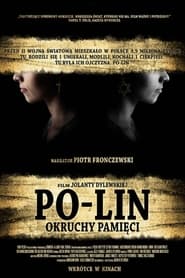
Unique archives show a world that no longer exists: pre-war Poland in which two cultures: Jewish and Polish, coexisted wall-in-wall; cottage in a cottage; town next to town. "Po-lin" - meaning "we will stop here" in Yiddish - does not deny the painful past. It only shows that there was something more next to them. Worth remembering and - perhaps - reconstruction.
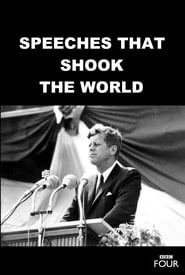
Speech-making is the art of persuasion. Well-honed rhetoric appeals not just to the mind, but to the heart and, deeper down, in the guts. Examining the speeches that provoked radical change, surprised pundits or shocked listeners, poet Simon Armitage dissects what makes a perfect speech. Simon gets the inside story behind some of the famous speeches of the modern age, talking to Tony Blair's speechwriter, to Earl Spencer on his controversial address at his sister's funeral and the woman who challenged the rioters in Hackney. We hear how Peter Tatchell confronted the BNP, Paul Boateng on how Enoch Powell's divisive speech personally affected him as a child, and Colonel Tim Collins, whose charge was to motivate his troops on the eve of the Iraq war. Simon discusses the nuts and bolts of speech writing with Vincent Franklin, aka the blue-sky thinking guru Stuart Pearson from The Thick of It, and gets tips on powerful delivery from actor Charles Dance.
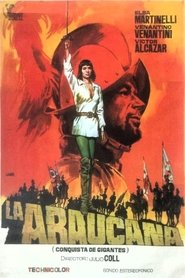
La Araucana is a Chilean film based on an epic poem in Spanish about the Spanish conquest of Chile, by Alonso de Ercilla; it is also known in English as The Araucaniad. It is considered the national epic of the Kingdom of Chile and one of the most important works of the Spanish Golden Age
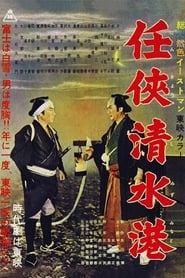
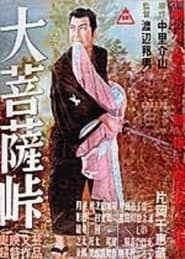
An all-star cast highlights this Jidai-Geki classic. Set in the samurai era, this is the tale of period Yakuza. One of the real classics in this genre. In this dramatic portrayal of the real-life gambling boss Jirocho, a good-hearted and honest boss sets out to take revenge for a fellow boss. At the same time, the other local bosses, in a bid to increase their own power, plot to dispose of Jirocho. Starring Kataoka Chiezo in one of his signature roles, this is an excellent portrayal of a figure who is not well known outside of Japan. Co-starring Nakamura Kinnosuke, this exciting tale of period yakuza brings history to life.
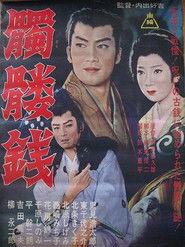
The mysterious story behind the Skull Coins, which are said to reveal the location of treasure, and the battle for them will make your heart beat faster.
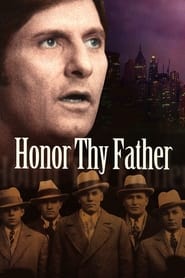
Joseph Bologna stars as Bill Bonanno in this made-for-television adaptation of the controversial bestseller from Gay Talese, chronicling the rise of New York's infamous Bonanno organized crime family. When his father disappears in 1964 and Bill is compelled to take over the "empire," other mafiosi attempt to take what's theirs. Brenda Vaccaro and Richard S. Castellano fill out the impressive cast of this gripping crime tale.
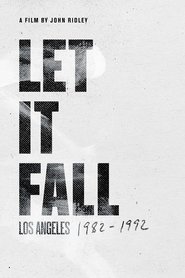
An in-depth look at the culture of Los Angeles in the ten years leading up to the 1992 uprising that erupted after the verdict of police officers cleared of beating Rodney King.
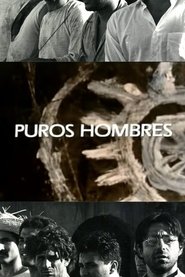
During the dictatorial regime of Juan Vicente Gómez, the bachelor Ibarra is imprisoned for political conspiracy. In prison, the inmates live together remembering the events that led to their imprisonment. Finally, a group, led by the bachelor Ibarra, manages to carry out a plan to escape from the prison.
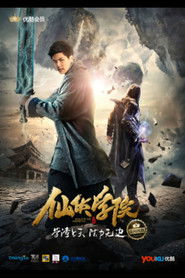
The film mainly tells the story of ordinary high school student Lu Fan who was accidentally involved in the demon battle, and was awarded the top master of the immortal world. He was then forced to take the story of “Xianxia College” to cultivate immortality, love, counterattack and destroy the Mozu.
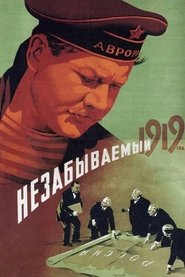
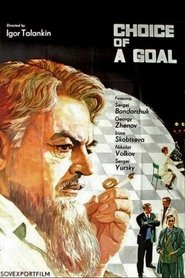
Soviet propaganda film in two episodes about Stalin's strong and cruel suppression of the 1919 anti-communist uprising in St. Petersburg, Russia. Stalin and Lenin are shown as heroes who destroyed the efforts of anti-communists led by White Russians with support from "bad" British capitalists headed by Sir Winston Churchill and Lloyd George.
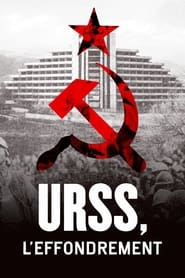
In August 1991, the Soviet empire collapsed. Yet this colossus seemed indestructible: its power had towered over the world for nearly a century. But a collapsed economy, reforms too late to avoid bankruptcy, an abortive coup d'état and the change of power revealed to the world the pre-existing debacle. The Soviet power and state disappeared. From then on, all rules are abolished. What happens when a state disappears and no longer finances or manages the territory under its control?
New York, June 3, 1968. Valerie Solanas enters the Factory, Andy Warhol's studio, and fires three shots at him, who miraculously survives, but is seriously wounded. What led this woman to try to kill the famous pop artist, as well as to write a manifesto calling for the eradication of men?
We have detected that you are using an ad blocker. In order to view this page please disable your ad blocker or whitelist this site from your ad blocker. Thanks!