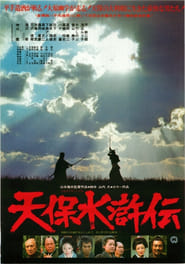
A great famine struck all of Japan: the so-called Great Tenpō famine. It was a time when there were frequent uprisings in rural areas due to farmers losing their land as a result of strict tax collection. The Tonegawa area of Boso was a lawless area for a generation, as two major forces fought against each other: Sukegoro of Iioka, who wields power with his industrial capital behind him, and Shigezo of Sasakawa, a rising yakuza. Furthermore, the successive floods of the Tone River, which could be called fate, forced the farmers into even more poverty and despair. Meanwhile, farmers in Nabe Village continue to live a lethargic life, but agricultural reform is about to begin under the hands of Yugaku Ohara, a ronin who has settled in the village.
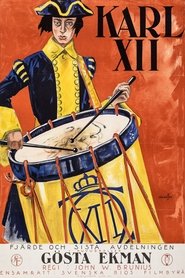
The film depicts the life of Charles XII of Sweden who oversaw the expansion of the Swedish Empire until its defeat at the Battle of Poltava. It was the most expensive production in Swedish history when it was made, and inspired a string of large budget Swedish historical films
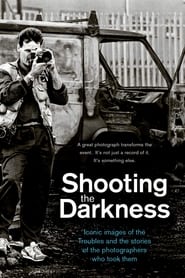
The testimony of the men who unwittingly became war photographers on the streets of their own towns in Northern Ireland, when violence erupted around them. Instead of photographing weddings and celebrities, as they expected, they produced the images that crudely show the suffering of ordinary people between 1968 and 1998, the worst years of the conflict.
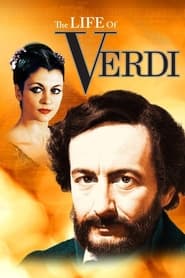
This 1982 biographical television miniseries, as seen on PBS's Great Performances, dramatizes the life of this classic Italian composer known for operas including La Traviata, Rigoletto, and Aida and his Requiem.
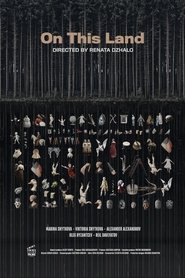
In late 18th-century Russia, village life is shaped by a fusion of rural superstitions, pagan beliefs and traces of Orthodox Christianity. Twin girls are violently separated when one is believed to be possessed, accused of draining the vitality of her sister. Meanwhile, a young man, branded a freak and outcast, obsessively constructs mechanical wings in a desperate attempt to fly like Icarus. Overseeing this turbulent world are Europeanised feudal lords who maintain brutal, cynical control over the peasants, exacerbating class tensions.
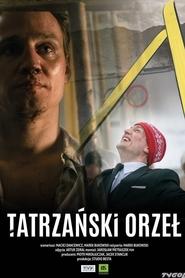
Stanislaw Marusarz, a well-known Polish jumper, including: the 1938 world vice-champion in Lahti, four-time Olympian, seven-time participant in the ski world championships, as well as a second lieutenant of the Home Army, a Tatra courier. From the first months of the occupation, he was active in the underground as a courier of the Underground State to Hungary. In 1940, he jumped from the second floor and escaped from the Gestapo prison in Krakow. After the war, he was one of the longest active ski jumping athletes in the world. Marusarz became the guest of honor at the 4-Hills-Tournament in the 1965-66 season. He stood on the famous Gross-Titlis-Schanze at the age of 53 - his jump in a suit and tie has made his legacy. Marusarz's spectacular jump in a suit during the Four Hills Tournament '66 became a pretext to tell his fate, as well as the story of his sister Helena - a talented skier, participant of the Resistance Movement, murdered by the Nazis in 1941.
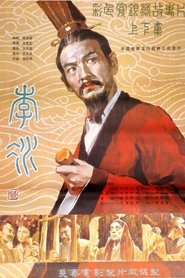
This movie accurately describes the accomplishment of chief hydraulic engineer Mr. Bing Li 2500 years ago, and his name is used as the title of this movie.
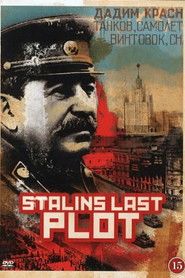
January 1953: On the eve of his death Stalin finds himself yet another imaginary enemy: Jewish doctors. He organizes the most violent anti-Semitic campaign ever launched in the USSR, by fabricating the "Doctors' Plot," whereby doctors are charged with conspiring to murder the highest dignitaries of the Soviet Regime. Still unknown and untold, this conspiracy underlines the climax of a political scheme successfully masterminded by Stalin to turn the Jews into the new enemies of the people. It reveals his extreme paranoia and his compulsion to manipulate those around him. The children and friends of the main victims recount for the first time their experience and their distress related to these nightmarish events.
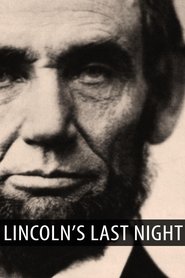
Re-enactments augment this documentary that chronicles Lincoln's journey from his early years as a rising politician through his presidency, the Civil War and to his untimely death.
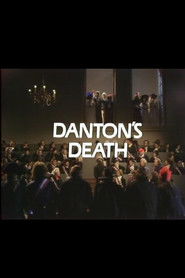
Danton's Death is arguably the most dramatic and penetrating study of revolution ever written. Georg Büchner concentrates on that moment in 1794 when the Reign of Terror, already well established, spills over into a total blood-bath. The play, adapted by director Alan Clarke and Stuart Griffiths, both highly imaginative and closely documentary, shows how the great hero of the early phase of the Revolution, Danton, sickened by the excesses of the guillotine, which he helped to create, wants to call a halt. But Robespierre and Saint-Just, leaders of the Jacobins, with a ferocious puritanical zeal, spur on 'the wild horses of the Revolution'.
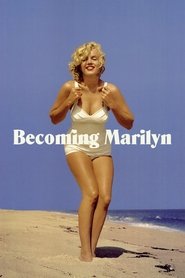
The story of how Norma Jeane Mortenson became Marilyn Monroe (1926-62), a lucid path of self-discovery, from anonymity to stardom: the painful birth of a myth.
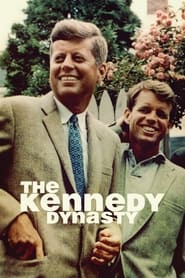
The story of a powerful political and economic dynasty, fundamental to understanding the turbulent destiny of the United States of America throughout the 20th century; of nine brothers who had truly extraordinary lives, marked by both greatness and tragedy: the story of the Kennedy family.
A short made for TV with director Peter Greenaway discussing the dazzling 3.5 minute opening sequence from his film, 'Prospero's Books'. As Prospero (John Gielgud) walks through his library, Greenaway comments on the historical, mythological, biblical & fictional characters occupying the library.
In 1940s Louisiana, a young Cajun girl with a passion for the swamp and singing defies her father's prohibition on exploring the wild, only to forge a sinister and mystical bond with a Rougarou.
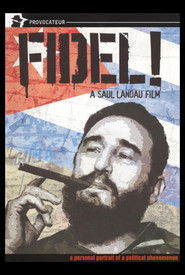
This film provides a unique view of Cuba's leader, containing fascinating archive footage of the Bay of Pigs invasion and scenes of Che Guevara - alongside interviews with political prisoners.
We have detected that you are using an ad blocker. In order to view this page please disable your ad blocker or whitelist this site from your ad blocker. Thanks!