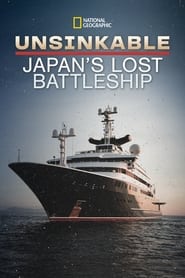
October 24, 1944, the world’s greatest battle at sea begins in the Philippines. Japan’s navy gambles on a decisive victory against the United States to turn the tide of World War II. Instead, Musashi, its top-secret super battleship, ends up at the bottom of the ocean.
Set in 1815, this is the dramatic story of a child of the fur trade, son of a Native mother and a Scottish-Canadian fur trader. John Mackenzie's father is a wintering partner of the Montréal-based North West Company, which was for decades the wealthiest merchant enterprise in North America. To mark his entry into adulthood, twelve-year-old John is travelling for the first time to Fort William, the Company's lavish winter headquarters by Lake Superior. In following his journey, the film reveals the complex network of people--Scottish, French and Native Canadian--that made up fur-trading society and gave a unique flavor to the opening up of Canada's northwest.
In 1755, ten thousand French Canadian settlers were thrown off their land, loaded on ships, and exiled. Island Memories explores the past in a small Acadian community in Nova Scotia where the last survivor of this great deportation is reputedly buried. A lively film full of adventure, people, and history.
Jim Bakker establishes a large televangelical empire in the 1980s, including Heritage Village. However, they are removed from P.T.L, the ministry that they had established in 1987.
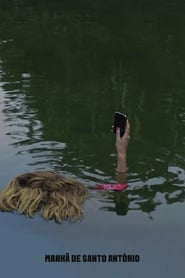
Tradition says that on 13 June, Saint Anthony’s Day (the national holiday of Lisbon’s patron), lovers must offer small vases of basil with paper carnations and flags with popular poems as a token of their love.
L. Onerva and Eino Leino - two people, two rebels, prisoners of a difficult love relationship. Along with two passionate poets, there will be a third wheel, a young and talented composer Leevi Madetoja.
Rummaging for Pasts is an experimental juxtaposition of two cinematic documents: the video diary of an international archaeological excavation and a collection of assorted eight millimeter found footage of Indian weddings.
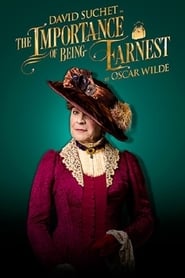
National treasure and Poirot star David Suchet starred as the formidable Lady Bracknell in Oscar Wilde’s much loved masterpiece The Importance of Being Earnest. Directed by Adrian Noble, (Amadeus, The King’s Speech, Chitty Chitty Bang Bang) Wilde’s superb satire on Victorian manners is one of the funniest plays in the English language. Two bachelor friends, the adorable dandy Algernon Moncrieff (Philip Cumbus – regular player at Shakespeare’s Globe) and the utterly reliable John Worthing J.P., (Downton Abbey’s Michael Benz) lead double lives to court the attentions of the exquisitely desirable Gwendolyn Fairfax (Emily Barber) and Cecily Cardew (Imogen Doel). The gallants must then grapple with the riotous consequences of their deceptions, and with the formidable Lady Bracknell.
Acclaimed dramatization recreating the incidents surrounding the 1971 revolt in New York's Attica State Prison that lasted for 23 days and resulted in the greatest casualty toll between Americans since the Civil War.
The plot of the film starts at the beginning of the century, in the heyday of the Andrássy and Károlyi families, during the ever increasing crisis of the Austro-Hungarian Monarchy, and ends with the emigration of the Károlyi couple after the collapse of the 1918-19 revolutions. It tells the story of this historical period (war, revolution, take-over by the proletariat, dictatorship) from the view of an extremely wealthy lady, Andrássy Katinka. The authors tried to evoke the special story during which a strange and unique woman gets thoroughly involved in history through her love and at the same time keeps her own identity and self-governance.
The Victorian era is often cited for its lack of sexuality, but as this documentary reveals, the period's artists created a strong tradition surrounding the classical nude figure, which spread from the fine arts to more common forms of expression. The film explains how 19th-century artists were inspired by ancient Greek and Roman works to highlight the naked form, and how that was reflected in the evolving cultural attitudes toward sex.
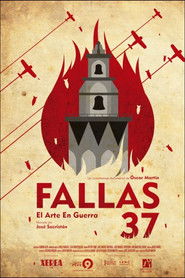
In November 1936, a few months since the beginning of the Spanish Civil War, the government of the Second Republic moves to Valencia. In this situation, several Valencian artists and intellectuals decide to build four fallas — satirical plasterboard sculptures created to be burnt — to mock fascism.
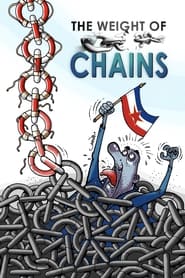
The Weight of Chains is a Canadian documentary film that takes a critical look at the role that the US, NATO and the EU played in the tragic breakup of a once peaceful and prosperous European state - Yugoslavia. The film, bursting with rare stock footage never before seen by Western audiences, is a creative first-hand look at why the West intervened in the Yugoslav conflict, with an impressive roster of interviews with academics, diplomats, media personalities and ordinary citizens of the former Yugoslav republics. This film also presents positive stories from the Yugoslav wars - people helping each other regardless of their ethnic background, stories of bravery and self-sacrifice.
We have detected that you are using an ad blocker. In order to view this page please disable your ad blocker or whitelist this site from your ad blocker. Thanks!