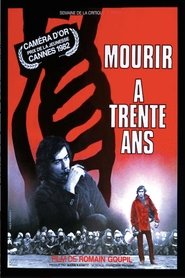
Michel Recanati was a militant leader in the May, 1968 riots in Paris, organizing many groups to meet, discuss, and act on leftist principles both before and after the disturbances. He was imprisoned for a short while in 1973. Disillusioned after the failure of the demonstrations and the death of the only woman he had loved, his life seems to have changed from a period of hope and activism to one of bottomless despair. His friend, Romain Goupil wrote and directed this biographical documentary. Death at 30 received the 1982 Cannes Film Festival's Golden Camera Award for "Best First Feature-Length Film."
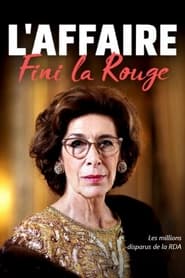
The historical background to the story is the transfer of 269 executed women to the Berlin Anatomy Department in the years 1939-1945. The corpses were misused for experimental purposes.
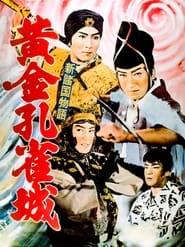
A group of pirates led by the evil Gondaiyu and his wizard, Genkuro, capture the Golden Peacock Castle and massacre the peaceful clan that lives there. The few survivors that manage to escape plot their revenge and wait for the right timing for an attack. The struggles of the Golden Peacock Clan continue as they seek to reclaim their home and prevent the evil Gondaiyu from taking their most prized treasures.
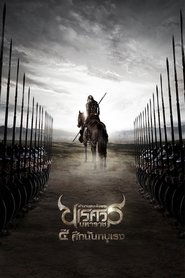
Army of God, King Ananda Bago Red Score big hitters than any war. 3200, elephant riding includes the army and the commoners Regiment, which amounted to 12000 252000 by Mr. A wise army into battle. Well Maha Raja Manga equipment necessary to do and steal cover Roland Smooth brave soldiers.
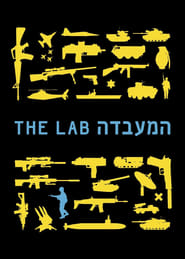
Since 9/11, the Israeli arms industries are doing bigger business than ever before. Large Israeli companies develop and test the vessels of future warfare, which is then sold worldwide by private Israeli agents, who manipulate a network of Israeli politicians and army commanders, while Israeli theoreticians explain to various foreign countries how to defeat civil and para-military resistance. All based on the extensive Israeli experience.The film reveals The Lab, which has transformed the Israeli military occupation of Gaza and the West Bank from a burden to a marketable, highly profitable, national asset.
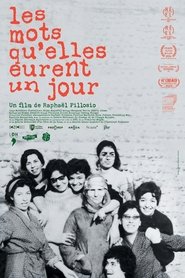
1962, at the end of the Algerian War, Algerian independence activists are released from Rennes prison. For one night, filmmaker Yann Le Masson films them. They tell him their vision for the future of Algeria and the place women must occupy in the new society to be built. Fifty years later, with the soundtrack missing, Raphaël Pillosio sets out to find these women. Two deaf people set about lip-reading the women filmed by Yann Le Masson, revealing snatches of sentences, words cut short by the camera's shifts. An investigative film in which the few activists still alive discover their old testimonies and tell us their silent story. The reconstruction of the lost soundtrack will remain in suspense; no happy ending will come to absorb the absence, to cancel the ferocious operation of time. An essay film about cinema that depicts their disappearance, and forever keeps them alive.
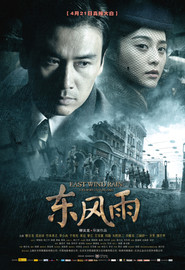
Year 1941, a roll of film is delivered to Shanghai and a Chinese spy named Gong An Ming (Liu Yun Long) must decide what he should do with the film, which turns out containing a great secret that could shock the whole world. He discovers the plan code named 'East Wind Rain' and passes the information to the American that their territory will soon be invaded by the Japanese. The code is aired during the weather report from Radio Tokyo on Dec 4, 1941. While in Shanghai An Ming meets with a singer cum pianist, Huan Yan (Fan Bing Bing) and falls in love with her, not realizing that she is also one of the spies. Soon An Ming realizes that his effort found no success and have been ignored due to some reason. And now by risking his own life he must also decide whether to make Huan Yan his lover or his enemy? Will the Japanese attack Pearl Harbor in the end? Which country is Huan Yan working as a spy for? Will An Ming get caught by his enemy?
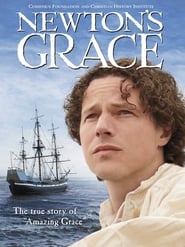
John Newton was a troubled young man with a violent temper and a penchant for vulgarity that literally made his fellow sailors blush. Whipped for desertion and sold into slavery, it seemed his life would end early in a West African grave...until he was rescued by a ship captain sent by his father. Following a powerful conversion experience during a storm at sea, Newton would eventually become a pastor in the Church of England and the writer of several of the church's most beloved hymns, including "Amazing Grace".
For centuries the Japanese warred among themselves and their neighbors, creating a colorful, rich and sometimes brutal legacy. Intriguing to outsiders for centuries, modern Japan is no less so In the 21st century. Focuses on Tokyo and its environs, with attention to scenery, shopping and shrines.
"In 1904, disgusted by the aftermath of the Spanish-American War and the subsequent Philippine-American War, Mark Twain wrote a short anti-war prose poem called "The War Prayer." His family begged him not to publish it, his friends advised him to bury it, and his publisher rejected it, thinking it too inflammatory for the times. Twain agreed, but instructed that it be published after his death, saying famously: None but the dead are permitted to tell the truth."
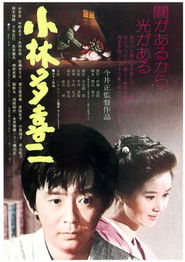
A headstrong young man seeks to join the Shinsengumi, but while his determination impresses his superiors, questions begin to arise as to his true identity and intentions.
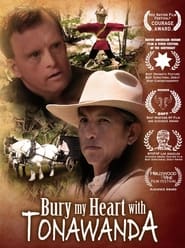
A historical film about the Seneca culture featuring the Tonawanda Indian Reservation, Bury My Heart with Tonawanda tells the story of a developmentally disabled boy with Downs Syndrome who is rejected by his own family but is accepted and nurtured by the Tonawanda Seneca Nation.
James Franco's pre production test reel for Blood Meridian. Originally selected to direct a feature length adaptation, James Franco filmed a 32 minute test scene of Tobin telling The Kid about how the Glanton Gang first met Judge Holden in the desert.
We have detected that you are using an ad blocker. In order to view this page please disable your ad blocker or whitelist this site from your ad blocker. Thanks!