Beginning with Guernica and the Chinese cities of Chongqing and Shanghai in 1937 and ending with the bombing of Hiroshima and Nagasaki in August 1945, World War Two saw a new art of warfare in the form of extensive, worldwide bombing campaigns.
Haunted by his violent past, the ambitious lawyer Anuol returns to his homeland, South Sudan, committed to serve his country and hold accountable those who are responsible. But his quest, led by the rules of law, hits a wall when he is confronted with his countrymen’s reluctance to reconcile with history.
The extraordinary story of the Irish War of Independence (1919-22): from the failed insurrection of 1916, the detailed account of how pro-independence Ireland rebuilt a movement whose efforts would eventually lead to the creation of a new nation. (Documentary film based on the miniseries of the same title.)
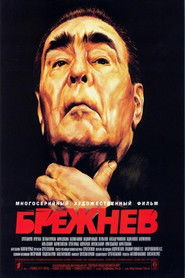
A biographical TV movie about Soviet leader Leonid Brezhnev that originally aired in four parts on Russia's Channel One. While nostalgic, the film does not attempt to rehabilitate Brezhnev.
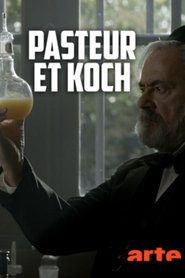
Louis Pasteur and Robert Koch: great scientists, national icons, opponents in the service of research. One is a Frenchman and chemist and is already in the second half of his life. He is honored worldwide with numerous prizes for his discovery of the rabies vaccine. The other was a still unknown German country doctor in his 30s, whose discovery of the tuberculosis bacillus was later awarded the Nobel Prize for Medicine. From 1881, the two were bitter rivals. Their 20-year rivalry resulted in spectacular progress in the fight against deadly epidemics.
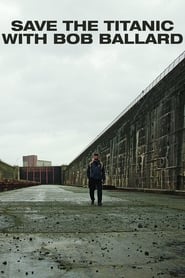
Robert Ballard has been living and breathing the Titanic since he was part of the team that discovered it in 1985. In Save the Titanic With Bob Ballard, he revisits the iconic ship in an entirely different way—from the perspective of those who set sail on it some 100 years ago. Ballard travels to the shipyards of Northern Ireland to retrace the path of the doomed ship from its very incarnation. Throughout his journey, Ballard is driven by one personal question—will the Titanic survive another 100 years? As evidence mounts that the ship is under siege by natural forces, careless visitors, and even rogue salvage operators, the man who found it teams with the families of victims and survivors to protect the legacy of history’s most famous ship.
Ten years after fleeing the regime in Serbia, Marko finds himself defending some of the very people that he fought against while he lived there, including the notorious Radovan Karadzic.
The Waffen SS is the elite Nazi fighting force that holds a dark place in Germany's history. Their code is a lethal combination of bravery and savagery.
A view of the life and works of the late Alex Colville, the celebrated Canadian painter. Shows the influence on his life and works of his experience as an artist during World War II, and of his relationship with his wife, Rhoda. Friends and critics speak of the construction and sense of menace in his work, and Colville comments on his sense of order, goodness, and contingency.
We have detected that you are using an ad blocker. In order to view this page please disable your ad blocker or whitelist this site from your ad blocker. Thanks!