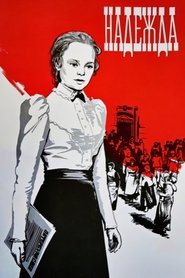
The film tells about the childhood and youth of the wife, friend and military ally of the founder of the country of the Soviets Nadezhda Konstantinovna Krupskaya. The main attention in the film is paid to the participation of a young revolutionary in the organization of the struggle of the workers of St. Petersburg for their rights, against the autocracy.
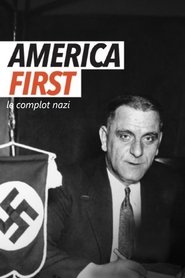
April 17, 1944. A high-profile trial for sedition opens in Washington. Dozens of individuals—including members of Congress—are accused of cooperating with German forces, participating in pro-Nazi movements, and plotting to overthrow the U.S. government. How did this happen in the world's greatest democracy? And why does no one remember this major episode in American history?
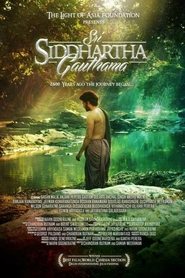
Sri Siddhartha Gautama is a Sinhala movie released on 24 January, 2013. The movie is directed by Saman Weeraman and featured Anchal Singh and Gagan Malik as lead characters.
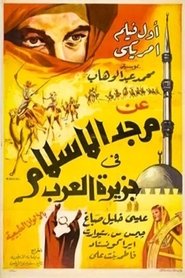
An old Bedouin tells the story of the twenty-three year old Prince Abdul Aziz ibn Saud’s daring raid on Riyadh to geologists exploring the deserts of Saudi Arabia.
They were going to become heroes, but they didn't know it. Most of them were not yet twenty years old in June 1940, when France found itself on the ground. They were starting careers, studies, had families, friends. None had heard General de Gaulle's call on June 18, but all listened to Marshal Pétain's speech on the 17th, asking to stop fighting. They immediately rebelled and joined London or the Resistance. Through the testimonies of seven of the last Companions of the Liberation (made in 2013), this film tells us about their unwavering commitment and takes us in their footsteps until the Liberation.
Ukrainian journalist Katya Soldak, currently living in New York City and working for Forbes magazine, chronicles Ukraine's history: its strong ties to Russia for centuries; how it broke away from the USSR and began to walk alone; the Orange Revolution, the Maidan Revolution, the Crimea annexation, the Donbass War; all through the eyes of her family and friends settled in Kharkiv, a large Ukrainian city located just eighteen miles from the Russian border.
The long-suppressed story of 12,000 Japanese Americans who dared to resist the U.S. government's program of mass incarceration during World War II. Branded as 'disloyals' and re-imprisoned at Tule Lake Segregation Center, they continued to protest in the face of militarized violence, and thousands renounced their U.S. citizenship. Giving voice to experiences that have been marginalized for over 70 years, this documentary challenges the nationalist, one-sided ideal of wartime 'loyalty.'
The little-known story of a deadly race massacre and carefully orchestrated insurrection in North Carolina’s largest city in 1898 — the only coup d’état in the history of the US. Stoking fears of 'Negro Rule', self-described white supremacists used intimidation and violence to destroy Black political and economic power and overthrow Wilmington’s democratically-elected, multi-racial government. Black residents were murdered and thousands were banished. The story of what happened in Wilmington was suppressed for decades until descendants and scholars began to investigate. Today, many of those descendants — Black and white — seek the truth about this intentionally buried history.
Between the end of the Second World War and the abolition of the "offence of homosexuality" in 1982, 10,000 sentences were handed down in France. Sentences in correctional courts, fines and sometimes imprisonment, the convictions were mainly against men. The last witnesses of this period speak out and tell of four decades of clandestine life, just before the tragedy of AIDS.
A story about of one of the darkest periods in German history, an era in which the belief in occult forces was widespread. In Bamberg, witch hunts were fostered by a greedy and delusional Bishop Prince and reached their peak around 1630. This Bamberg ruler used the witch trials to purge his political enemies and enrich himself with their goods. Almost 1000 innocent men, women and children became his victims. BURNING SOULS deals with the era seen through the eyes of Johanna Wolff, a pharmacist's daughter, and the young physician Cornelius Weinmann. To save the innocent, he and a few courageous men revolt against the Bishop Prince.
Seventeenth century. Set in a small village, nestled between the sea and the mountain, the father of Alan, a young fifteen-year-old boy, has sold himself for two years to indentured service. Alan is forced to take the place of his father and struggles to support his family.
Young prince Aleksandr has to hold out against two enemies - the Horde in the east and the Teutonic order and Sweden in the west. He discovers that some boyars are plotting against him and are ready to betray Novgorod to the Swedes and the Germans to boost their trade. Meanwhile, his best friend falls under suspicion, as somebody tries to poison the young prince at his own wedding feast. Aleksandr has no way out - to defend his people against the invaders and to find the true poisoner.
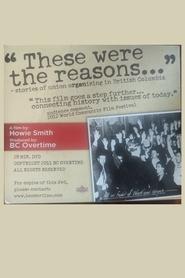
This film takes us into the harsh realm of BC's early coal mines, canneries, and lumber camps; where primitve conditions and speed-ups often cost lives. Then, the film moves through the unemployed' struggles of the '30s, post WWII equity campaigns, and into more recent public sector strikes over union rights.
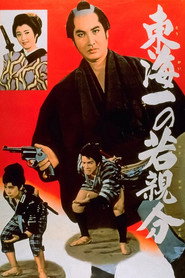
He was married to his lover's butterfly and started a new residence. But good things do not last. In his uncle, Uzaemon in Kawashima, Yoshiji Akaji, Yoshimoto's lender, and Kanehira Akagi, the older brother of the former loan of Mishima, played a challenge. It is said to open the ladies' room to the settlement of Wada island. Although Jiro headed to Shigetsugu for arbitration, he was forced to surrender. In such a case, Jiro became chased by Kinpei and others.
We have detected that you are using an ad blocker. In order to view this page please disable your ad blocker or whitelist this site from your ad blocker. Thanks!