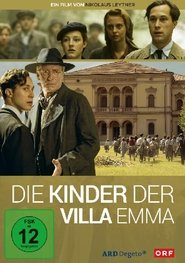
According to true events, the moving drama "The Children of Villa Emma" tells of a dangerous escape that took place during the Second World War. In 1942/1943, the Italian village of Nonantola was indeed a refuge for 73 Jewish children who wanted to escape the merciless access of the National Socialists on their way to the "Promised Land" of Palestine. Director Nikolaus Leytner describes the dangerous journey as an exciting test, presented by a talented young cast.
With unique and exclusive testimonies from doctors, nurses, loved ones, and patients we go behind closed doors to examine a high security psychiatric facility that takes care of some of the most dangerous patients.
Final part of epic drama about war and its effects upon human beings, follows the fortunes of the Godai family through the Sino-Japanese War through the Soviet Union's sudden attack upon Japanese troops at the end of the war.
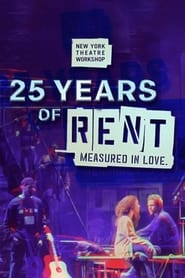
A quarter century ago, Jonathan Larson’s groundbreaking musical, RENT, opened at New York Theatre Workshop. From its humble beginnings at NYTW, this rock musical went on to shape a generation. What began in the East Village traveled to Broadway, across the nation and around the world. On March 2, 2021, NYTW held its biggest fundraising event of the year, 25 YEARS OF RENT: MEASURED IN LOVE. This virtual celebration of RENT and its impact on the collective cultural consciousness featured a selection of iconic songs by some of today’s most beloved recording and theatre artists, exclusive content uncovering how RENT came to life, and reflections on the driving force of Jonathan’s legacy in the American theatre.
The tale of a confrontation with a formidable enemy, poised to seize the throne. It is time for the two kings to set aside their differences and unite in order to protect and preserve their kingdom.
Welcome to Florence, Arizona: a cowboy town with a prison problem. Just 8,500 residents call the tiny community home—but over 17,000 inmates live there, housed in nine jails spread out over a sprawling industrial prison complex. The economic fate of the town’s inhabitants is inextricably linked with the prisons—and the townspeople are not necessarily happy about it. Director Andrea B. Scott follows four colorful characters whose lives are tied up with the prisons, including the town’s aspiring mayor, a retired correctional officer and speed shooter, a barber who longs for the town’s free-spirited cowboy days, and troubled teen Marcus, whose parents met through their prison careers. “Florence, Arizona” is a richly drawn, humorous look at a singular small town whose Wild West roots are still very much alive in its outlaw identity today. -TCFF database
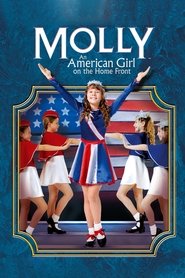
Molly is a girl living in the year 1944 and WWII has brought many changes to Molly's life. An English girl comes to live with Molly's family to escape the bombings. They slowly become good friends.
The "Good News" is a film dedicated to one of the main holidays of Orthodox Christians: the Annunciation of the Most Holy Theotokos. The main idea of this holiday is the beginning of the liberation of the human race from sins and eternal death, the joyful news about the upcoming birth of Jesus Christ. The film shows how people living in the remote Russian village are preparing for the Annunciation, marking the turning point of winter and the beginning of field work. Everyday details of the parish community life help to feel Russian Orthodox customs that have been formed for centuries.
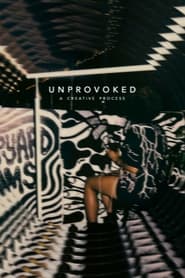
Artist Taylor Denise sets out to make her first painting, which also happens to be her largest work to-date. As she embarks on this creative process of making shit because it looks cool, she's met with comradery, debauchery, and people's brains interrupting art whatever way they want to-ery.
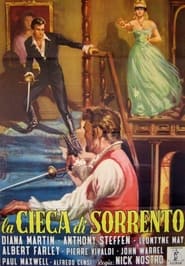
La Cieca Di Sorrento (also known as Revenge of the Black Knight is a 1963 cloak and dagger film directed by Nick Nostro and based on the novel of the same name by Francesco Mastriani. Masked knights fight the cruel Tyrant Amedeo, tutor of the beautiful, rich and blind orphan Isabella. The knights are led by a young doctor who in the end will defeat Isabella's evil oppressor, give her her sight and marry her.
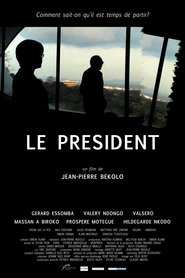
Cameroonian filmmaker Jean-Pierre Bekolo's newest work uses split-screens (at times, up to four images simultaneously) to present a fake documentary in which "the president" has disappeared; talk-show hosts, rivals, politicians and even rappers chime in on what may have occurred, and what their president for life has—or has not—done for Cameroon.
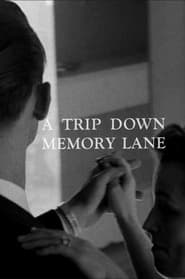
A Trip Down Memory Lane is a 1965 experimental collage film by Arthur Lipsett, created by editing together images and sound clips from over fifty years of newsreel footage. The film combines footage from a beauty contest, religious procession, failed airflight, automotive and science experiments, animal experimentation, skyscraper construction, military paraphernalia, John D. Rockefeller and scenes of leisure, Richard Nixon and scenes of war, blimps and hot air balloons, and a sword swallower. Lipsett envisioned his film as a kind of cinematic time capsule for future generations.
Southern California’s Coachella Valley, including the communities of Palm Springs, Palm Desert, Desert Hot Springs, boasts hundreds of extraordinary midcentury modern homes, public buildings and commercial structures. Modern designers such as William F. Cody, Albert Frey, William Krisel, John Lautner, Richard Neutra, R.M. Schindler, Donald Wexler, E. Stewart Williams left their collective mark on this desert paradise. Desert Utopia: Mid-Century Architecture in Palm Springs traces the history of modern architecture in Palm Springs from the first bold forays into modernist design to the preservation challenges facing the region today. Director Jake Gorst’s film features rare archival images and footage as well as interviews with historians, homeowners and the architects who helped create this mecca of modernism.
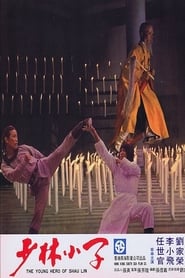
This film is about Fong Sai-yu going under cover as a servant in the villain's mansion. He is a famous fighter that fights for justice. While at the mansion he met the great Kow Lee played by Tao-Liang Tan also a great fighter that works there for the villain. He recognize Fong Sai-Yu right away and challenge him to a fight because he wanted to match his fighting skill with the famous fighter. At first Fong Sai-Yu declined but eventually agreed after the great Kow Lee threatens to reveal his identity. They met on top of a mountain where they fought to a draw and then became great friends. The great Kow Lee later help Fong Sai-Yu at the end of the film to defeat the villain who was very tough to beat.
We have detected that you are using an ad blocker. In order to view this page please disable your ad blocker or whitelist this site from your ad blocker. Thanks!