This documentary looks at the factors that led to the 2008 financial crisis and the efforts made by then Treasury Secretary Henry Paulson, Federal Reserve Bank of New York President Timothy Geithner, and Federal Reserve Chair Ben Bernanke to save the United States from an economic collapse.
The sinking of the Titanic was far more than a simple accident. It was a tragedy that could have been prevented. It was the result of a long chain of mistakes: a fatal series of avoidable human errors that sent the Titanic and more than half of her passengers to their watery graves. Based around the official inquiry held immediately after the event, plus evidence that's come to light since the wreck of the Titanic was discovered in 1985, National Geographic, in this drama-documentary special, answers the question: Who Sank the Titanic?
A shocking political exposé, and an intimate ethnographic portrait of Pacific Islanders struggling for survival, dignity, and justice after decades of top-secret human radiation experiments conducted on them by the U.S. government.
While many GDR opposition activists emigrated to West Germany at the beginning of the 1980s, the well-known singer-songwriter Bettina Wegner held on to her homeland against all odds. Although she was sent to prison as a young mother, she remained convinced that it was worth fighting to make the GDR a better, freer society. However, life as an undesirable person in the state becomes a real ordeal for her and her family.
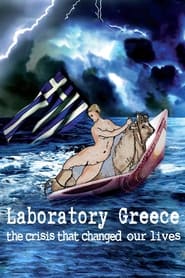
A journey through Greece and Europe’s past and recent history: from the Second World War to the current crisis. It is a historical documentary, a look into many stories.
«If Democracy can be destroyed in Greece, it can be destroyed throughout Europe»
Paul Craig Roberts
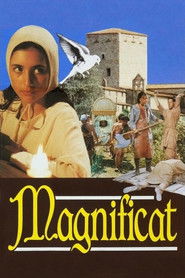
During the Middle Ages, a traveling executioner hires an apprentice to learn the finer points of torture and execution, and a young girl is given by her parents to a Catholic convent.
O-Kiyo (Mitsuko Mito), who had escaped from her boss, Shoden, who controlled the Sensoji Temple district, was desperately contemplating suicide when she was rescued by ronin Kojuro Tozawa (Kazuo Hasegawa), who hid her in a dilapidated apartment building. The Shoden clan desperately searched for O-Kiyo, but Kojuro found a huge sum of 50 ryo and ransomed O-Kiyo. Unable to accept this outcome, the enraged Shoden clan attempted to win the favor of constable Jinnosuke Nakayama (Kusuo Abe), seeking to demolish the dilapidated building and transform the area into a pleasure district. However, Kojuro thwarted their plans, bringing joy to the poor residents of the building. After demonstrating his remarkable skills, Kojiro revealed his true identity - he was a prominent hatamoto.
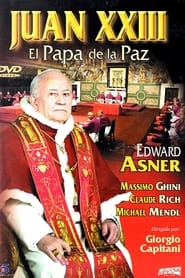
This is a two-part Italian television mini-series directed by Giorgio Capitani and broadcasted in April 2002 on Rai Uno. It is the life story of Pope John XXIII, nicknamed "the good Pope".
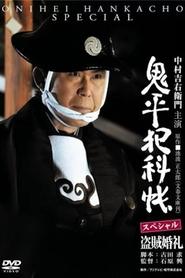
Thieves broke into Yamashiroya, a drug wholesaler, and stole 780 ryo. In the storehouse, there was a sticker with a picture of an umbrella, the signature of Yahei Kasayama, a great thief who once ransacked the entire Kanto region. Heizo Hasegawa (Kichiemon Nakamura), the director of the reform of the thieves, learns that the theft was the work of Yahei's son Yataro (Somegoro Ichikawa [now Koshiro Matsumoto]) and his gang, thanks to the help of a spy named Isaji (Koichi Miura). He learns that Yataro is in the process of marrying Oito (Tomoka Kurokawa), the daughter of Shigezo of Narumi, a great thief from Owari. Heizo learns the true identity of the thread and the evil plans of the second generation Narumi Shigezo (Fuse Hiroshi), and he meets Nagashima no Kugoro (Matsudaira Ken), a former thief who is trying to arrange a marriage deal to return the favor to the previous generation Kasayama and the previous generation Narumi. ) while hiding his identity...
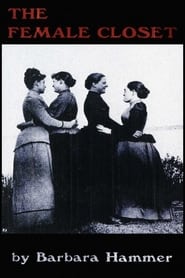
The Female Closet uses archival photographs, home movies, interviews, and other visual materials to explore the closeted lesbian stories of artists Alice Austen, Hannah Höch and Nicole Eisenman. Utilizing groundbreaking research, newly discovered home movies, and archival photographs, and other visual sources, The Female Closet is a cultural interrogation of the closeted and not-so-closeted lives of three women artists.
On November 22, 1963 CBS newsman Walter Cronkite is given the task of reporting on live television about President John F. Kennedy's assassination in Texas.
A film based on the biography of the famous Russian balalaika player Vasili Vasilevich Andreev (1867-1918), a self-taught virtuoso musician, who brought balalaika to the concert stage.
Leon Gast's musical documentary reveals New York City's Latin culture and features live performances of salsa greats The Fania All Stars and The Spanish Speaking People of New York. A document of urban American Hispanic culture, Gast's film captures the rhythms of New York's Spanish Harlem, from illegal cockfights and Santeria rituals to the rooftops and backstreets of El Barrio and the legendary musicians performing at the Cheetah club.
During the middle of the Kanei Period (1624-1644) Japan was in the early stages of its most peaceful era. This left a large number of unemployed samurai with nothing to do, and their morale suffered. In order to raise their spirits, the Shogun's Chief Advisor suggests that they hold a "Festival of Swordsmen" in the Shogun's presence. Problems arise when some of the martial artists bring their personal grudges to the competition. When Busshi Shirogoro (OTOMO) meets the daughter of the late Lord SANADA Yukimura sparks fly as she tries to use the competition to carry out her vengeance against Shogun Iemitsu.
We have detected that you are using an ad blocker. In order to view this page please disable your ad blocker or whitelist this site from your ad blocker. Thanks!