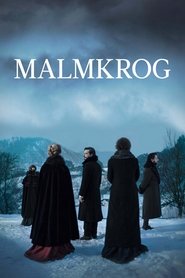
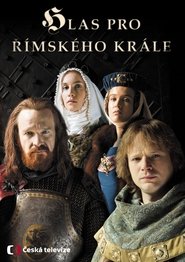
Among the guests who come to the mansion of aristocratic landowner Nikolai over Christmas are a politician, a young countess, and a general with his wife. They dine and discuss topics such as progress and morality. As the debate becomes more heated, cultural differences become increasingly apparent.
Part of ESPN's 30 for 30 Shorts. On October 30, 2001, with the United States of America still reeling from the aftermath of the September 11 terrorist attacks, George W. Bush took to the mound at Yankee Stadium to throw the "first pitch" of the 2001 World Series' third game. Includes interviews with former United States Secretary of State, Condoleezza Rice; former New York City mayor, Rudy Giuliani; Yankees shortstop, Derek Jeter; former Yankees manager, Joe Torre; former United States Director of Central Intelligence, George Tenet; members of the Bush family; and the 43rd President of the United States, George W. Bush.
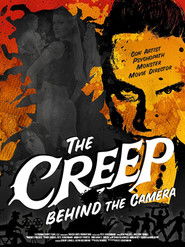
Italy, 1970. An increasing legion of harmless warriors begins a peaceful struggle for sexual freedom through pornography, shaking and shocking religious authorities and conservative political institutions. They are ironic, happy, crazy. They are dreamers, defenders of definitive communion between body and soul. But they were censored and humiliated. They were mistreated and arrested for demanding loud a new cultural renaissance.
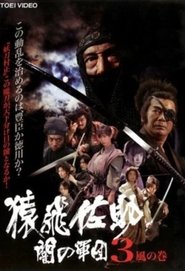
The day of the final battle approaches and, to guarantee the uncertain victory, Sarutobi Sasuke is asked to retrieve the legendary sword Muramasa. Sighted in three different locations, the army splits up and goes on a journey after it, but new faces show up, dubious allies and dangerous enemies, and the fight begins. Part 3 of 4 about Sarutobi Sasuke.
"In 1904, disgusted by the aftermath of the Spanish-American War and the subsequent Philippine-American War, Mark Twain wrote a short anti-war prose poem called "The War Prayer." His family begged him not to publish it, his friends advised him to bury it, and his publisher rejected it, thinking it too inflammatory for the times. Twain agreed, but instructed that it be published after his death, saying famously: None but the dead are permitted to tell the truth."
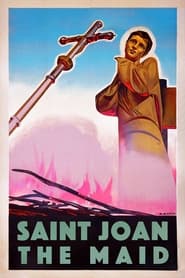
This relatively straightforward dramatic biography was one of two films commissioned to honor Joan of Arc on the 500th anniversary of her death, but it was soon undeservedly relegated to obscurity in favor of Carl Dreyer's triumphant 'La Passion de Jeanne d'Arc'. The comparison is unfair: Dreyer was an artist, but director Marco de Gastyne certainly proved himself a distinguished craftsman, and his emphasis on the Maid of Orléans early life in Domrémy serves as a picturesque, matching bookend to Dreyer's impassioned courtroom drama.
A sweatshop somewhere in England, 1987. Management is desperate to dispel the mysterious phenomenon spreading among the seamstresses: full-body possessions. When a failed attempt to cover up a vulnerable coworker's fits leaves would-be agitator Maggie unemployed, she must choose between swallowing her pride or taking a stand, until she realizes what's been occurring isn't mass hysteria-it's a strike.
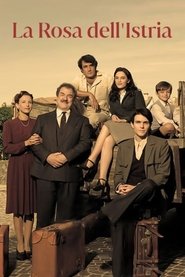
The film recounts the tragedy of Istrian and Dalmatian exiles following the post-war armistice. Maddalena is eighteen years old and lives in Canfanaro, Istria, dreaming of becoming a painter. First the fury of war and then Tito's partisans destroy her family and her dreams.
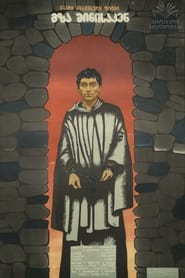
The film is set in southern Georgia during Ottoman control, where inhabitants, who were driven from their homes due to enemy invasions, try to return home through different means. One of these inhabitants is the young scholar Antimoz.
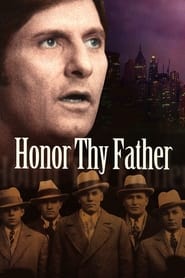
Joseph Bologna stars as Bill Bonanno in this made-for-television adaptation of the controversial bestseller from Gay Talese, chronicling the rise of New York's infamous Bonanno organized crime family. When his father disappears in 1964 and Bill is compelled to take over the "empire," other mafiosi attempt to take what's theirs. Brenda Vaccaro and Richard S. Castellano fill out the impressive cast of this gripping crime tale.
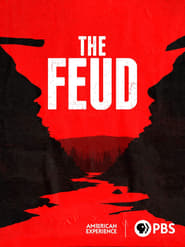
The feud between the Hatfields and McCoys is perhaps the most famous family conflict in American history. As legend has it, two neighboring families in the backwoods of Appalachia waged a crude and bloody war against each other over a stolen hog, an illicit romance, and longstanding grudges. Yet the events that took place near the end of the 19th century between the Hatfields and McCoys are part of a much richer and more complex narrative of the American experience.
We have detected that you are using an ad blocker. In order to view this page please disable your ad blocker or whitelist this site from your ad blocker. Thanks!