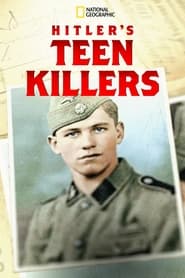
They grew up under the Nazi regime. They pledged to give their lives for Hitler. They were fanatics who would not be stopped. They were the 20,000 teenagers who made up the 12th SS Panzer Division. Unleashed in France to halt the Allied invasion, they would sow terror and destruction in their wake. Historical colorized archives and a handful of survivors tell us this story.
In 1840, a caravan of carts headed from Buenos Aires to Córdoba carrying merchandise, ammunition and prisoners, against the background of the struggles between the Unitarians and the Federalists.
Oskar Gröning, known as the "Accountant of Auschwitz," was charged with the murder of 300,000 Jews. When he took the stand in 2015, at the age of 94, his trial made headlines worldwide.
Khayas falls in love with Laila but her father refuses the alliance, which leaves Khayas heartbroken. Things take a turn when Laila then moves to Mecca.
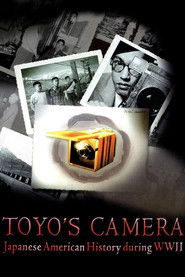
Even though bringing in cameras to the internment camps was prohibited, one man managed to smuggle in his own camera lens and build a camera to document life behind barbed wires, with the help of other craftsmen in the camp. That man was Toyo Miyatake, a successful issei (first generation immigrant) photographer and owner of a photo-shop in the Los Angeles Little Tokyo district, and of one of the many Americans who was interned with his family against his will. With his makeshift camera, Miyatake captured the dire conditions of life in the camps during World War II as well as the resilient spirit of his companions, many of whom were American citizens who went on to fight for their country overseas. Miyatake said, "It is my duty to record the facts, as a photographer, so that this kind of thing should never happen again."
Rap Dixon was a legendary African American baseball player who played in what were known as the Negro Leagues. This film chronicles his life and baseball accomplishments while exploring how racism and segregation affect how people are remembered in history.
The film attempts to fill in the "missing years" of Jesus, from ages 3 through 12. When King Herod fearing that the Messiah has indeed been born, orders that all Hebrew male children under the age of three be slain, Joseph moves his family near Egypt. Here, Jesus, sensing His divinity, expresses a desire to return to Nazareth. Travelling homeward with His mother Mary, Jesus flashes forward to events that will unfold in his adult life.
A portrait of American actress Uma Thurman, muse of legendary filmmaker Quentin Tarantino and courageous voice for the many victims of despotic producer Harvey Weinstein.
A young Russian boy, Thomas Minton, travels to New York as a passenger on a Russian freighter. Close to Ellis Island he gets off and thus starts his journey to America the same way as all immigrants in former times. Thomas is searching for the family of one of his ancestors, who had emigrated decades ago, but once sent a letter home together with a sample of his new profession: 3D-Photography.
During the Chinese-Japanese War (1937-1945) a nightclub dancer is given a dangerous mission by her dying brother. According to her brother's will, she goes on a journey with encoded papers of the Independence Army operations. She soon becomes a most wanted criminal by the Japanese Army and must cross the continent on her own.
January, 1947. The public receives the news of Al Capone's death with indifference, although twenty years earlier he had ruled Chicago's crime underworld with brute force and corrupting many touchable individuals. Until the day the head of the Untouchables Brigade, Eliot Ness, entered the scene. Since then, a cruel battle between the two of them began, a battle that ended in trial, conviction, disease, insanity and death.
Based on the historical private security guard and detective agency established in the U.S. by Scotsman Allan Pinkerton in 1850. Pinkerton became famous by claiming that he had thwarted a plot to assassinate President Abraham Lincoln, who later retained his services during the Civil War.
We have detected that you are using an ad blocker. In order to view this page please disable your ad blocker or whitelist this site from your ad blocker. Thanks!