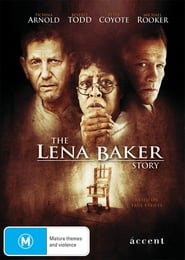
Based on true events, The Lena Baker Story recounts one African-American womans struggle to rise above the challenges of her life, to face the choices she makes, and to ultimately triumph over her...Lena Baker was the first and only woman to be sentenced to death by the electric chair in the state of Georgia and was executed in 1945. She was pardoned posthumously in 2005.
Using vintage footage, this witty documentary explores the history and sociology of camping, from its origins in English high society at the end of the 19th century, through hippy outfits and the advent of mass tourism, to contemporary 'glamping'.
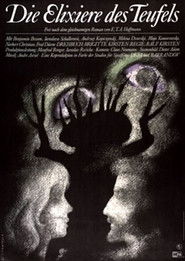
Young seminary student Franziskus has been ceremonially ordained. He wants to escape the harshness and injustice of the world and devote himself to the service of God in the quiet seclusion of a monastery. He is also hoping to forget the beautiful lady Aurelie, whose life he saved in a flooded brook and with whom he spent an amorous night. He knows that her father would never allow her to marry him. But the devil dressed in a monk's habit and under the name Viktorin intervenes in Franziskus's destiny and attempts to lead him astray. To do so he first uses the diabolical elixirs kept at the monastery as a rare relic. When the young monk gets expelled from the monastery, Viktorin prepares another trap with the help of Aurelie's stepmother Euphemie.
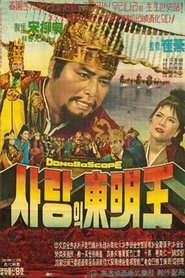
There were three women lived with Pu Yi, the last emperor of China, during 1922 and 1924. Wan-jung, the Queen, ended up with being insane. Tan Yuling died. Wenxiu, a concubine, was eliminated from the Royal family. This is the story of the fate of three women, including the wife and cousin of who have a lesbian relationship
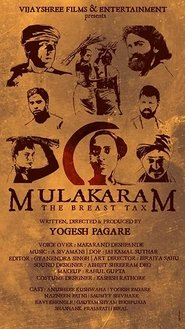
Nangeli, a comrade from the so called lower caste fights against the caste discrimination where women are not allowed to wear cloth over the upper part of their body
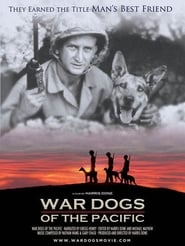
It’s 1942, somewhere in the Pacific: Deadly ambushes by entrenched Japanese in the thick jungles take a heavy toll on American troops. Marine commanders were willing to try anything, including using dogs to sniff out the hidden enemy. But even with their superior senses, nobody anticipated just how effective they would be.
Taken out of the pages of history itself, this is the story of the sizzling love between Kenreimon-in of the Taira Clan and Yoshitsuné of the Minamoto Clan. When the Taira Clan had met ignominious defeat at the hands of Yoshitsuné, Kenreimon-in had jumped into the sea with her son, the infant Emperor, but only she had been rescued by Yoshitsuné. A rough-hewn warrior, Yoshitsuné had taken her by force until he awakened an answering love in the Empress with his chamber techniques.
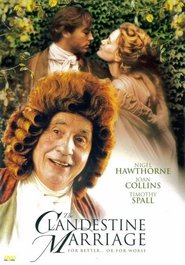
A period film, set around an English country house whose owners want to arrange a marriage of convenience between their elder daughter and an aristocratic heir of a hard-up noble family.
The true story of the undersized Depression-era racehorse whose victories lifted not only the spirits of the team behind it but also those of their nation. Narrated by William H. Macy, featuring interviews and archive footage in both color and black & white of Tobey Maguire, Babe Ruth, Lou Gehrig, Jesse Owens, Jeff Bridges, Gary Stevens, Chris McCarron, Emily Kilby, Farrell Jones, Tom Smith, Buck Brannaman, Noble Threewitt, and Chris Howard.
The film is based on the true story of Yoichi Hatta (1886-1942), a civil engineer who traveled to Japanese-ruled Taiwan in 1910 to build a complex irrigation system in the barren southwest. Hatta manages to overcome the initial doubts of local farmers, but a tragic tunnel accident eventually halts the project and shakes his confidence.
Born into a family of farmers in the mid-19th century, Karoline Augusta Antonsen moves to a nearby industrial city in her late teens, driven by the dream of building a large family and owning a big house. This short film follows her journey of hope, and her struggle to survive in a tough economy. Will she achieve her lifelong ambition or will her story end in tragedy?
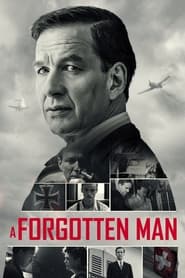
Spring 1945, Heinrich Zwygart, Swiss ambassador to Germany flees bombed-out Berlin after eight years of service in the capital of the Reich. This is the end of a terrible mandate, during which he had to make fatal compromises to preserve the neutrality and security of his country. He went through the war, but will he survive the peace?
Coverage of the ceremonial procession of the Queen's coffin through central London to lying-in-state at Westminster Hall. HM the King and members of the royal family take part in the procession as the cortège makes its way from Buckingham Palace to the Palace of Westminster. The doors of Westminster Hall will open for the first members of the public to pay their respects to Queen Elizabeth II.
“Dokuro sen” (The Skull Coin) is the first film adaptation of the popular novel by Kikuo Sumita. The story evolves around the seven cursed coins (the Skull Coin) that are supposed to reveal the secrets of the hidden Tokugawa treasure.
A tribute to auteur Mrinal Sen, the film intricately weaves the personal and professional journeys of Kunal Sen and Ranjan through their collaboration on an ambitious film project, Chaalchitra, in 1981.
We have detected that you are using an ad blocker. In order to view this page please disable your ad blocker or whitelist this site from your ad blocker. Thanks!