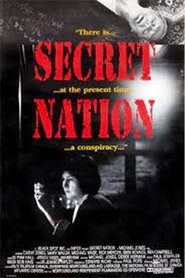
A graduate history student returns to her native Newfoundland, searching for proof of a conspiracy surrounding the referendum that saw Newfoundland join Canada.
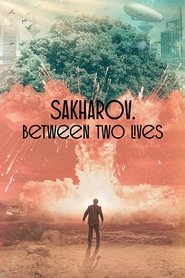
Avenue, university and even an asteroid bear his name. Academician Sakharov is known all over the world: someone as the creator of the hydrogen bomb, someone as an outstanding public figure and human rights activist. All his life Andrei Sakharov lived between two fires - science and humanism - and this dualism formed the basis of the film. The picture will show the scientist as he saw himself, through his dialogues with the Conscience.
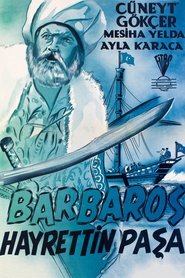
The film tells the story of the struggle between Barbaros Hayrettin Pasha and Count Vespasiano. Barbaros Hayrettin Pasha and his fleet engage in battle off the coast of Fondi Castle. They capture Count Reinaldi and his niece, Countess Julia, from the defeated fleet to obtain ransom. Barbaros Hayrettin demands the ransom from Julia's fiancé, Count Vespasyo of Fondi Castle. Julia, who does not want to marry Vespasyo, asks Barbaros to help her. However, Barbaros remains indifferent to this request. In response, Vespasio attacks the island of Midilli, where Barbaros resides, and takes many people captive. A major battle erupts between Vespasio and Barbaros. Countess Julia will await her next encounter with Barbaros.
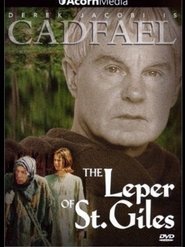
When a cruel middle-aged baron and a beautiful wealthy orphan are to be wed at the abbey, it comes as no surprise when the sadistic nobleman is found strangled to death.
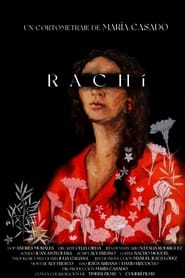
Combining modern footage with home movies and interviews, filmmaker María Casado's life is explored, focusing on themes of family, history, and belonging, with a particular emphasis on childhood experiences related to home.
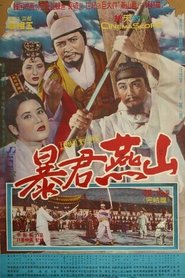
Prince Yeonsan-gun turns into a tyrant out of grief for his mother's death. He orders beheadings of all the officials who displease him or who advised the previous king to depose the queen. He becomes crueler by the day. But in 10th year of his reign, he is kicked out of the throne and dies a tragic death.
Since its release in 1968, Planet of the Apes, the masterful film directed by Franklin J. Schaffner and starring Charlton Heston, and its subsequent sequels have asked its viewers challenging questions about contemporary society under the guise of a bold science fiction saga: a fascinating look at a hugely successful pop culture phenomenon.
By mid-1945, Hitler is dead and the war has ended in Europe. Halfway around the world, however, the fighting is still going strong on a small island in the Pacific. Okinawa was the site of the last battle of the last great war of the 20th century, with a casualty rate in the tens of thousands. Through it all, military cameramen risked their lives to film the conflict, from brutal land combat to fierce kamikaze attacks at sea. See the footage they captured and experience this intense battle the way the soldiers saw it -- in color.
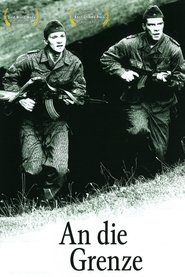
19-year-old NVA soldier, Alex Karow, is sent to the West German-East German border in May 1974, shortly after Willy Brandt's resignation and during the World Cup. The army is dominated by brutal rituals, tolerated or used by the officers. Alex understands that the ideals of balance, democracy and human dignity are propaganda. The question of what happens when the other appears in the sights of the Kalashnikov occupies the soldiers day and night, interrupted almost exclusively by the games of the World Cup with the historic encounter between the GDR and the FRG. Alex draws strength from his love for Christine, a confident tractor driver who lives in the neighbouring village. Christine encourages him not to do what his father expects, but to follow his dream of becoming a photographer. But when her brother sends Alex's photo from the border fortifications to the West, everything gets out of control...
The beautiful account of the powerful drama of love and courage of Austrian Archduke Franz Joseph and Princess Elizabeth of Bavaria. This is a condensed version of the original German language 3-part "Sissi" series.
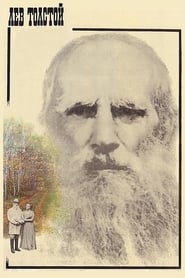
The film consists of two parts: “Insomnia” and “Departure”. We shall meet Lev Tolstoy in the final years of his life at Yasnaya Polyana. We shall see him surrounded by his family, friends, acquaintances and absolute strangers who were coming to the great man and artist from all over the world. We shall hear “the voice of his thoughts”. In his sleepless nights, we shall follow his memory of the happy youthful years and the crucial, hard ones. We shall witness Tolstoy’s tragic departure from Yasnaya Polyana and his death at an obscure little station of Astapovo.
A biopic of Ananta Singha. Some calls him dacoit, some calls him a rebellion. This adaptation gives the viewer a chance to know him as a whole, a person and as a revolutionary communist leader.
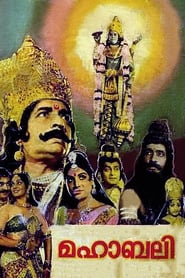
Mahabali was a beloved king and very kind to his subjects in the state of Kerala. The time under his rule was considered one of great prosperity and happiness. It is in fact this success as a king that led the gods to be wary of him and bring his demise at the hands of Vamana.
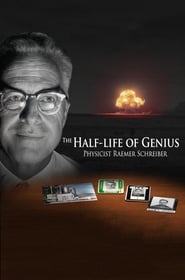
Our two-hour film highlights the life and career of Dr. Schreiber with respect and clarity. Raemer, his wife Marge, and young daughter Paula would move to the high-desert of New Mexico where he and other brilliant minds would change the world forever.
Perhaps the most beloved (and indisputably the greatest) American president, Abraham Lincoln was, in many ways, an enigma -- equally loved and hated in his lifetime. What drove John Wilkes Booth to assassinate Lincoln? Was the Confederate government behind the plot? The questions that have haunted Americans for more than 100 years are finally answered in this fascinating documentary that employs forensic experts as well as noted historians.
For the Honour of Australia is a 1916 film composed of footage from two 1915 Australian silent films, For Australia and How We Beat the Emden, plus the documentary How We Fought the Emden.
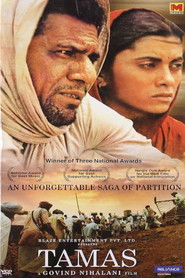
Set in the backdrop of riot-stricken Pakistan at the time of the partition of India in 1947, the film deals with the plight of emigrant Sikh and Hindu families to India as a consequence of the partition.
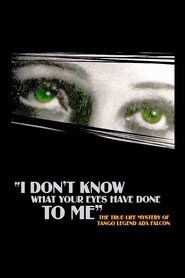
Argentinean singer and tango legend Ada Falcón disappeared without a trace in 1942 at the height of her career. This is the story of how she was located sixty years later, living in an unexpected way, in an unexpected place.
A deep investigation, in the way of a poetic essay, on one of the main Latin American movements in cinema, analyzed via the thoughts of its main authors, who invented, in the early 1960s, a new way of making movies in Brazil, with a political attitude, always near to people's problems, that combined art and revolution.
We have detected that you are using an ad blocker. In order to view this page please disable your ad blocker or whitelist this site from your ad blocker. Thanks!