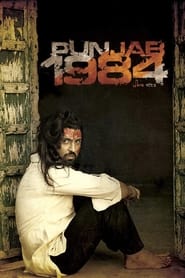
This is the story of a mother and her missing son set in the backdrop of 1984 Punjab, when the state was going through a terrible time of terrorism. The film depicts the longing of a mother for her son and her search for her son, who is labelled a terrorist because of the bad times in Punjab.
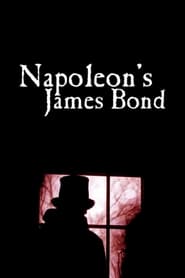
Charles Louis Schulmeister (1770-1853) was a smuggler and a revolutionary, but also a chief of police and Napoleon Bonaparte's favorite spy. A look back on his adventurous life with the purpose of unraveling the many mysteries of his unique path.
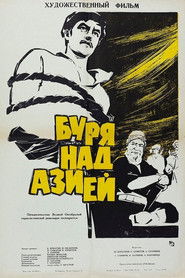
The film was made on the basis of the literary version of events in the life of the famous Russian ethnographer, anthropologist, biologist and traveler who studied the indigenous population of South-East Asia, Australia and Oceania.
On November 30, 2017 the National Park Service and National Park Foundation will present the annual National Christmas Tree Lighting. Popular entertainers and a United States military band add to the celebratory evening.
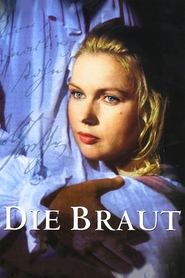
The relationship between Johann Wolfgang von Goethe, the great German writer, and Christiane Vulpius, a village girl, is one of the instantaneous and fiery passion. They lived together for 28 years, 18 of these living in sin, 10 a married couple. Christiane's rival, Charlotte von Stein, a former favorite of Goethe, begins plotting and scheming against her. Christiane puts up with countless insults and humiliations like having to 'disappear' with their son into the servants' quarters and to stay at home on official occasions. Goethe marries her when she saves his life during an attack by plundering Napoleonic soldiers. Her new social position as Goethe's wife is resented and envied by all. When she is openly attacked by the snooty, jealous people, Goethe is only half-hearted in coming to her defence. But she stays with him for he is her great love, even when she turns to the charms of many youthful admirers...
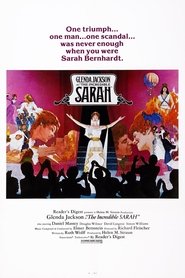
The legendary actress Sarah Bernhardt's unconventional life and career are examined in this biopic. At an audition in 1860, the teenage Bernhardt proclaims herself the greatest actress of her time. Her career blossoms, as does her private life. But art and life don't stay balanced, much to the frustration of her lovers. The eccentric Bernhardt eventually does marry another actor, but it's her life on stage that ultimately gives her the most satisfaction.
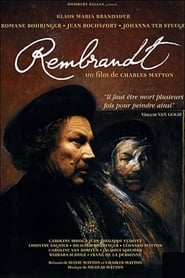
This French-German-Dutch biopic on the life of 17th century Dutch master Rembrandt van Rijn is told in flashbacks from the point-of-view of the aged artist. Soon after establishing his career as a painter in Amsterdam, he marries the radiant Saskia. As he makes a name for himself, he can soon afford to buy a large house by teaching wealthy aristocrats how to paint. However, the couple's happiness is short-lived; Saskia dies soon after bearing their son, Titus. Crushed, van Rijn seeks comfort first in the arms of his maid Geertje and then with his second wife, Hendrickje, who gives birth to a daughter. In spite of his genius, van Rijn's determinedly eccentric behavior alienates the very members of the elite who were paying his bills. At one point, the artist's home and belongings, including many of his paintings, are seized and sold for humiliatingly low prices in a rigged auction.
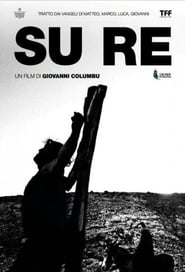
Transposing the story of the Passion of Jesus to Sardinia, Su Re draws for the very first time on the four gospels of Matthew, Mark, Luke and John together. Giovanni Columbu's distinct view is shot in a landscape unaffected by modernity and played out by an amateur cast, offering still new insights into the life of Christ.
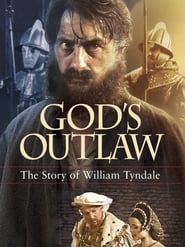
A dramatized biography of William Tyndale, the 16th Century reformer determined to translate the Bible into English, which illegal act set him at odds with the Catholic Church, Sir Thomas More and King Henry VIII.
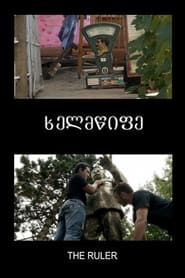
Stalin’s statue in the garden of a nunnery provokes discussion – plenty of it – in a small Georgian village. Some of the locals used to know Stalin personally because he visited the village several times when he was young, and they continue to see him as a benign ruler from the good old days rather than the brutal dictator he was. Whenever an episode of purge shook the Soviet Union’s republics, they hid the statue in the woods. The church also plays an important role in people’s lives. All in all, the film reveals a fundamental conflict in Georgian society.
In 1964, Algeria, just two years after the end of the war of independence, found itself catapulted into new contradictions, a still rural territory which responded to the modernity brought by the revolution. Filmed during the winter of 1964-1965 by the young director Ennio Lorenzini, it is the first international Algerian production which paints a rare portrait in color of a multifaceted nation, far from the simplistic vision created by the press and the French army. Produced by Casbah Film, Les Mains Libres (initially titled Tronc De Figuier) bears witness to the stigmata of colonization and the future of free Algeria throughout the Algerian territory and reveals the richness of its landscapes and the diversity of its traditions . The documentary, using the aesthetics of militant cinema of the time, is made up of four scenes: Sea and Desert, The Struggle, The Earth, Freedom.
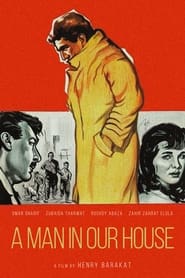
Rebel Ibrahim Hamdy assassinates a pro-colonial Prime Minister but is arrested and hides with a fellow university student, who initially refuses but eventually accepts him. Abdul Hamid Khatib meets Samia and her cousin, and Ibrahim uses the situation to hasten Samia’s marriage, which she rejects. Nawal, the youngest daughter, becomes the liaison between Ibrahim and his colleagues, helping him escape. Abdul Hamid tries to inform the political police of Ibrahim’s location, but Samia stops him. The head of the political police suspects them and punishes them to find Ibrahim. Ibrahim refuses to leave the country, returning to fight colonialism and participating in an operation.
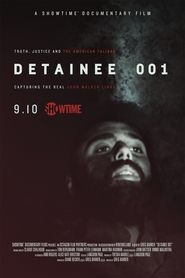
A deep dive into the mysteries that led a young American man name John Walker Lindh, who became known as the “American Taliban,” to the battlefield in Afghanistan fighting alongside the people who were supposed to be his enemy.
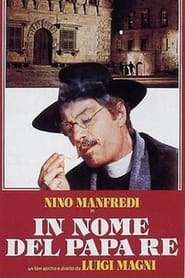
In 1867, with Garibaldi's forces close to bringing Rome into the Italian kingdom, Monsignor Colombo da Priverno, a world-weary judge on the papal court, wants to resign, disgusted by the violence to which the papacy resorts to hold secular power.
We have detected that you are using an ad blocker. In order to view this page please disable your ad blocker or whitelist this site from your ad blocker. Thanks!