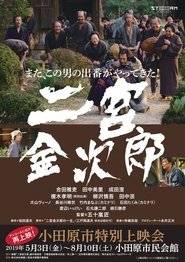
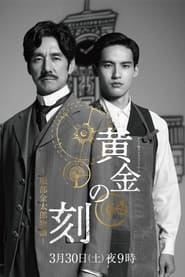
Ninomiya Kinjirou is a biopic follows the life of the eponymous character, an 18th century peasant boy who worked to rescue over 600 poor villages and hamlets from financial ruin by developing new economic policies.
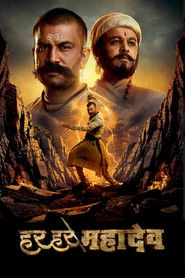
The young Shivaji Shahaji Bhosale is building the foundation of Hindavi Swarajya. This is the beginning of a memorable journey for the man who will go on to be known as Chhatrapati Shivaji Maharaj. But to turn this dream of Swarajya into reality, he must unite the Watandars.
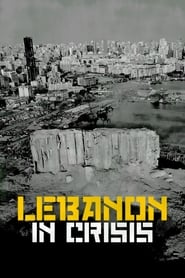
The apocalyptic blast in the Port of Beirut, Lebanon, on August 4, 2020, exacerbates anger at those in power: protests cross religious boundaries as the Lebanese people curse corruption, nepotism, gross economic mismanagement and squandering of resources. How did the Land of Cedars, a country with so much to offer, allow itself to get into such a dire situation? And will it be able to bounce back?
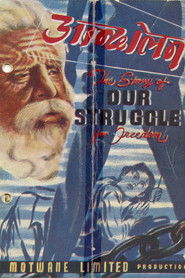
A stridently nationalistic story of India’s freedom struggle, presented through the experiences of a Bengali family from 1885, when the Indian National Congress was established, to 1947. Important events incorporated into the plot were Gandhi’s satyagraha (1920), the Simon Commission (1928), Vallabhbhai Patel’s Bardoli satyagraha (1928) and the 1942 Quit India agitations. Krishan Chander’s script, Sachin Shankar’s choreography and the acting styles owed much to the IPTA theatre of the 40s. The film, made at Bombay Talkies, was produced by the distributors of the Chicago Radio PA systems label. Kishore Kumar plays the militant hero of this quasi-documentary. Motwane included old documentary footage purchased from Kohinoor and Krishna Film, as well as a shot of Rabindranath Tagore singing his Jana Gana Mana composition, one of India’s national anthems (Arunkumar Roy’s Of Tagore and Cinema, 1994, traces this footage to Ufa, shot when Tagore visited Munich)
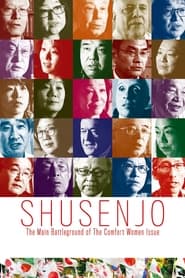
A Japanese-American director digs deep into the controversial 'comfort women' issue to settle the debate on whether the women were paid prostitutes or sex slaves, and reveals the motivations and intentions of the main actors pushing to revise history in Japan.
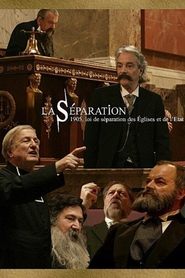
On March 21, 1905, the hemicycle of the Palais-Bourbon resounded with the first session of a crucial and animated parliamentary debate, which was to last nearly ten months and occupy 48 sessions in the Chamber of Deputies. They have to study the bill of separation of the Churches and the State. This law, which founded laicity in France, was adopted on December 9, 1905.
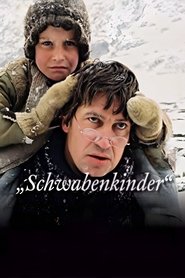
A story about of one of the darkest periods in German history, an era in which the belief in occult forces was widespread. In Bamberg, witch hunts were fostered by a greedy and delusional Bishop Prince and reached their peak around 1630. This Bamberg ruler used the witch trials to purge his political enemies and enrich himself with their goods. Almost 1000 innocent men, women and children became his victims. BURNING SOULS deals with the era seen through the eyes of Johanna Wolff, a pharmacist's daughter, and the young physician Cornelius Weinmann. To save the innocent, he and a few courageous men revolt against the Bishop Prince.
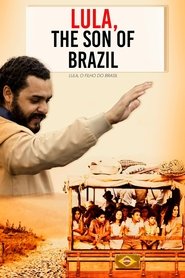
The true story of a working class boy who moves to the nation's financial capital at a young age and becomes one the most influential politicians in Brazilian history.
Russia, January 25, 1725. "Give it all...". The emperor's weakening hand was able to write in his will only these two short incomprehensible words that kept Russia in a bloody struggle for the crown for a century.
New York, May 16, 1888. Visionary Serbian inventor Nikola Tesla is about to introduce an innovative AC asynchronous motor. Before the demonstration, wealthy businessman George Westinghouse meets Tesla privately to get him to sell him his patent and go into business with him. Tesla declines the offer but during the demonstration something happens that will change the world forever.
The true story of Rosario Livatino, a young judge in Sicily in the early 1980s, who have been nicknamed 'The Boy Judge' from the President of the Republic. He's strictly incorruptible, working hard and refusing even to shake hands with suspects. He then starts a number of investigations that lead him to touch the mafia power in the area, and then to personal war with the hidden organization.
Italy, WWII. After his anti-fascist mother is arrested, Mario spends his childhood on the streets. In 1947 they are miraculously reunited and start a new life in America. Based on the life of Mario Capecchi, 2007 Nobel Prize in Medicine.
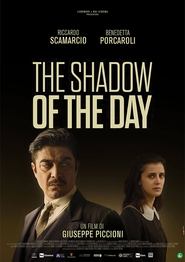
Italy, after the promulgation of the racial laws (1938). Luciano, a Fascist-abiding restaurateur, nonetheless believes he can still live by his own rules inside his business. However, everything changes when Anna, a girl with a dangerous secret, starts to work at his restaurant.
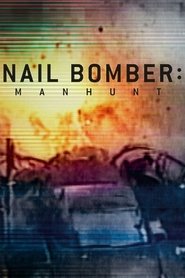
This documentary examines the 1999 London bombings that targeted Black, Bangladeshi and gay communities, and the race to find the far-right perpetrator. He terrorized a city, seeking to ignite a race war but justice was served by those who wouldn't let his hate win.
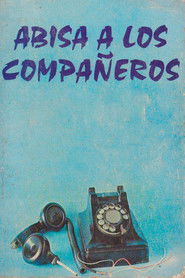
Based on real events in Peru, 1963. A team of revolutionary foreigners planned and pulled a heist on the biggest bank in Peru. The loot helped fund the rural revolution in Concepción, Cusco.
We have detected that you are using an ad blocker. In order to view this page please disable your ad blocker or whitelist this site from your ad blocker. Thanks!