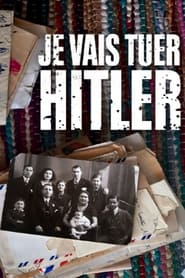
One day, in Savigny, an 18-year-old boy left his house in the middle of the war, saying: "I'm leaving, I'm going to kill Hitler." His name was Joseph, he was Jewish, he was my great-uncle. He disappeared during the night of the Occupation, and his existence became a family secret. He disappeared from history, the small as well as the big: he is not on any deportation list, and the only archive where he appears is a family photo of him as a child. It disappeared like a stone at the bottom of the water, instead of going up in smoke in the sky of Poland. What did he become? And why didn't anyone mention his name anymore?
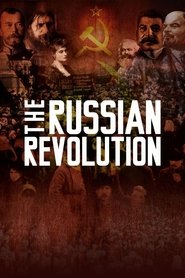
Starting in 1881 this film shows the personal battle between Lenin's Ulyanov family and the royal Romanovs that eventually led to the Russian revolution.
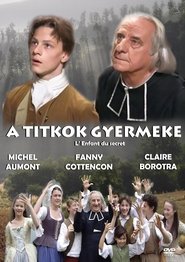
Set in 18th century, a 10 year old deaf boy has been abandoned by his mother, Comtesse de Solar, and is taken care by Abbé de l'Épée, who teaches him how to comunicate and express.
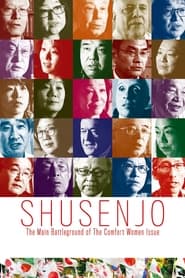
A Japanese-American director digs deep into the controversial 'comfort women' issue to settle the debate on whether the women were paid prostitutes or sex slaves, and reveals the motivations and intentions of the main actors pushing to revise history in Japan.
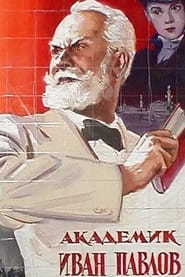
Russia, 1875: In Riazan’, Dr Pavlov is summoned to a landowner who refuses to accept the inevitability of his death; to Pavlov’s dismay, he orders the destruction of a beautiful apple orchard. 1894: Experimenting on dogs, Pavlov tries to comprehend the interaction between nerves and external signals governing digestion. In 1904, he formulates the principles of conditional reflexes. When Zvantsev, an opponent of Pavlov’s materialist worldview, leaves the laboratory, the scientist hires Varvara Ivanova who becomes his most reliable assistant. 1912: Pavlov receives an honorary doctorate from Cambridge University. 1917: Despite Pavlov’s political scepticism, the Bolshevik administration treats him with great respect.
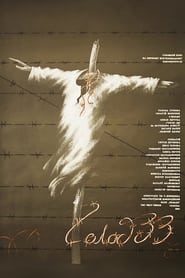
The film about the Holodomor famine in Ukraine, based on the novel 'The Yellow Prince' by Vasyl Barka. The film is told through the lives of the Katrannyk family of six. It relies more on images than on words shot in black-and-white.
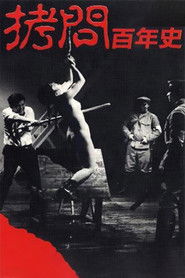
The movie takes place in four periods: the first, a group of female Christians are raped and crucified in 18th century Japan. The second deals with a man who beats his cheating wife and her lover. The third, is set in WW2 where inquisition soldiers torture, rape and abuse female traitors, and the fourth story deals with soldiers raping and abusing suspected female spies.
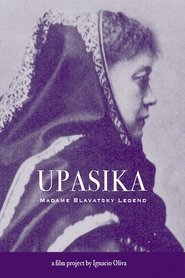
Helena Petrovna von Hahn, called Madame Blavatsky, was an extraordinary personality of her time, regardless of how we decide to observe her philosophy. This film does not praise her work; nor does it defy and debunk what she stood for, in spite the fact that she was one of the most controversial figures of the 19th century.
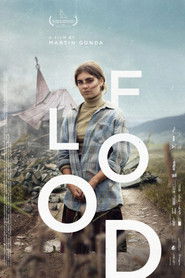
In communist Czechoslovakia in 1984, Mara dreams of leaving her village to study in the city and become a pilot. But her father, a widowed Ruthenian farmer, insists she stay and work the land. When her village faces destruction due to a new dam, their generational conflict intensifies, revealing the struggle between tradition, identity, and the desire for freedom in a context of historical change.
Like many boys and girls whose early years included the Great Patriotic War, 16-year-old Dusya was eager to go to the front. She and her family lived not far from Sukhumi, and not a week passed without Dusya stopping by the local military registration and enlistment office. Each time the military commissar refused to grant her request, but Dusya did not give up and one day she was offered to enter an intelligence school.
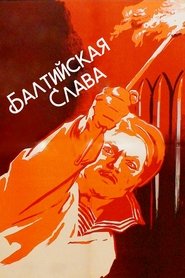
A film about the struggle of Baltic Fleet sailors for revolutionary Petrograd in the autumn of 1917. The film focuses on the fates of a sailor and a naval officer who join the ranks of those fighting for the revolution.
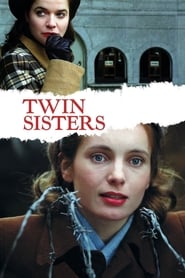
1920s Germany. Two sisters aged six years, no sooner see their remaining parent buried when they are torn apart. Lotte goes to live with her upper middle class Dutch aunt in Holland, Anna to work as a farm hand on her German uncle's rural farm. The World War II impacts each of their lives and finally in old age they meet again.
An intriguing peddler comes to Hope Valley selling the townspeople his wares and teaching them valuable lessons about joy and giving. When the townspeople realize that the recently displaced settlers in the area will not have a proper Christmas, they come together to create a special holiday celebration — including a Nativity presentation from the schoolchildren — that will infuse everyone with the true spirit of Christmas.
Terry Wilson is a 70-year-old lifelong resident of Meadowvale Village, Ontario's first heritage district. As development looms and begins to destroy Terry's favourite place in the world, he recreates pieces of history in his backyard, crafting an oasis where it feels like nothing has changed. A beautiful tribute to his childhood, his mother, and his town, Terry passionately fights to preserve history in a world that's too anxious for change.
Musashi returns Japan's legendary swordsman and philosopher to the screen once again. In an original period drama based on the historical facts of the life and travels of the famous Miyamoto Musashi we find an apprentice, an instructor and the account of a famous battle in Japan of the Middle Ages where many questions will be answered.
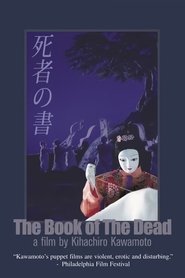
A sheltered aristocratic woman in feudal Japan, bored and unfamiliar with the world outside her estate, passes the time copying a special Buddhist sutra sent by her father who has been absent on official business for years. While gazing out her window one late afternoon, the setting sun creates a vision of a holy figure in the distant mountains.
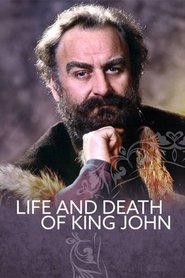
The reign of England's King John is threatened by Philip of France who demands that John's nephew Arthur be placed on the throne. Pragmatic and decisive, King John moves to plactate the French, but there are others who seek disputre his authority.
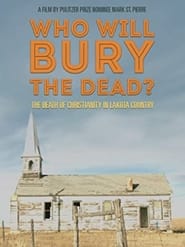
This documentary offers a deep, candid, and historical look at the Christian experience of America's largest and best-known tribes: the Dakota and Lakota. Its exploration into Native American history also takes a hard and detailed look at President Ulysses S. Grant's Peace Policy of 1873, which was, in effect, a "convert to Episcopalianism or starve" edict put forth by the American government in direct violation of its Constitution. The devastation it had on the values of the people affected were dramatic and extremely long-lasting. Grant's policy was finally ended over 100 years later by the Freedom of American Indian Religions Act in 1978. Interlaced with extraordinarily candid interviews, this documentary presents an insider's perspective of how the Dakota and Lakota were estranged from their religious beliefs and their long-standing traditions.
We have detected that you are using an ad blocker. In order to view this page please disable your ad blocker or whitelist this site from your ad blocker. Thanks!