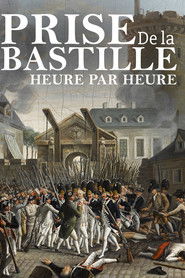
Paris, July 14, 1789. The kingdom has been in crisis for several months, and the city is buzzing with unrest. Citizens are angry and have had enough of inequality, unemployment and hunger. Armed with axes, hay thieves, knives and rifles, they storm the Bastille fortress. Join us for the crazy day in the streets of Paris, which has become a symbol of the French Republic.
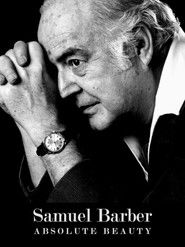
Known for his mournful "Adagio for Strings," Samuel Barber was never quite fashionable. This acclaimed film is a probing exploration of his music and melancholia. Performance, oral history, musicology, and biography combine to explore the life and music of one of America’s greatest composers. Features Thomas Hampson, Leonard Slatkin, Marin Alsop and many more of the world's leading experts on Barber's music, with tributes from composers Leonard Bernstein, Aaron Copland, Virgil Thomson and William Schuman. The film was broadcast on PBS, and screened at nine film festivals internationally, with three best-of awards. It was named a Recording of the Year 2017 by MusicWeb International.
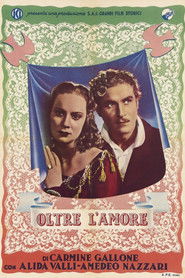
Set in the Papal States in the first half of the 19th century, it tells the story of the Roman noblewoman Vanina Vanini and her secret love for the Carbonaro Pietro Mirilli. The latter, given his commitments in the underground struggle, decides to abandon his young lover, who is nevertheless willing to marry him. Left alone, Vanina is unable to escape her despair and tries in every way to reunite with her companion, even going so far as to denounce the Carbonari to the Cardinal of Romagna, naming them all except Pietro and revealing the hiding place where they meet. Pietro, learning of Vanina's betrayal, casts her out. Only then does Vanina realize the gravity of her actions and decides to join the Carbonari, even participating in combat operations, during one of which she is wounded. This brings the two young people closer together forever.
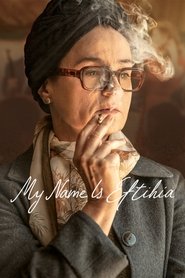
A young girl, recently married, is traveling from Aidini to Greece with her mother and her two daughters. On board the ship she decides not to let life pass her by, but to live her own way. And she goes ahead! She writes endlessly wherever she can, on napkins and cigarette boxes, to bills. She smokes, she passionately falls in love, casually gambles in luxurious salons, but also in illegal basements. A teacher who becomes an actress and plays in streets and in theaters, a poet who becomes the greatest Greek folk songwriter. She collaborates with all the famous music personalities of the country, from Vassilis Tsitsanis and Apostolos Kaldaras to Manolis Ηiotis, Antonis Repanis and Manos Hadjidakis, bravely asserting herself to a cruel and typically male-dominated world.
In a time without the internet or social media, Mónica battled the pressures of fame while starring in the beloved children's show Sube a mi nube. Though the show brought joy to many, it slowly consumed her, as she struggled with the weight of her mental health in a world that didn't understand her pain.
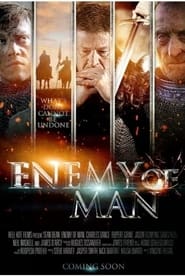
This film takes a fresh look at the Battle of Trafalgar through the eyes of the HMS Victory's surgeon and his medical team that supported the brutal tactics leading to Nelson's victory over the French navy. However, there was one patient they did not save.
A fresh new look at Lolita, the famous and controversial novel published in 1955 by Russian writer Vladimir Nabokov (1891-1977), a masterpiece of English-language literature that has been constantly misinterpreted by countless readers who have mistakenly turned its young heroine into an erotic icon.
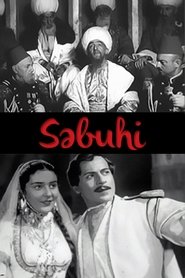
The film is dedicated to the life and creative work of the great Azerbaijani educator, playwright, and philosopher, Mirza Fatali Akhundov, affectionately known as Sabuhi, meaning “man of the morning.”
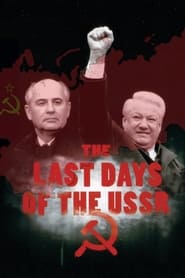
From 1989 to 1991 a string of unpredictable events happened that brought to light the rivalry between two men: Gorbachev, hindered by the economic results of his perestroika, and Yeltsin, embodying the hopes of the Russian people. Illustrated with interviews of top protagonists such as Mikhail Gobachev himself, the documentary recounts the critical last two years of the former USSR.
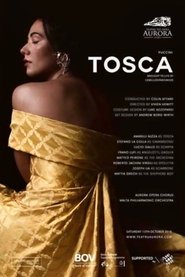
Tosca returns to the Teatru tal-Opra Aurora in a completely new production, under the direction of the renowned Vivien Hewitt, following the recent successes of 2011 (Aurora's own production) and 2014 (a Gaulitanus chorus production). Attracting the greatest names in the opera world since its first performance in Rome in 1900, Tosca 2011 brought the Aurora its largest ever international cast, featuring soprano Michele Crider, tenor Neil Schicoff, and baritone Juan Pons. This time, the Aurora has made a point of enhancing the star-quality element in the cast beyond just the three leading roles. It is with pleasure, and a good dose of enthusiasm, that we announce our stellar cast, composed of Amarilli Nizza (Tosca), Stefano La Colla (Cavaradossi), Marco Vratogna (Scarpia), Frano Lufi (Angelotti), Matteo Peirone (Sacristan), Cliff Zammit Stevens (Spoletta), Joseph Lia (Sciarrone), and our own Mattia Grech (Shepherd Boy).
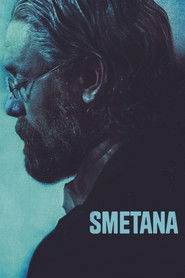
Life of Czech composer Smetana, his search for love and artistic inspiration despite hearing loss, and quest for his muse Eliska. Navigating personal and professional challenges and the founding of the National Theatre in Prague.
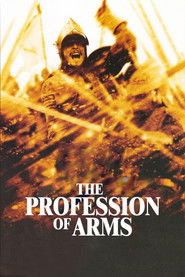
In autumn of 1526, the Emperor, Charles V, sends his German landsknechts led by Georg von Frundsberg to march towards Rome. The inferior papal armies, commanded by Giovanni de'Medici, try to chase them in the midst of a harsh winter. Nevertheless, the Imperial armies manage to cross the rivers along their march and get cannons thanks to the maneuvers of its Lords. In a skirmish, Giovanni de'Medici is wounded in the leg by a falconet shot. The attempts to cure him fail and he dies. The Imperial armies assault Rome. The film is beautifully but unassumingly set, and shows the hard conditions in which war is waged and its lack of glory. It ends straightforwardly with the declaration made after the death of Giovanni de'Medici by the commanders of the armies in Europe of not using again fire weapons because of their cruelty.
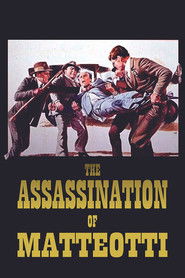
How the Italian Fascist Party managed to turn the physical elimination of a political enemy into a test of strength fundamental for the ascent into the totalitarian regime.
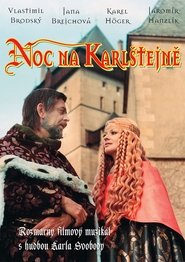
No Woman is allowed into Karlstejn Castle! Yet the enamoured Daniele Kolářová and the equally enamoured Jana Brejchová manage to spend one night in disguise in the Castle despite the strict royal ban.
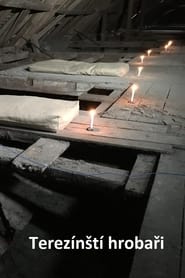
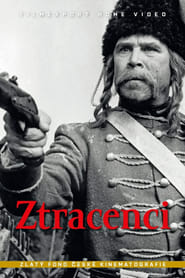
In the middle of the eighteenth century, at the time of the Prusso-Austrian War, a cuirassier, a hussar and an infantryman meet by chance and hide together in a secluded place. The war has left different marks on each of them, but they all long for normal human happiness. Although they initially have different attitudes towards military service, they are changed by their stay in seclusion and the atmosphere of life in a peasant cottage and refuse to return to the Austrian army. But all three Theresian "misfits" take up arms again, which they no longer want to touch, when the solitude is overrun by the Prussians. They manage to cover the escape of the family and their child, but pay with their lives.
A rich nobleman steals a perfume merchant's wife just prior to the French Revolution, in which the perfumer is a leader of the peasants. His priest made him swear an oath to leave vengeance to God, however.
We have detected that you are using an ad blocker. In order to view this page please disable your ad blocker or whitelist this site from your ad blocker. Thanks!