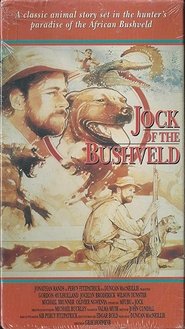
In 1886 the 20 years old Percy Fitzpatrick from Kaapstad sets out for the Delagoa bay in Transvaal to dig for gold. On his way he prevents the weakly puppy Jock being drowned and adopts him. But when they finally reach the destination of his journey, there's no gold there anymore. So Percy starts out as a foreman, and henceforth he and Jock live through many exciting adventures involving wild animals and slave drivers.
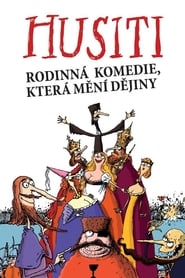
What if the events in a key era in our history were actually completely different than what our history textbooks try to tell us? What if Master Jan Hus didn't even get warm in Constance, let alone burn up? What if Jan Zizka had more than one healthy eye? This animated comedy from director Pavel Koutský playfully breaks the myths about the Hussite era as the pedestal of history is occupied not by preachers and military leaders but by two unbelievable scatterbrains, who become the heroes of their time against their will.
After resigning from the presidential post of the Indian National Congress, Subhas Chandra Bose plays an important role in India's freedom struggle during World War II.
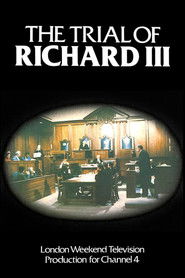
A modern trial by jury at the Old Bailey of one of the most famous events in English history. Conducted on the afternoon and evening of 21st February, 1984, it was held almost 500 years after the death of the last of the Plantagenet Kings, King Richard III, on Bosworth Field, the last of the English monarchs to die in battle. The charges are that King Richard III did, in or about the month of August, 1483, in the Tower of London, murder Prince Edward, Prince of Wales, and Prince Richard, Duke of York. Presiding over the case is Lord Elwyn-Jones, the former Lord Chancellor, and he is ably supported by two of Britain’s leading criminal Queen’s Counsels. A fascinating trial which presents evidence which offers the viewer the opportunity to join the jury in weighing the evidence and reaching his or her own verdict before discovering that of the television jury.
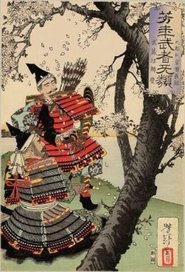
A 1942 Jidaigeki by the veteran jidaigeki filmmaker Kunio Watanabe about the legendary warrior Musashibo Benkei
with Hideko Takamine portraying Minamoto no Yoshitsune (who is, of course, a man).
The film climaxes in the famous encounter/fight btw Benkei and Yoshitsune at the Gojo Bridge.
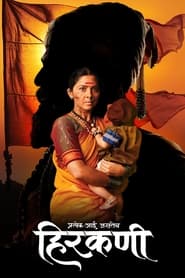
When the Raigad fort gates get shut down before she could leave, a simple village woman climbs down the cliff in the middle of the night to get back her infant son.
Set on a university campus in 1975, this film follows the lives of Q (a Black adoptee), her roommate Jam (the daughter of former Black Panthers), and Marcus (a student who has experienced the school’s discrimination firsthand) as they bond together to form a Black Student Union.
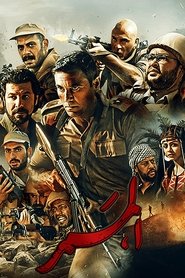
A platoon of Commandos’ soldiers, lead by a fearless commander, Nour, and their journey through heroic battles from The Six Days War to the commencement of The Attrition War.
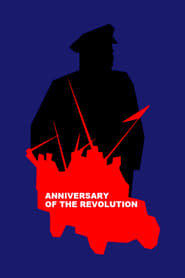
A chronicle of the Russian Revolution of 1917, from the bourgeois democratic February Revolution to the great socialist October Revolution and the final triumph.
The beginning of 1945, Poland. In a newly liberated country, the Communist Security Service is annihilating its enemies under the guise of punishing "national traitors." They organize a labor camp for Germans, Silesians and Poles, on the site of a former Nazi concentration camp called Zgoda / Reconciliation. Franek, who is in love with the Polish prisoner Anna, goes to work as a warder in the camp to save her. He does not know that one of the prisoners - Erwin, his German friend, also loved this girl for a long time. Franek joins the communists in the illusory hope of outsmarting the system.
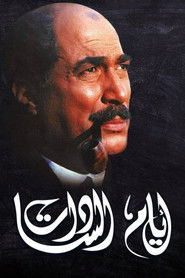
A biopic depicting the life of the late Egyptian president Anwar Sadat, following his early life, his political and military achievements, and his assassination during the Cairo annual victory parade.
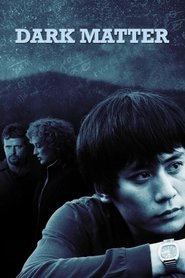
Liu Xing a brilliant Chinese student, arrives at University and makes the transition into American life with the help of Joanna Silver. Xing joins a cosmology group working to create a model of the origins of the universe. He is obsessed with the study of dark matter and a theory that conflicts with the group's model. When he begins to make breakthroughs of his own, he encounters obstructions.
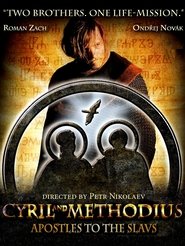
The series follows Cyril and Methodius, two Byzantine Greek brothers born in the 9th century. They became missionaries of Christianity and influenced the cultural development of the Great Moravian territory.
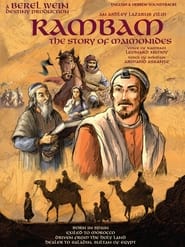
Rambam was born in Cordova, Spain in the 12th century. Known as the "Nesher Gadol" the "Great Eagle" - Rambam had the unique ability to see and perceive, with insight and clarity, the "big picture" - and man's relationship to the Divine. He was the first philosopher to unify - and reconcile the rational - with the reality of God. The legacy he left behind is astounding.
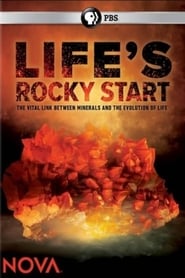
Four and a half billion years ago, the young Earth was a hellish place-a seething chaos of meteorite impacts, volcanoes belching noxious gases, and lightning flashing through a thin, torrid...
A ride on the Zephyr at Pontchartrain Beach, a ride on the Canal Street streetcar, a journey along the New Basin Canal, exploring Lincoln Beach, watching the New Orleans Pelicans play ball, seeing the Mardi Gras Indians on tree-lined North Claiborne Avenue or just going to the neighborhood movie theatres. Visit some of the special places from New Orleans’ recent past.
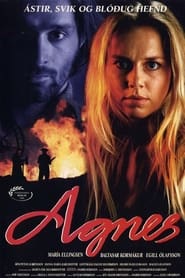
In a barren land ruled by oppression and ignorance, a spirited woman driven by hope of a better life must fight against the odds. Agnes is a servant in the house of the county sheriff. There she is constantly sexually harassed by him and treated with contempt by his wife. Agnes falls in love with Natan, a self taught homoeopathic doctor. The sheriff takes revenge on Natan by making it illegal for him to practice his profession. The dramatic relationship between the three main characters ultimately leads to a fatal web of events where a love affair turns into a nightmare of brutality and destruction.
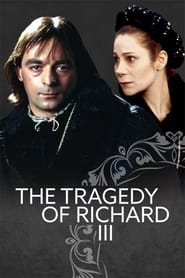
Richard Duke of Gloucester, youngest brother of King Edward IV, will stop at nothing to get the crown. He first convinces the ailing King that the Duke of Clarence, his elder brother, is a threat to the lives of Edward's two young sons. Edward has him imprisoned in the Tower of London; killers in Richard's pay then drown Clarence in a barrel of wine. When news of Clarence's death reaches the King, the subsequent grief and remorse bring about his death. Richard is made Lord Protector, with power to rule England while his nephew (now King Edward V) is still a minor. Before the young king's coronation he has his two nephews conveyed to the Tower, ostensibly for their safekeeping. Richard's accomplice, the Duke of Buckingham, then declares the two boys illegitimate and offers Richard the crown, which after a show of reticence he accepts. After Richard's coronation, he and Buckingham have a falling-out over whether or not to assassinate the two children.
The film depicts a dramatic episode in Danish history: the tumultous relationship between King Christian VII of Denmark and his English consort Caroline Matilda in Eighteenth century Copenhagen and the Queen's tragic affair with the royal physician and liberal reformer Johann Friedrich Struensee.
We have detected that you are using an ad blocker. In order to view this page please disable your ad blocker or whitelist this site from your ad blocker. Thanks!